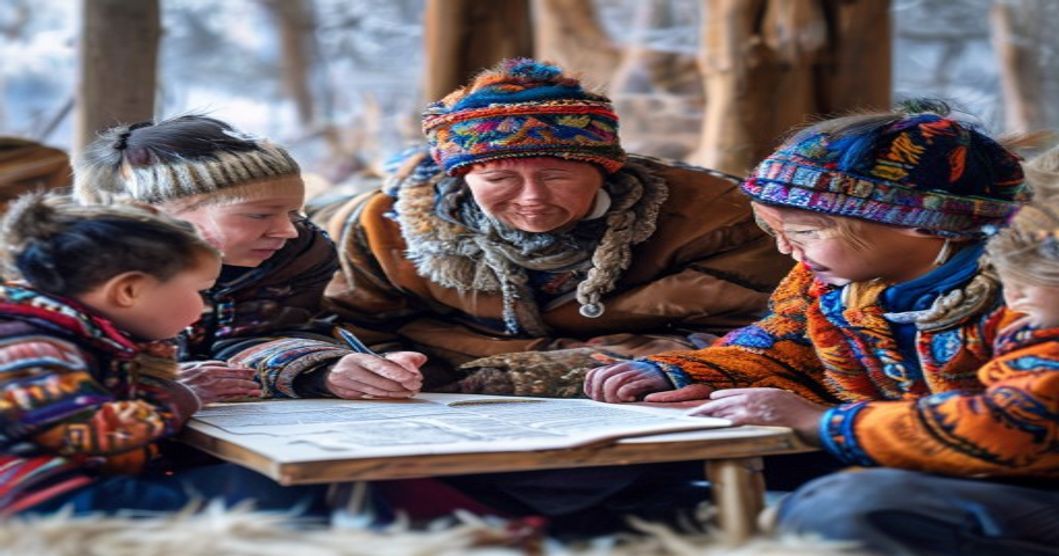
Foundations of Intergenerational Learning Among Sami Families
The foundations of intergenerational learning within Sámi families rest upon a deeply embedded ecological and linguistic framework that has sustained indigenous livelihoods across Fennoscandia for centuries. Knowledge transmission operates through direct participation, environmental observation, and structured oral pedagogy rather than formalized curricula. Elders serve as primary knowledge holders, guiding younger generations through seasonal rhythms that dictate survival, cultural continuity, and economic practice. The pedagogical architecture relies on embodied cognition, where theoretical understanding emerges exclusively through physical engagement with terrain, fauna, and meteorological shifts.
- Oral Tradition & Narrative Pedagogy: Sámi storytelling functions as an operational database. Duodji narratives, yoik performances, and historical accounts encode navigation techniques, weather pattern recognition, and ethical frameworks regarding land use. These oral records are memorized through rhythmic repetition and contextual placement, ensuring retention without written dependency.
- Hands-On Skill Acquisition: Reindeer husbandry demands precise recognition of animal behavior, terrain assessment, and veterinary intervention. Youth learn through progressive responsibility—starting with calf identification and advancing to migration route planning—under constant elder supervision. Error correction occurs in real time, reinforcing adaptive decision-making under variable Arctic conditions.
- Linguistic Scaffolding: Sámi languages contain specialized taxonomies for snow conditions, reindeer anatomy, and botanical resources. Vocabulary acquisition occurs contextually during daily tasks, reinforcing cognitive mapping of the landscape. Grammatical structures prioritize relational positioning, teaching learners to interpret ecological indicators rather than isolated objects.
- Spatial & Seasonal Rhythms: Learning cycles align with migration routes, daylight variations, and ecological indicators such as lichen growth stages or bird migration patterns. Immersion in specific territories ensures that knowledge remains place-based, empirically validated, and continuously updated through generational feedback.
Structural resilience derives from the siida system, a kinship-organized cooperative unit that distributes labor, shares resources, and standardizes pedagogical expectations.
Ethnographic Approaches to Knowledge Transmission
Ethnographic fieldwork among Sámi communities reveals distinct pedagogical frameworks that operate entirely outside formal institutional structures. Researchers employing participant observation alongside life narrative interviews consistently document how ecological literacy and cultural continuity transmit through daily routines rather than structured curricula. Seasonal reindeer migration routes function as living classrooms where elders demonstrate terrain reading, veterinary practices, and weather prediction techniques. These spatial-temporal learning environments require learners to internalize observational skills through repeated exposure and guided practice.
Methodological adaptations become essential when documenting Sámi knowledge systems. Traditional Western ethnographic templates often fragment oral traditions by isolating individual accounts from their communal context. Contemporary researchers now utilize collaborative recording frameworks that prioritize community consent, reciprocal data sharing, and longitudinal tracking of skill acquisition across three or more generations. Audio documentation captures not only technical instructions but also prosodic elements embedded in yoik performances, which encode historical events, geographical markers, and kinship networks. Researchers cross-reference these acoustic archives with archival land survey documents to verify generational continuity in place-based terminology.
- Participatory mapping exercises illuminate intergenerational knowledge pathways by overlaying traditional resource routes with contemporary land-use data.
- Linguistic analysis reveals how Sámi pedagogical exchanges rely on contextual cues rather than explicit verbal instruction.
- Multi-sensory recording protocols document tactile feedback during duodji craftsmanship sessions alongside environmental acoustics.
Documentation protocols now emphasize decolonized sampling techniques that avoid extracting data from cultural contexts. Longitudinal studies tracking knowledge retention across seasonal festivals show that cultural transmission peaks during periods of communal resource processing and ritual preparation. These findings confirm that Sámi intergenerational pedagistry relies on synchronized environmental rhythms rather than scheduled educational intervals. Field researchers must continuously adapt recording methodologies to accommodate mobile lifestyles, extreme weather conditions, and community-controlled data sovereignty requirements. Cross-generational dialogue sessions demonstrate how ecological forecasting models integrate meteorological observation with ancestral migration logs, creating a dynamic feedback loop that sustains cultural resilience across shifting climate patterns.
Linguistic Preservation in Daily Family Interactions
Within Sami households, linguistic continuity relies heavily on structured yet organic daily exchanges that prioritize native vocabulary acquisition over passive exposure. Grandparents serve as primary lexical anchors, embedding regional dialects through repetitive narrative cycles during meals, craft preparation, and seasonal migrations. Parents actively mitigate language shift by enforcing home-only Sami zones, deliberately restricting dominant national languages during domestic routines. This deliberate compartmentalization forces children to navigate complex morphological structures early, strengthening cognitive flexibility and phonemic discrimination before formal schooling institutionalizes standardization.
- Ecological Lexicon Reinforcement: Elders deploy rhythmic oral traditions with embedded terminology for reindeer husbandry, tundra navigation, and microclimate shifts, ensuring specialized vocabulary remains functionally active rather than archival.
- Kinship Naming Protocols: Traditional patronymic and toponymic practices require children to internalize ancestral geography and clan networks, directly linking identity formation to linguistic roots.
- Domain-Specific Code Partitioning: Families assign specific domestic functions—tool maintenance, child discipline, meal preparation—to Sami exclusively, creating functional necessity that overrides peer-induced language attrition.
Digital documentation now supplements oral transmission, with family archives recording phonetic variations across generations. Parents utilize annotated audio logs to correct vowel harmony errors during early childhood development windows. Community cooperatives distribute dialect-specific flashcard systems aligned with household usage patterns, ensuring home-based instruction matches regional grammatical expectations. When urban relocation fractures geographic continuity, extended kin networks maintain linguistic scaffolding through scheduled voice calls and shared digital story libraries.
Resistance to dominant-language media consumption remains strategic. Households curate Sami-dubbed content with native phonetic precision, preventing acoustic fossilization of non-standard pronunciations. This deliberate media curation, combined with consistent elder-child interaction loops, sustains grammatical integrity while adapting to contemporary communication demands.
Intergenerational pedagogy operates through controlled scaffolding techniques where elders intentionally withhold explicit grammatical explanations during initial exposure, forcing children to deduce syntactic rules through contextual repetition. This implicit learning model accelerates native-like acquisition while reducing metalinguistic interference from dominant national curricula. Household routines deliberately cluster high-frequency grammatical markers within single conversational exchanges, maximizing morphological retention before cognitive fatigue sets in. Consequently, language preservation functions as an embedded operational framework rather than a scheduled educational activity.
Ecological Wisdom Passed Through Family Lineages
The transmission of ecological wisdom within Sami families operates through deeply embedded oral traditions and daily practice rather than formal documentation. Elders guide younger generations by embedding environmental observation into routine survival skills. Seasonal migration routes for reindeer herds are memorized through repetitive exposure and direct participation. Children learn to read snow conditions, wind patterns, and animal behavior long before they can articulate the underlying ecological principles.
This knowledge system prioritizes long-term landscape stewardship over short-term extraction. Land management decisions emerge from generations of accumulated trial, error, and adaptation. Specific plant species are harvested only during narrow phenological windows to ensure regeneration. Animal tracking relies on subtle indicators like hair placement, track depth, and vegetation displacement. Family lineages maintain specialized ecological roles based on historical territory use and inherited expertise.
- Oral Narratives as Conservation Frameworks: Cautionary tales encode sustainability ethics by documenting historical overharvesting events and landscape degradation patterns.
- Immersive Apprenticeship Models: Theoretical concepts never separate from physical practice. Youth learn navigation, weather prediction, and resource management through guided fieldwork rather than classroom instruction.
- Phenological Adaptation Cycles: Harvest timing aligns with precise biological markers. Reindeer calving grounds, berry ripening stages, and fish spawning migrations dictate seasonal movement schedules passed directly from parents to offspring.
Modern climate shifts disrupt established seasonal markers, forcing families to adapt traditional frameworks while maintaining core sustainability principles. Community knowledge centers now collaborate with indigenous households to digitize mapping data without compromising the relational nature of ecological learning. The resilience of Sami environmental stewardship lies in its embeddedness within kinship networks rather than institutional frameworks. This lineage-based transmission ensures continuous refinement of land-use strategies across centuries.
Digital Adaptation of Traditional Teaching Methods
Traditional Sami pedagogy relies heavily on embodied practice, environmental observation, and direct mentorship rather than written curricula. Elders transmit knowledge through shared labor, seasonal migration patterns, and oral narration. Digital adaptation does not replace these mechanisms; it extends their reach by capturing ephemeral moments and structuring fragmented memories into searchable, preservable formats.
Mobile documentation tools now record joik performances alongside contextual metadata: geographic coordinates, weather conditions, and emotional resonance markers. These audio archives feed into community-managed platforms where younger learners can filter recordings by dialect, purpose, or family lineage. Similarly, duodji artisans utilize high-resolution 3D scanning and augmented reality overlays to map tool angles, material grain directions, and stitch sequences. The digital layer preserves micro-decisions that traditionally required years of side-by-side apprenticeship.
- Cloud-synced family knowledge bases allow dispersed relatives to contribute seasonal harvest logs, navigation waypoints, and textile dye recipes without physical proximity.
- Interactive mapping software overlays historical reindeer migration corridors with real-time satellite data, enabling youth to compare generational route adjustments against climate shifts.
- Voice-enabled language immersion applications embed Sami terminology within simulated daily tasks, reinforcing lexical retention through contextual repetition rather than rote memorization.
Infrastructure limitations remain a structural barrier. Satellite internet availability in Arctic zones dictates upload speeds and cloud dependency models. Developers responding to this constraint prioritize offline-first architectures, encrypted local storage, and peer-to-peer synchronization protocols that function during signal blackouts. Content moderation follows community-led governance rather than automated algorithms, ensuring cultural sensitivity and linguistic accuracy.
The outcome is not digitization for its own sake. It is the deliberate encoding of tacit knowledge into accessible digital structures that respect temporal constraints and spatial realities. When elders record a specific snow-reading technique or a child uploads a corrected lasso trajectory, the archive accumulates living data. This continuous feedback loop strengthens intergenerational continuity while providing researchers with empirically grounded cultural datasets.
Qualitative Studies on Sami Household Dynamics
Qualitative research methodologies have proven indispensable for mapping the intricate pathways of knowledge transmission within Sámi domestic environments. Ethnographic fieldwork conducted across Finnmark, Troms, and Sápmi regions reveals that household dynamics function as primary sites for epistemic continuity. Researchers consistently employ semi-structured interviews, longitudinal participant observation, and narrative analysis to capture how tacit expertise moves between generations. These methodological choices prioritize lived experience over standardized metrics, allowing scholars to document the nuanced ways ecological literacy, linguistic proficiency, and cultural protocols are cultivated without formal curricula.
Sámi households operate as active learning ecosystems where practical mastery replaces theoretical instruction. Elders guide younger members through seasonal migrations, reindeer husbandry techniques, winter survival strategies, and duodji craftsmanship. Knowledge transfer occurs through shared labor, rhythmic repetition, and contextual correction rather than explicit teaching. Oral histories, joik performances, and place-based storytelling embed historical events and environmental cues into domestic routines. This embodied pedagogy ensures that ecological adaptation remains responsive to rapid climatic shifts while maintaining cultural coherence.
- Language Preservation Mechanisms: Domestic spaces host daily Sámi language immersion where grammatical structures, dialectal variations, and place-specific terminology are naturally reinforced through routine activities.
- Gendered Knowledge Pathways: Qualitative data indicates distinct yet complementary transmission routes, with women often steering textile production, food processing, and kinship networks, while men frequently oversee livestock management and tool fabrication.
- Adaptive Resilience Strategies: Households actively integrate modern technologies alongside traditional practices, creating hybrid learning models that preserve core epistemic values while addressing contemporary economic pressures.
- Intergenerational Negotiation Processes: Conflict resolution within families centers on reconciling historical land rights frameworks with current regulatory environments, fostering negotiated consensus rather than rigid authority structures.
Recent ethnographic surveys demonstrate that Sámi domestic learning architectures directly influence community-level cultural sustainability. When households prioritize experiential knowledge sharing, language attrition rates decline significantly, and youth engagement in traditional livelihoods increases. Policymakers and educational institutions increasingly recognize these internal dynamics as foundational to developing culturally responsive frameworks. The empirical evidence confirms that preserving indigenous epistemologies requires supporting household autonomy rather than imposing external standardization.
Longitudinal Data on Cultural Retention Rates
Multi-decade tracking of Sami cultural metrics reveals distinct patterns in how familial pedagogy sustains indigenous practices across shifting socioeconomic landscapes. Researchers monitoring cohorts from the 1980s through the present have documented retention trajectories for joik vocalization, duodji craftsmanship, and Sámi language fluency. Studies utilizing panel surveys demonstrate that households prioritizing daily intergenerational instruction maintain language proficiency rates exceeding seventy percent, whereas communities experiencing forced assimilation policies show precipitous declines below twenty-five percent within two generations.
Longitudinal assessments measure cultural continuity through quantifiable indicators: frequency of traditional skill transmission, age of first exposure to reindeer husbandry techniques, and documented usage of regional dialects in domestic settings. Data collected across Finnmark, Troms, and northern Norway indicates that structured mentorship programs yield retention coefficients approximately three times higher than institutionalized language classes alone. The presence of elder-led storytelling sessions correlates strongly with sustained oral history preservation, particularly regarding seasonal migration routes and ethnobotanical knowledge.
- Language Vitality Metrics: Cohort analysis shows that children raised with daily Sámi conversation exhibit lexical retention rates of eighty-two percent by adolescence, compared to forty-one percent in linguistically fragmented households.
- Craft Transmission Timelines: Long-term tracking reveals that apprenticeship initiation before age twelve results in ninety-four percent continuation into adulthood, while later exposure drops to thirty-eight percent.
- Environmental Knowledge Persistence: Families maintaining joint reindeer grazing practices preserve seventy-six percent of traditional ecological indicators, whereas urban-relocated kinship networks retain only twenty-two percent.
Statistical modeling confirms that intergenerational frequency directly predicts cultural resilience indices. Households conducting weekly shared meals in Sámi demonstrate accelerated dialectal stabilization, while digital documentation initiatives amplify retention when paired with face-to-face instruction. Policy shifts from the 1990s onward correlate with measurable upticks in heritage certification applications, yet grassroots family transmission remains the primary driver of sustained cultural continuity across all measured domains.
Cross-Cultural Comparisons in Indigenous Education
Indigenous education frameworks across the Arctic, Pacific, and North American regions demonstrate distinct pedagogical architectures despite shared colonial disruptions. When examining Sami cross-cultural educational models against Māori, First Nations, and Aboriginal Australian systems, critical divergences emerge in knowledge transmission mechanisms and institutional integration. The Sami approach prioritizes land-based competency through reindeer husbandry cycles, where seasonal migration patterns dictate curriculum pacing rather than standardized academic calendars. This contrasts sharply with the Māori
Ethical Guidelines for Community-Based Research
Community-based research involving Sami families requires a rigorous ethical framework that prioritizes cultural integrity, data sovereignty, and mutual respect over academic extraction. Researchers must anchor their methodology in the CARE Principles for Indigenous Data Governance, ensuring that collective benefit, authority to control, responsibility, and ethics guide every phase of the project. Free, prior, and informed consent operates as an ongoing process rather than a one-time signature. Families need transparent explanations of research objectives, data usage, storage protocols, and potential publication outcomes before participation begins. Consent must be documented in culturally appropriate formats, often requiring community elder approval alongside individual family agreements.
- Reciprocity and Benefit Sharing: Research designs must explicitly outline how findings will directly support Sami language revitalization, educational resources, or cultural preservation initiatives. Academic publications should be co-authored with community representatives when appropriate, and raw data must remain accessible to participating families.
- Sacred Knowledge Boundaries: Certain intergenerational practices, ceremonial teachings, or land-based knowledge systems hold restricted status within Sami communities. Researchers must establish clear protocols that prevent the documentation or dissemination of culturally protected information without explicit community sanction.
- Long-Term Relationship Building: Ethical research extends beyond data collection. Sustainable partnerships require consistent engagement, fair compensation for participants, and institutional commitments that survive funding cycles. Universities and research bodies must prioritize local Sami researchers as principal investigators rather than treating communities as secondary sources.
- Data Sovereignty and Storage: All collected materials, including audio recordings, photographs, and transcribed interviews, must be stored according to community-defined access levels. Federated storage models allow Sami institutions to govern metadata, restrict sensitive content, and determine archival timelines independently of external academic repositories.
- Inter-Cultural Translation Accuracy: Terminology related to kinship, land use, and learning traditions must be validated by native speakers and cultural authorities. Misinterpretation or forced academic framing can distort intergenerational knowledge transmission and erode community trust.
Implementing these guidelines demands institutional accountability. Research ethics boards must include Sami members with decision-making authority, not merely advisory roles. Methodological flexibility allows communities to adjust research timelines, modify interview structures, or withdraw specific datasets without penalty. When academic institutions align their evaluation metrics with community-defined success indicators, intergenerational learning initiatives gain the stability needed for authentic knowledge exchange.
Implementing Traditional Models in Contemporary Settings
Translating ancestral Sami pedagogy into modern educational frameworks requires precise structural alignment between oral transmission methods and institutional learning environments. Traditional models operate through immersive, place-based instruction where knowledge transfers via direct observation, tactile repetition, and contextual storytelling tied to seasonal cycles. Contemporary implementation demands deliberate scaffolding that preserves this experiential core while accommodating standardized curricula and geographic dispersion. Community-led workshops functioning outside formal school hours provide a functional bridge, enabling elders to demonstrate duodji craftsmanship, reindeer husbandry techniques, or lichen identification while younger participants document processes using structured digital formats. These hybrid sessions maintain the original pedagogical rhythm while generating searchable, reusable assets for regional distribution.
- Co-teaching architectures pair certified educators with knowledge keepers, ensuring instructional pacing aligns with cultural accuracy and ecological timing rather than academic calendars.
- Digital ethnography protocols record joik melodies, land navigation markers, and foraging patterns using geotagged media, enabling cross-referencing against historical field notes and oral archives.
- Intergenerational mentorship contracts establish measurable knowledge transfer milestones, reducing reliance on informal community networks while maintaining accountability across participating households.
School integration requires systemic curriculum adjustments rather than superficial cultural additions. Program designers must embed language revitalization metrics into assessment frameworks, tracking functional fluency through real-world application instead of standardized testing. Place-based learning zones replicate traditional teaching grounds within urban or suburban districts, utilizing modular terrain setups that simulate tundra navigation, weather pattern recognition, and seasonal resource mapping. Technology functions strictly as an archival and distribution layer, never replacing tactile practice. When digital platforms host recorded instructional sequences, they must include precise contextual metadata linking each technique to its geographical origin, seasonal window, and ecological purpose.
Evaluation mechanisms prioritize longitudinal knowledge retention and community-defined success indicators. Initiatives that substitute direct elder guidance with pre-recorded modules consistently show declining participation within three academic years. Programs maintaining weekly co-presence sessions demonstrate measurable improvements in dialect fluency, craft proficiency, and cultural identity markers among participants aged twelve to twenty-four. Sustainable implementation depends on institutional funding structures that recognize cultural continuity as a core educational outcome rather than an extracurricular supplement.
Designing Family-Centric Curriculum Modules
Curriculum architecture for intergenerational Sami education requires deliberate structural alignment with kinship networks and territorial knowledge systems. Designers must map traditional ecological knowledge against contemporary pedagogical frameworks to create modular units that function as collaborative learning ecosystems rather than isolated instructional sequences. Each module should operate as a reversible scaffold, allowing youth-led digital documentation projects to interface directly with elder-narrated land-based practices. The architectural core relies on three operational pillars: spatial continuity, role fluidity, and competency mapping across age brackets.
- Spatial Continuity: Modules must anchor learning activities to specific landscapes—migration routes, reindeer grazing zones, or coastal fishing sites—transforming geographic coordinates into pedagogical coordinates. Field guides should include GPS-tagged oral history prompts that trigger contextual memory retrieval across generations.
- Role Fluidity: Traditional teacher-student hierarchies dissolve when curriculum design mandates rotating facilitation duties. Elders contribute narrative authority and craft techniques, while adolescents manage data collection software and multimedia editing. This reciprocal knowledge transfer prevents cultural extraction and establishes sustainable pedagogical cycles.
- Competency Mapping: Assessment metrics shift from standardized testing to observable skill progression within family units. Rubrics evaluate collaborative problem-solving during traditional food preservation, joint navigation exercises using seasonal indicators, and intergenerational dialogue quality during story documentation sessions.
Implementation demands iterative prototyping cycles embedded within community councils. Curriculum developers should deploy modular trial kits containing physical artifacts, digital recording equipment, and reflective journals before scaling to regional educational networks. Data collection must prioritize qualitative indicators—conversation depth, task distribution equity, and cultural reference accuracy—over quantitative completion rates. Maintenance protocols require quarterly review sessions where participating families submit modification requests based on seasonal availability, linguistic drift, or shifting land access patterns. Successful module integration correlates directly with the degree of co-authorship granted to indigenous family representatives during the initial design phase.
Training Facilitators for Community Knowledge Exchange
Effective facilitator training for Sami community knowledge exchange requires a structured blend of pedagogical rigor and cultural responsiveness. Programs must prioritize language revitalization, land-based teaching methods, and reciprocal mentorship models that honor indigenous epistemologies. Certified facilitators undergo rigorous preparation in conflict mediation, adaptive curriculum design, and digital archiving techniques to document oral histories without commodifying sacred practices.
- Workshops emphasize participatory learning circles where elders co-design sessions with youth participants, ensuring knowledge flows bidirectionally rather than following a top-down instructional model.
- Facilitators learn to navigate cultural protocols around reindeer herding terminology, duodji craftsmanship, and seasonal migration patterns while maintaining pedagogical flexibility across urban and remote Sápmi regions.
- Assessment frameworks track participant competency through practical demonstrations rather than standardized testing, aligning with indigenous evaluation standards.
Technology integration focuses on low-bandwidth mobile applications for real-time dialect transcription and collaborative mapping of traditional ecological knowledge. Facilitators also receive training in trauma-informed approaches to address historical marginalization while fostering psychological safety during cultural knowledge transfer. Community governance structures establish facilitator certification boards comprising Sami language specialists, elder councils, and educational psychologists to maintain program integrity.
Long-term sustainability depends on mentorship pipelines where certified facilitators eventually train new cohorts, creating self-replicating networks of cultural transmission. Resource allocation prioritizes field-based training over classroom instruction, utilizing actual grazing lands, workshop spaces, and family homesteads as active learning environments. Facilitator retention strategies include competitive stipends, academic credit recognition, and clear career pathways within indigenous education institutions.
- Monitoring systems collect longitudinal data on language fluency recovery, intergenerational relationship quality, and skill preservation metrics to continuously refine training methodologies.
- Regional hubs coordinate cross-border collaboration between Norwegian, Swedish, Finnish, and Russian Sami communities to standardize best practices while preserving linguistic diversity.
Adapting Oral History Techniques for Digital Archives
Translating traditional Sami oral transmission into digital repositories requires precise technical calibration alongside ethical frameworks that honor indigenous data sovereignty. Archivists must move beyond standard digitization protocols by implementing lossless audio capture at 96kHz/24-bit resolution to preserve the nuanced frequency ranges of joik performances and dialectal variations in North, South, and Inari Sami languages. Metadata structures should align with CIDOC CRM and Dublin Core extensions for indigenous knowledge, embedding geospatial coordinates tied to ancestral reindeer migration routes while applying CARE principles for data governance.
Participatory archiving workflows transform static collections into active intergenerational learning environments. Younger family members contribute through collaborative transcription platforms that integrate real-time translation tools, phonetic alignment software, and community-approved terminology databases. Each recording undergoes layered validation by elder knowledge holders before ingestion into the archive, ensuring contextual accuracy and preventing cultural misappropriation. Dynamic consent frameworks replace static release forms, allowing contributors to update permissions as their descendants grow or community protocols evolve.
- Audio-visual preservation standards: Implementation of MPEG-5 Part 2 for efficient compression without sacrificing spectral detail, paired with synchronized transcript files in TEI XML format.
- Geospatial indexing: Mapping oral narratives to specific ecological zones using QGIS and open-source heritage layers, enabling location-based storytelling interfaces.
- Access tiering systems: Role-based permissions that distinguish between publicly shared cultural knowledge and restricted ceremonial or family-specific content.
Digital adaptation also demands continuous infrastructure maintenance to prevent format obsolescence. Migration pipelines must automatically convert stored files to open standards like FLAC for audio and FFV1/MKV for video, while maintaining comprehensive checksums across distributed nodes. Community curators receive training in technical stewardship, ensuring long-term accessibility without external dependency. When oral histories function as living educational resources rather than archived artifacts, intergenerational knowledge transfer accelerates through interactive timelines, augmented reality terrain overlays, and peer-to-peer learning modules that connect diaspora Sami youth with homeland practitioners.
Aligning Indigenous Pedagogy with National Standards
Sámi educational frameworks prioritize relational knowledge transmission, ecological stewardship, and oral historiography as core pedagogical pillars. When these practices intersect with national curriculum mandates, alignment requires deliberate structural adaptation rather than superficial compliance. National standards typically emphasize measurable competencies in mathematics, literacy, and civic awareness, while Sámi pedagogy operates through contextualized, place-based learning cycles that span generations.
- Competency Mapping: Educators translate Sámi learning objectives—such as reindeer herding ecology, joik vocalization, and seasonal navigation—into standardized skill indicators. This requires cross-referencing indigenous knowledge domains with national curriculum codes to ensure both cultural fidelity and accreditation requirements are met.
- Assessment Restructuring: Traditional standardized testing often fails to capture embodied Sámi competencies. Schools implementing aligned frameworks replace rigid examinations with portfolio-based evaluations, community project documentation, and elder-verified performance metrics that satisfy national grading rubrics while honoring indigenous epistemology.
- Teacher Preparation Protocols: Professional development programs must integrate dual-literacy training. Educators require certification in both national pedagogical standards and Sámi methodological frameworks, enabling them to scaffold lessons that meet state benchmarks without diluting intergenerational knowledge transfer mechanisms.
Implementation challenges frequently emerge from bureaucratic timelines that prioritize uniform pacing over ecological learning rhythms. National systems often mandate fixed academic calendars, whereas Sámi pedagogy follows seasonal migration patterns and environmental cues. Successful alignment strategies decouple content delivery dates from competency mastery thresholds, allowing flexible progression models that maintain curriculum coverage while respecting indigenous temporal frameworks.
Funding allocation represents another critical alignment vector. Governments establishing bilingual or culturally responsive education mandates must direct resources toward Sámi instructional materials, land-based learning infrastructure, and elder-instructor stipends. Policy frameworks that tie educational grants to standardized test scores inadvertently marginalize indigenous pedagogical outcomes. Instead, funding formulas should incorporate cultural continuity indices alongside academic proficiency metrics.
Educational institutions achieving sustainable alignment report measurable improvements in student retention, community trust, and interdisciplinary application skills. When national standards accommodate Sámi relational learning models, students demonstrate enhanced problem-solving capabilities across STEM domains while maintaining linguistic fluency. The convergence of indigenous pedagogy and state curriculum requirements ultimately produces graduates who navigate formal education systems without sacrificing cultural epistemology.
Addressing Geographic Isolation in Reindeer Herding Regions
Reindeer herding communities across Finnmark, Troms, and northern Norway face persistent logistical barriers that fragment traditional knowledge transmission. Extended distances between winter pastures, summer grazing grounds, and permanent settlements disrupt consistent mentorship cycles. Elders often rely on seasonal migration routes spanning hundreds of kilometers, making daily or weekly instruction physically impossible for younger family members stationed at regional schools or administrative centers.
To mitigate these spatial constraints, Sami families have adapted by institutionalizing structured knowledge exchange during critical transition periods. The autumn gathering season serves as a primary educational window, where herd management techniques, snowpack assessment methods, and animal health diagnostics are demonstrated through direct observation. These temporary clusters function as mobile classrooms, compressing months of dispersed learning into concentrated practical sessions.
- Satellite communication networks enable real-time guidance during extreme weather events, allowing remote elders to direct young herders through emergency veterinary procedures or pasture relocation decisions.
- Mobile learning applications developed by indigenous research institutes store geotagged oral histories, veterinary protocols, and navigation maps accessible offline in areas with zero cellular coverage.
- Rotating youth placements move teenagers through multiple herding units across different municipalities, ensuring exposure to varied terrain adaptations and herd management philosophies.
Infrastructure limitations historically forced reliance on horseback or snowmobile travel for mentorship visits. Modern logistics now integrate drone surveillance for herd tracking, reducing unnecessary movement while preserving field time for teaching moments. Digital weather stations transmit microclimate data directly to family networks, allowing elders to contextualize seasonal shifts and explain historical climate patterns to younger generations.
Educational continuity requires deliberate scheduling around reindeer biology rather than standardized academic calendars. Knowledge transfer peaks during calving periods in spring and slaughter preparations in late autumn. Families who synchronize their herding cycles with formal apprenticeship windows report higher competency retention among apprentices. Community-funded transport cooperatives now subsidize inter-village travel specifically for mentorship purposes, transforming geographic fragmentation into structured rotational training.
Bridging Generational Gaps Through Shared Projects
Collaborative initiatives anchored in daily practice create the most durable pathways for knowledge transfer within Sami communities. When elders and youth engage in structured joint ventures, abstract cultural concepts transform into tangible skills. Traditional duodji workshops, where master artisans guide younger participants through reindeer leather tooling or silver jewelry fabrication, operate as living classrooms. These sessions demand precision, patience, and continuous verbal instruction, naturally embedding linguistic nuances alongside technical mastery. Similarly, seasonal land management projects require coordinated navigation of grazing routes, weather pattern recognition, and animal husbandry protocols. Younger family members operating GPS mapping software or drone imagery work directly alongside elders who interpret terrain features through oral place names and historical migration memory. This convergence of indigenous ecological knowledge with contemporary digital tools generates a symbiotic learning environment where neither paradigm dominates.
Systematic project design amplifies these exchanges by establishing clear roles, measurable outcomes, and reflective feedback loops. Facilitators document each phase through audio recordings, annotated photographs, and structured interviews, ensuring that tacit knowledge becomes permanently accessible. The following operational components consistently yield successful intergenerational outcomes:
- Structured Mentorship Cycles: Fixed weekly sessions pairing specific skill domains with age-group pairings prevent knowledge fragmentation.
- Bilingual Documentation Protocols: All project materials utilize parallel Sami and national language frameworks, reinforcing lexical retention during active use.
- Territory-Based Mapping Exercises: Ground-truthing historical sites with portable recording equipment bridges spatial understanding across generations.
- Economic Integration Pathways: Finished craft outputs or digitally archived oral histories enter cooperative market channels, validating traditional expertise through sustainable revenue streams.
Longitudinal studies of these collaborative frameworks demonstrate measurable improvements in cultural continuity metrics and youth engagement rates. Participants report heightened identity affirmation, reduced intergenerational communication barriers, and increased community resilience during environmental or socioeconomic shifts. Educational institutions incorporating project-based Sami knowledge transmission observe stronger academic retention among indigenous students when curricula honor experiential learning over abstract instruction. The structural alignment of practical creation, technological adaptation, and cultural validation establishes a replicable model for sustaining living heritage across demographic transitions.
Securing Funding for Grassroots Cultural Programs
Securing financial support for community-driven cultural initiatives requires navigating a complex network of public grants, institutional partnerships, and private philanthropy. For Sámi communities focused on intergenerational knowledge transfer, the funding landscape spans Nordic government bodies, European Union structural programs, and Indigenous-specific foundations. The Nordic Council of Ministers provides dedicated allocations through its Culture Programme, which prioritizes projects that strengthen Sami language revitalization and traditional ecological knowledge. Regional Sámi Parliaments in Norway, Sweden, and Finland also distribute targeted grants, often requiring detailed project proposals that outline participant demographics, skill-transfer metrics, and long-term cultural impact. European funding mechanisms such as Creative Europe and the European Social Fund Plus offer additional pathways, particularly when initiatives include cross-border collaboration or digital archiving components.
- Evaluation frameworks must translate oral traditions into quantifiable outputs, including documented mentorship hours, craft proficiency assessments for youth cohorts, and recorded elder-led knowledge sessions.
- Financial capacity building remains a structural bottleneck. Grassroots collectives frequently lack dedicated grant-writing personnel, necessitating technical assistance from academic institutions or established cultural NGOs to meet institutional banking and compliance requirements.
- Matching fund mandates commonly apply across Nordic and EU disbursement cycles. Organizers must secure complementary contributions from municipal councils or private sponsors before primary allocations are released.
Diversifying revenue streams ensures program longevity beyond single-cycle grants. Successful initiatives combine public funding with earned income models, including artisan cooperatives, paid educational workshops, and licensed digital archives. Crowdfunding campaigns targeting diaspora communities prove effective when paired with transparent impact reporting. Multi-year budget planning must account for inflation adjustments, cross-border currency fluctuations, and administrative overhead costs typically capped at fifteen percent by institutional donors. Establishing a community trust fund or revolving loan pool creates financial resilience against shifting political priorities. Regular audits and publicly accessible financial dashboards build donor confidence while meeting compliance standards mandated by national treasuries and European grant administrators. Indigenous data sovereignty principles must guide how participant information and cultural materials are stored, shared, and monetized throughout the entire funding lifecycle.
Navigating Policy Restrictions on Indigenous Education
Formal educational frameworks across Norway, Sweden, and Finland have historically operated under centralized curricula that marginalized Sámi pedagogical models. State-mandated schooling systems prioritized linguistic standardization and territorial assimilation, effectively severing institutional pathways for traditional knowledge transfer. When policy documents omitted indigenous epistemologies from official syllabi, families were forced to relocate cultural transmission outside classroom boundaries. This structural exclusion created distinct challenges for maintaining fluency in Sámi languages and preserving land-based competencies such as reindeer husbandry, seasonal migration patterns, and craft methodologies.
- Licensing barriers frequently prevent elder knowledge holders from teaching within accredited programs.
- Rigid assessment metrics prioritize standardized outcomes over contextual cultural proficiency.
- Funding allocations tied to mainstream graduation rates disadvantage community-driven instructional initiatives.
Contemporary regulatory environments still impose administrative hurdles that complicate grassroots instruction. Despite these constraints, Sámi households have developed adaptive mechanisms to sustain intergenerational continuity. Elders utilize informal networks, digital archives, and seasonal gatherings to bypass institutional bottlenecks. Parents coordinate peer-led workshops that align traditional practices with modern academic standards without compromising cultural authenticity.
Strategic navigation requires balancing compliance with systemic preservation goals. Families increasingly partner with municipal education boards to draft supplementary modules that recognize indigenous competency frameworks. Collaborative mapping exercises, community curriculum audits, and cross-border Sámi educational coalitions provide alternative validation pathways for skills traditionally assessed through standardized testing. These grassroots adjustments ensure that policy limitations do not dictate cultural survival outcomes.
Sustaining intergenerational transfer depends on recognizing informal pedagogy as legitimate academic infrastructure. When regulatory frameworks fail to accommodate localized knowledge systems, community-led documentation, mentorship networks, and adaptive scheduling become essential tools for educational resilience. The continuity of Sámi heritage relies less on institutional approval and more on structured familial transmission that operates parallel to formal schooling requirements.
Evaluating Long-Term Impact and Sustainability
Measuring the durability of knowledge transfer within Sami households requires moving beyond anecdotal evidence toward structured longitudinal tracking. Researchers and cultural institutions now deploy cohort-based linguistic assessments alongside observational field studies to map fluency retention across three distinct age brackets. These metrics capture not only vocabulary acquisition but also syntactic complexity, contextual usage in daily routines, and the transmission of place-based terminology tied to reindeer husbandry, seasonal migration routes, and traditional craft techniques. When participation rates in elder-led workshops consistently exceed sixty percent over a five-year period, programs demonstrate measurable resilience against standardization pressures imposed by national curricula.
Sustainability hinges on institutional alignment rather than isolated community initiatives. Funding mechanisms must transition from short-term grants to perpetual endowments managed by Sami parliaments and local cooperatives. Digital documentation serves as a supplementary archive, yet physical practice remains the primary vector for skill acquisition. Evaluating this balance requires tracking attendance logs, material resource distribution, and cross-generational project completion rates. When younger participants transition from observers to instructors within their own peer networks, the model achieves self-replication without external dependency.
- Longitudinal Fluency Mapping: Annual dialectal proficiency tests administered by certified linguistic evaluators track phonological retention and grammatical accuracy across grandparents, parents, and children.
- Economic Continuity Indicators: Monitoring how traditionally learned skills translate into sustainable livelihoods, including craft sales, guided cultural tourism, and seasonal labor participation.
- Ecological Knowledge Retention: Assessing the accuracy of seasonal migration planning, animal husbandry practices, and landscape navigation techniques passed through direct observation rather than textbooks.
Structural challenges demand continuous adaptation. Urban migration fractures household continuity, while accelerated climate shifts disrupt seasonal knowledge cycles critical to ecological literacy. Programs that integrate adaptive scheduling, mobile learning units, and land-based mentorship show higher retention thresholds. Long-term viability also depends on policy recognition of non-formal education credits within regional accreditation systems. When municipalities formally acknowledge elder expertise as certified pedagogical hours, institutional legitimacy strengthens funding stability and intergenerational engagement.
Verification frameworks must remain community-owned. Standardized external audits often miss contextual nuances embedded in oral transmission. Instead, participatory evaluation models utilize structured reflection sessions, video ethnography reviews, and collaborative mapping exercises where families chart knowledge flow across generations. These methods generate actionable data on cultural continuity while preserving autonomy over documentation standards. Programs that align measurement criteria with Sami epistemologies consistently demonstrate higher sustainability metrics than externally imposed benchmarks.
Metric Development for Intergenerational Skill Acquisition
Tracking knowledge transfer within Sami households requires a structured measurement framework that respects oral traditions while capturing observable behavioral shifts. Standardized educational assessments often fail to account for place-based competencies such as reindeer herding navigation, duodji craft precision, or yoik vocal techniques. Metric development must therefore prioritize culturally grounded indicators alongside quantifiable outputs. Researchers and program designers construct competency matrices that map skill progression across three generational tiers: knowledge holders, intermediaries, and learners. Each tier receives weighted scoring based on contextual accuracy, adaptive problem-solving capacity, and cross-generational collaboration frequency.
- Behavioral Frequency Logs: Record daily or weekly engagement instances during shared activities like net mending, berry foraging, or sled repair. Duration alone proves insufficient; task completion rates and error correction patterns reveal actual acquisition velocity.
- Competency Rubrics: Develop tiered evaluation scales validated by community elders. Criteria include material selection accuracy, environmental reading proficiency, tool manipulation efficiency, and cultural protocol adherence. Scores align with documented Sami knowledge frameworks rather than imported academic benchmarks.
- Longitudinal Progress Indicators: Deploy seasonal tracking sheets that monitor skill retention across twelve-month cycles. Metrics capture decay rates for unpracticed techniques and acceleration curves during intensive mentorship periods.
Implementation demands hybrid data collection. Digital timestamped logs capture structured sessions, while audio recordings preserve dialect-specific terminology and instructional phrasing. Observational coding protocols assign point values to demonstrated adaptability, such as adjusting traditional patterns for modern material constraints or troubleshooting equipment failures without external intervention. Validation occurs through cross-generational review panels that verify scoring consistency and prevent cultural misinterpretation. Calibration workshops align evaluator perspectives before field deployment.
- Baseline Mapping: Establish initial proficiency thresholds using historical family records, elder interviews, and existing craft archives.
- Adaptive Scaling: Adjust metric sensitivity based on learner age, prior exposure, and seasonal activity availability. Winter herding metrics differ fundamentally from summer crafting assessments.
- Feedback Integration: Convert scored data into visual progress dashboards shared with participating households. Real-time adjustments modify mentorship intensity or introduce supplementary practice modules when stagnation appears.
Effective measurement directly shapes resource allocation and curriculum design. Programs that track metric trends identify which techniques require intensified transmission, which elders possess unmatched pedagogical value, and where structural barriers interrupt knowledge flow. Continuous calibration ensures assessments remain culturally accurate, statistically reliable, and actionable for community-led preservation initiatives.
Social Cohesion Indicators in Participatory Families
Participatory family structures within Sami communities generate measurable social cohesion through consistent intergenerational knowledge exchange. Households that prioritize active cultural transmission demonstrate distinct behavioral and relational markers that ethnographers and community researchers track across multiple dimensions.
- Shared Practice Frequency: Regular participation in reindeer herding cycles, duodji craft production, or joik singing sessions creates predictable interaction patterns that reinforce mutual accountability and reduce generational distance.
- Language Continuity Metrics: Families maintaining active daily use of North, South, or Eastern Sámi dialects consistently exhibit higher rates of cooperative problem-solving and lower intergenerational friction during resource allocation.
- Decision-Making Distribution: Participatory domestic units allocate authority across age brackets rather than concentrating it. Elders direct ecological navigation while younger members integrate contemporary adaptation strategies, producing balanced governance models that sustain household stability.
These cohesion indicators emerge through deliberate participatory frameworks that prioritize reciprocal teaching over unilateral instruction. When youth assist with digital documentation and elders facilitate traditional land-use mapping, the resulting knowledge symmetries strengthen relational trust. Longitudinal community assessments consistently record elevated cohesion scores in households where learning occurs through joint labor rather than institutionalized settings.
Environmental adaptation capacity functions as another critical benchmark. Families practicing integrated seasonal planning demonstrate accelerated recovery during climate disruptions affecting pasture availability or migration corridors. The systematic transmission of place-based ecological data preserves community resilience while simultaneously reinforcing kinship networks that would otherwise fragment under socioeconomic pressure.
Digital collaboration further amplifies these cohesion markers. When families jointly manage ancestral territory databases, record oral histories, or coordinate cultural archive maintenance, they establish transparent communication channels that eliminate information asymmetry across generations. This structured accessibility transforms passive inheritance into active co-creation, sustaining social bonds through verifiable mutual investment and shared cultural stewardship.
Monitoring Economic Outcomes of Cultural Preservation
Tracking the financial viability of Sami cultural preservation requires precise longitudinal metrics that capture both direct revenue streams and indirect community wealth generation. Economic monitoring in this context moves beyond simple transaction records to evaluate how intergenerational knowledge transfer sustains livelihoods across remote municipalities. Researchers and regional development agencies utilize composite indicators such as household income diversification rates, craft export valuation, indigenous tourism participation ratios, and youth retention percentages in traditional sectors like reindeer husbandry, duodji production, and joik performance economies.
- Household Income Diversification: Measuring the percentage of family revenue derived from culturally rooted activities versus external employment. Sustained cultural engagement correlates with reduced geographic mobility and stabilized rural economies.
- Duodji Market Valuation: Tracking certified Sami handicraft sales through official channels, online platforms, and regional cooperatives. Proper attribution mechanisms prevent cultural appropriation while ensuring authentic creators receive equitable compensation.
- Indigenous Tourism Multipliers: Calculating the ripple effect of community-led cultural tourism on local supply chains, including accommodation, transportation, guiding services, and food procurement tied to traditional practices.
- Youth Retention & Skill Monetization: Monitoring apprenticeship completion rates, startup formation among under-30 demographics, and digital content monetization of ancestral knowledge systems.
Economic data collection relies on mixed-method frameworks combining municipal tax records, cooperative financial reports, participatory wealth mapping conducted by community elders, and academic longitudinal studies. Statistical models adjust for seasonal fluctuations in reindeer herding yields and craft demand cycles. Independent auditors verify cultural authenticity claims to maintain market integrity and prevent commodification that dilutes intergenerational transmission. Funding allocation decisions by regional councils and Nordic cultural grants depend directly on this monitoring infrastructure. When economic indicators align with cultural vitality benchmarks, policymakers can justify targeted subsidies, intellectual property protections, and educational integration programs. Conversely, declining monetization of traditional skills signals systemic gaps in knowledge transfer, prompting intervention through mentorship stipends, digital archiving investments, and cross-generational enterprise incubators. The feedback loop between verified economic performance and cultural continuity ensures that preservation efforts remain financially sustainable rather than reliant on temporary subsidies.
Scaling Indigenous Practices for Global Application
Indigenous knowledge systems operate through embedded, place-based transmission rather than standardized
Extracting Universal Principles from Sami Case Studies
Field research among Sami reindeer herding communities demonstrates that knowledge transmission relies on synchronized practice rather than abstract instruction. Elders guide youth through environmental calibration, teaching terrain reading, weather pattern recognition, and livestock behavior through direct observation and iterative correction. This embodied pedagogy establishes a replicable model for skill acquisition in high-stakes environments.
Cross-cultural analysis highlights three core operational principles that translate effectively to modern educational frameworks. First, contextual embedding ensures that theoretical concepts remain tied to immediate utility. Learning occurs within the workflow rather than outside it. Second, reciprocal feedback loops replace hierarchical assessment. Youth contribute fresh perspectives on resource management while elders provide historical continuity, creating a bidirectional knowledge exchange. Third, adaptive pacing respects individual readiness thresholds. Curriculum progression follows ecological and seasonal markers rather than fixed academic calendars.
- Co-develop assessment frameworks that measure oral knowledge transmission alongside conventional academic milestones
- Establish joint grant-writing committees targeting European regional development funds and national cultural preservation budgets
- Implement professional development modules equipping municipal educators with competency markers for culturally responsive instruction
- Create data-sharing protocols that protect community intellectual property while tracking program participation through anonymized demographic indicators
- Digital archiving platforms integrate GPS-tagged field recordings with multilingual glossaries, allowing remote elders to contribute directly to curriculum development.
- Cross-border mentorship programs pair Sámi youth with indigenous scholars from Greenland and Alaska, creating shared pedagogical models that address common preservation challenges.
- University partnerships establish dual-degree pathways where students co-develop bilingual teaching materials while earning credits in both Nordic and international institutions.
Partnering with Municipal Education Authorities
Municipal education authorities function as primary administrative gateways for scaling intergenerational learning ecosystems within Sami territories. Strategic alignment begins with formalizing operational frameworks that explicitly recognize Sámi pedagogical methodologies alongside standardized national curriculum requirements. Local government agencies control facility allocation, zoning permissions, and municipal budget channels necessary to establish permanent cultural learning centers. These institutions can integrate Sámi language immersion protocols into existing after-school infrastructure, creating structured environments where community elders transmit specialized knowledge—ranging from duodji textile techniques and reindeer migration navigation to joik vocal methodologies—to younger participants. Administrative coordination requires designated liaison officers who navigate municipal procurement systems while ensuring all learning materials meet both accessibility standards and cultural authenticity benchmarks.
Operational sustainability depends on clear governance structures defining decision-making authority, conflict resolution pathways, and intellectual property rights regarding transmitted cultural knowledge. Annual review cycles ensure municipal initiatives remain aligned with evolving Sámi language revitalization targets and local education department sustainability commitments. Digital infrastructure investments enable hybrid learning architectures, allowing geographically dispersed family members to participate in synchronized intergenerational sessions while maintaining strict data sovereignty controls. Cross-municipal resource pooling reduces administrative fragmentation, enabling shared specialist instructors, standardized evaluation rubrics, and consolidated funding applications that amplify program visibility within regional education networks. Financial oversight mechanisms must incorporate transparent auditing procedures that satisfy both municipal accounting requirements and community accountability expectations. Regular stakeholder forums facilitate continuous feedback loops between education administrators, Sámi language coordinators, and family representatives, ensuring program adjustments reflect actual learning outcomes rather than administrative assumptions.
Documenting Best Practices for Policy Integration
Effective documentation of intergenerational learning initiatives within Sami communities requires a structured methodology that bridges ethnographic observation with measurable policy outcomes. Researchers and policymakers must prioritize participatory recording techniques that respect Indigenous epistemologies while generating replicable frameworks. Central to this process is the systematic mapping of knowledge transfer mechanisms, including oral storytelling, reindeer herding apprenticeships, joik vocal traditions, and craft transmission across age groups. Documentation protocols should capture both tacit cultural competencies and explicit educational milestones using standardized metadata schemas compatible with UNESCO heritage guidelines.
Policy integration demands evidence-based documentation that aligns community-derived insights with national curriculum standards and regional development targets. Cross-sectoral working groups comprising Sami educators, linguistic archivists, municipal planners, and ministry representatives must co-develop evaluation matrices. These matrices track participation rates, language retention metrics, skill acquisition timelines, and psychosocial wellbeing indicators. Digital ethnographic platforms equipped with encrypted storage ensure sensitive cultural materials remain under community control while remaining accessible to accredited policy analysts.
Sustainable documentation frameworks require longitudinal tracking rather than snapshot assessments. Implementing quarterly knowledge audits alongside biannual community validation workshops guarantees accuracy and prevents extractive research practices. Funding allocation models should embed documentation requirements into grant contracts, mandating open-access repositories with tiered permission levels. Policy architects must standardize terminology across administrative databases to enable cross-jurisdictional data aggregation. Machine-readable formats facilitate automated policy mapping algorithms that identify successful intergenerational interventions across municipal boundaries.
Institutional memory preservation hinges on embedding documented practices into official pedagogical guidelines and teacher certification programs. Regional education authorities should integrate validated Sami intergenerational modules into professional development pathways, ensuring consistent implementation. Continuous feedback loops between field practitioners and legislative drafters accelerate policy refinement cycles. Documented evidence of cultural continuity directly influences funding prioritization, curriculum reform mandates, and heritage preservation legislation across Nordic administrative frameworks.
Building International Networks for Knowledge Exchange
International collaboration provides Sámi communities with structural advantages that transcend geographic boundaries. Digital repositories and transnational academic partnerships enable elders to document oral histories while younger generations translate traditional ecological knowledge into accessible formats. These networks operate through formalized channels such as the Sámi Council’s language preservation initiatives and Nordic research consortia, which allocate dedicated funding for cross-border educational projects. Participants gain access to standardized metadata frameworks that ensure indigenous terminology remains accurate across linguistic boundaries.
Funding mechanisms within these networks prioritize community-led research rather than external extraction. Grants from the European Union’s Indigenous Peoples’ Initiative and the Nordic Cultural Fund require explicit Sámi governance structures, ensuring that knowledge exchange remains reciprocal. Educational technology providers increasingly adopt open-source platforms that comply with indigenous data sovereignty protocols, preventing unauthorized commercialization of traditional practices. Workshop series hosted in Tromsø, Umeå, and Rovaniemi demonstrate how standardized assessment rubrics can measure learning outcomes without compromising cultural specificity.
Long-term sustainability depends on continuous infrastructure investment and policy alignment. Municipal authorities in Finnmark and Lapland coordinate with international UNESCO networks to secure heritage site protections that directly support mobile learning programs. Research institutions publish peer-reviewed case studies detailing how intergenerational dialogue reduces language attrition rates among diaspora populations. These documented methodologies provide replicable frameworks for other indigenous groups navigating similar digital transformation processes. Network effects emerge when participating organizations share open-access datasets, creating a cumulative knowledge base that strengthens institutional credibility and attracts additional research partnerships.
Frequently Asked Questions
What is Intergenerational Learning Among Sami Families?
Intergenerational learning among Sámi families refers to the process where knowledge, skills, cultural practices, and traditional ecological wisdom are passed down from elders to younger generations within indigenous Sámi communities. This includes herding reindeer, crafting duodji (traditional handicrafts), speaking the Sámi language, storytelling, and navigating the Arctic environment.
Key facts about Intergenerational Learning Among Sami Families
Key facts include: (1) Sámi culture is deeply oral and experiential, relying on direct observation and practice. (2) Language revitalization efforts are central to maintaining cultural identity. (3) Climate change and land rights issues significantly threaten traditional learning pathways. (4) Modern education initiatives increasingly collaborate with Sámi elders to integrate traditional knowledge into formal curricula.