The Most Important Animals in Sami Folklore: Mythology and Cultural Impact
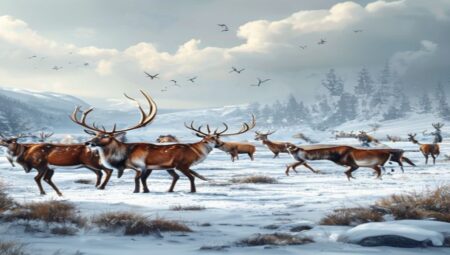
The Sami people, indigenous to the Arctic regions spanning Norway, Sweden, Finland, and Russia, developed a spiritual ecosystem where animals functioned as both ecological anchors and mythological mediators. Their folklore does not treat fauna as mere symbols but as active participants in a reciprocal relationship with humans. Reindeer occupy the central position in this cosmology, representing survival, seasonal migration, and the cyclical nature of life. The animal’s antlers were historically mapped to constellations, while its bones formed the structural framework for noaidi (shamanic) drums used in divination rituals.
- Bear held sacred status across Sami territories. Hunters avoided uttering its true name, substituting terms like “grandfather” or “forest elder” to prevent spiritual offense. Rituals involving bear bones emphasized respectful return to nature, reinforcing ecological balance through taboo systems.
- Fox appears in northern tales as a shape-shifting trickster linked to Aurboaivi (the sun goddess) and seasonal change. Its adaptability mirrored Sami survival strategies in extreme climates, while its cunning narratives taught ethical boundaries between human ambition and natural limits.
- Eagle and owl functioned as sky messengers and boundary guardians. The eagle’s flight patterns dictated hunting routes and weather predictions, whereas the owl’s nocturnal presence connected communities to ancestral wisdom and unseen realms during winter solstice ceremonies.
- Wolf and wolverine embodied resilience and territorial sovereignty. Folktales attributed strategic intelligence to these predators, transforming them from threats into respected teachers of endurance and communal defense mechanisms.
Mythological frameworks surrounding these creatures operated through oral transmission, joik vocalizations, and drum symbolism rather than written texts. The noaidi interpreted animal behavior during trance states to forecast harvest yields, migration shifts, and spiritual disturbances. Ritual offerings at sieidi (sacred stones) often included reindeer fat or fish scales to maintain harmonic relations with forest and sea spirits. This animistic structure prevented resource exploitation by embedding conservation ethics into religious practice.
Contemporary Sami communities reclaim these narratives as tools for cultural resilience and environmental advocacy. Traditional ecological knowledge embedded in animal folklore informs modern land management policies, particularly regarding reindeer herding rights and Arctic biodiversity protection. The mythological reverence for species once deemed sacred now supports legal frameworks against habitat fragmentation. By translating ancestral cosmology into present-day conservation discourse, Sami cultural impact extends far beyond historical storytelling into active geopolitical and ecological stewardship.
Reindeer Origins and Spiritual Significance in Sámi Cosmology
The reindeer occupies a central position in Sámi origin narratives, where it emerges not merely as livestock but as a primordial entity shaped by the same forces that formed the earth and sky. Traditional oral accounts describe the first reindeer as gifts from the supernatural realm, often linked to the creator figure or ancestral spirits who distributed life across the tundra. These stories emphasize a reciprocal relationship between humans and animals, where survival depends on mutual respect rather than domination. The animal’s ability to traverse harsh landscapes without leaving permanent traces reinforced its role as a guide through both physical and spiritual territories.
Within Sámi cosmology, the reindeer functions as a bridge between the visible world and invisible realms. Drum patterns frequently depict reindeer antlers mapping celestial movements, with each curve representing a phase of lunar or solar cycles. Shamans interpreted reindeer behavior during migrations as omens, reading changes in herd direction or vocalizations to forecast weather shifts and hunting success. The creature’s seasonal transformations—shedding and regrowing antlers, altering coat density—mirrored broader cosmological concepts of renewal, balance, and cyclical time. Rituals honoring the first kill or the autumn migration involved specific chants and offerings placed at sacred stones, acknowledging the reindeer as a mediator rather than a resource.
- Migration routes aligned with ancient ritual sites across Fennoscandia, proving that spiritual geography and survival strategy converged in traditional worldviews.
- Community calendars structured around calving seasons, rutting periods, and winter feeding grounds embedded temporal markers directly into cosmological frameworks.
- Hooves breaking ice to access lichen during deep snowfall symbolized divine intervention and sustained the belief that the animal provided direct sustenance from the earth’s core.
Contemporary Sámi scholars continue analyzing drum imagery and historical accounts to document how reindeer symbolism shaped governance, kinship systems, and land rights claims long before colonial boundaries divided traditional territories. The spiritual architecture surrounding the species remains a living framework for cultural continuity, ecological stewardship, and identity preservation across northern latitudes.
Ritual Applications and Community Traditions Surrounding Reindeer
Reindeer function as spiritual intermediaries within indigenous cosmology, structuring seasonal rites that synchronize human activity with tundra ec
The Bear Odaa: Sacred Prohibitions and Shamanic Transformation
The reverence for the bear within Sámi cosmology operates through a complex framework of linguistic avoidance and ritual discipline. Communities historically substituted direct references with circumlocutions, euphemisms, and descriptive phrases to prevent invoking the animal’s presence or anger. This semantic distancing functioned as both spiritual protection and ecological strategy, reinforcing respect for a predator that dictated survival patterns across taiga and tundra territories.
Ritual protocols surrounding the bear demanded strict adherence to prescribed behaviors. Participants observed dietary restrictions, avoided certain tools during processing, and followed precise sequences for dismantling carcasses. The preservation of skeletal elements required careful handling, as bones were believed to carry residual spiritual potency. Returning these fragments to rivers or forest soil completed the cycle of exchange, ensuring the creature’s spirit could regenerate in its original habitat.
Shamanic mediation formed the structural core of bear ceremonies. The noaidi entered controlled trance states through rhythmic drumming and vocal invocations, navigating liminal spaces to communicate with the bear’s guiding essence. These encounters rarely depicted literal transformation; instead, they emphasized boundary crossing, knowledge acquisition, and reciprocal negotiation between human settlements and wild domains. Ritual leaders documented omens, interpreted animal behavior during hunts, and calibrated community actions according to spiritual feedback received during drum journeys.
- Linguistic taboos prevented accidental invocation of the bear’s power
- Skeletal preservation maintained ecological and metaphysical continuity
- Trance protocols enabled direct negotiation with spirit entities
- Ritual timing synchronized with seasonal migration patterns
The ceremonial architecture relied on precise coordination between environmental markers and spiritual directives. Communities tracked lunar phases, snow depth, and prey availability to determine optimal moments for engagement. Failure to observe these parameters triggered corrective measures, including fasting periods, purification rites, and adjustments to hunting routes. The bear’s symbolic weight extended beyond mythology; it functioned as a regulatory mechanism governing resource allocation, social cohesion, and territorial boundaries across generations.
Hunting Customs and Post-Hunt Ritual Practices
The Sami hunting framework operated as a reciprocal spiritual contract rather than a mere survival activity. Before tracking reindeer, bear, or wolverine, hunters underwent purification rituals overseen by the noaidi, who interpreted drum patterns and animal behavior to determine favorable conditions. Strict taboos governed camp conduct: whispering was prohibited, menstrual women avoided hunting grounds, and sharp iron tools were often wrapped in birch bark to prevent spiritual contamination. Tracking methods relied on generational knowledge of snow tracks, wind direction, and seasonal migration routes, but success depended entirely on maintaining ecological and spiritual balance. The bear occupied the highest ritual status among hunted fauna. When a bear was taken, hunters observed absolute silence until the carcass reached the processing site. Reindeer hunts followed structured communal drives where participants coordinated movements using specific whistles and smoke signals to guide herds toward prepared enclosures without causing panic.
Post-hunt ceremonies centered on returning vitality to the natural cycle. The first meat from any significant kill was prepared according to ancestral formulas and distributed to elders, children, and those unable to hunt. Bear bones required meticulous placement on elevated platforms or within sacred stone formations called sieidi, ensuring the spirit could reassemble and return to the forest in a future incarnation. Drumming sequences performed by the noaidi acknowledged the animal’s sacrifice while reinforcing community cohesion. Certain vocalizations mimicked
Arctic Fox Giera and Raven Ruohtta in Sámi Oral Narratives
The Arctic fox designated as Giera operates within Sámi narrative structures as a mechanism for tracking ecological thresholds rather than functioning solely as a trickster archetype. Historical accounts emphasize the species’ physiological adaptations to subzero environments, which storytellers translated into frameworks for human resilience. Communities utilized Giera motifs to document seasonal migration corridors and predict snowpack stability. When foxes altered their hunting routes or abandoned traditional den sites, oral traditions recorded these shifts as indicators of broader climatic transitions. The animal frequently appears in accounts describing boundary negotiations between domestic spaces and uninhabited terrain. Hunters employed Giera narratives to reinforce protocols regarding meat preservation, cache placement, and silence during tracking phases.
Ruohtta commands a more expansive cosmological position across Sámi oral cycles. Raven mythology centers on territorial modification and knowledge transmission. Early recordings describe Ruohtta carving drainage patterns, redistributing mineral deposits, and introducing controlled vegetation management techniques that later informed land stewardship practices throughout Sápmi. The bird’s vocal repertoire served as a mnemonic device for decoding animal behavior, atmospheric pressure changes, and ice formation patterns. Elders positioned Ruohtta alongside ancestral figures to evaluate communal resource distribution and highlight consequences of ecological overexploitation. Narrative structures place the raven in dialogue with human protagonists, establishing behavioral benchmarks for patience, observation, and reciprocal exchange.
- Ecosystem Indicators: Both species functioned as living barometers for environmental shifts, with their seasonal behaviors directly mapped onto human settlement patterns.
- Mnemonic Architecture: Storytellers structured tales around specific topographic landmarks, ensuring accurate geographic transmission across generations without written records.
- Social Regulation: Narrative outcomes consistently rewarded communities that practiced resource restraint while punishing those who disrupted ecological balance.
Regional variations exist between Northern Sámi duodji practitioners and Southern Sámi pastoral groups, yet both traditions treat animal cognition as a direct reflection of human environmental literacy. Winter assemblies provided the structural context for transmitting these accounts when daylight hours contracted and travel became restricted. Performers adapted narrative pacing to match audience familiarity with local topography
Symbolic Roles of Tricksters, Guides, and Seasonal Omens
In Sámi cosmology, animals function as dynamic metaphors for survival, ecological balance, and spiritual navigation rather than static mythological figures. The trickster archetype emerges prominently through the Arctic fox and the wolverine, both embodying strategic adaptability in extreme environments. The fox operates as a boundary-crossing entity, using camouflage and cunning to outmaneuver predators while simultaneously teaching communities the value of resourcefulness during famine seasons. Similarly, the wolverine represents relentless endurance, its solitary hunting patterns reinforcing cultural lessons about patience and territorial awareness. These figures rarely serve as moral exemplars; instead, they illustrate how flexibility and calculated risk-taking sustain life in subarctic ecosystems.
- Spiritual guides predominantly manifest through the reindeer and the polar bear. The reindeer provides both physical migration routes and shamanic pathways, its antler cycles mapping seasonal transitions that dictate hunting and gathering calendars.
- The bear occupies a liminal space between the mortal realm and ancestral spirits, with ritual ceremonies focusing on respectful reconciliation rather than domination.
Seasonal omens rely heavily on avian and aquatic indicators. The white-tailed eagle’s early spring flight patterns signal thawing ice sheets, while ptarmigan plumage shifts dictate optimal hunting windows. Wolf vocalizations during polar nights historically warned of predator movement and atmospheric pressure changes, functioning as a natural meteorological system. Salmon runs in northern rivers mark the precise moment when riverine ecosystems transition from winter dormancy to active reproduction, directly influencing Sámi fishing permissions and communal feasting schedules. These biological signals were never treated as superstition but as empirical data points refined through centuries of environmental observation.
The integration of these animal roles into Sámi worldview demonstrates a highly sophisticated ecological framework. Tricksters encoded survival heuristics, guides mapped navigational and spiritual territories, and omens calibrated human activity to natural rhythms. Modern ethnographic studies confirm that these symbolic systems align remarkably with contemporary wildlife behavior research, validating the empirical foundation embedded within traditional storytelling practices.
Wolves, Golden Eagles, and the Four-Quadrant Worldview
The wolf occupies a central position in Sami cosmology, functioning not merely as a predator but as a spiritual compass and ancestral guardian. In traditional narratives, the grey wolf (*ulfa*) guides lost hunters across frozen tundra and serves as a messenger between the human realm and the *saivo*—the underground spiritual domain where ancestors reside. Its howl is interpreted as a warning of shifting weather patterns or approaching danger, embedding ecological observation within mythic frameworks. Sami elders traditionally avoided killing wolves without ritual justification, recognizing their role in maintaining herd balance and territorial boundaries.
The golden eagle (*guovssat*) commands the upper atmospheric sphere, symbolizing divine surveillance and cosmic order. Its nest placement on remote crags mirrors the sacred *sieidi* sites where offerings were historically made to secure favorable hunting conditions. When the eagle circled above a reindeer camp, it signaled either impending storm activity or the presence of rival clans. The bird’s seasonal migration aligns with the Sami lunar calendar, reinforcing its status as a temporal marker rather than a mere avian species. Ritual dancers wore golden eagle feathers during *joik* ceremonies to channel celestial authority and strengthen communal ties.
- Eastern Quadrant: Associated with dawn, renewal, and the wolf’s role in tracking prey during spring migrations. The direction governs fertility rites and early hunting expeditions.
- Southern Quadrant: Linked to warmth, human settlement, and the eagle’s nesting grounds. This zone dictates agricultural timing and seasonal festivals.
- Western Quadrant: Connected to twilight, death journeys, and the wolf’s function as a psychopomp guiding souls toward the *saivo* realm during winter solstice rituals.
- Northern Quadrant: Reserved for extreme cold, celestial navigation, and the eagle’s role in reading auroral patterns to forecast long-term climate shifts.
This four-part spatial model does not operate as a rigid grid but as a dynamic ecological matrix. Each quadrant corresponds to specific animal behaviors that Sami communities decoded through generations of observation. The wolf’s territorial patrols map resource distribution, while the eagle’s flight paths reveal atmospheric pressure changes. Together, they form a living cartography that predates modern meteorological instruments by centuries. Contemporary ethnographers note that these frameworks remain embedded in reindeer husbandry practices, where animal movement patterns still inform grazing rotations across Sápmi. Archival records from nineteenth-century missionary accounts inadvertently preserve these classifications, noting how Sami hunters tracked wolf den sites to locate mineral deposits and eagle roosts to identify wind corridors. The integration of fauna and cardinal directions creates a self-regulating knowledge system that balances spiritual reverence with practical survival strategies.
Totemic Lineages and Ecological Harmony in Traditional Lore
Traditional Sami cosmology constructs animal identities not as mere fauna but as ancestral kin and spiritual architects of survival. Totemic lineages functioned as the foundational framework for clan organization, where each family group claimed descent from or protection by specific creatures such as the reindeer, bear, arctic fox, whitefish, or golden eagle. These connections were never symbolic abstractions; they dictated social structure, marriage rules, hunting territories, and ritual obligations. A lineage bound to the bear, for instance, observed strict behavioral taboos mirroring ursine traits: silence in sacred spaces, avoidance of direct eye contact with elders during ceremonies, and seasonal migration patterns aligned with predator movements rather than agricultural calendars.
Ecosystem balance remained the operational core of these belief systems. The Sami conceptualized the tundra, taiga, and fjell landscapes as interconnected nervous systems where human activity required continuous calibration. Animal spirits were understood as autonomous agents possessing knowledge inaccessible to mortal hunters. Before any harvest, rituals involving smoked reindeer antlers, copper coins, or dried lichen were placed at sieidi sites to negotiate permission and ensure reciprocal generosity. This transactional spirituality prevented resource depletion by embedding ecological limits within sacred law. Overhunting triggered not merely economic loss but spiritual rupture, manifesting as failed migrations, illness, or communal misfortune.
- Reindeer lineages governed seasonal pasturage rotation, preventing overgrazing through kinship-based grazing rights and sacred boundaries marked by stone cairns.
- Bear worship protocols required complete silence during butchery, ritual washing of bones, and ceremonial singing to return the spirit to the forest realm intact.
- Fish and waterway ancestors dictated fishing seasons through dream interpretation and lunar phases, ensuring spawning grounds remained undisturbed during critical reproductive windows.
Modern ecological studies increasingly validate these traditional mechanisms. The Sami practice of rotational grazing, species-specific harvest quotas, and habitat preservation emerged from generations of totemic observation rather than abstract conservation theory. When a clan lost its connection to a specific animal lineage through cultural disruption or forced assimilation, local biodiversity often declined rapidly, demonstrating that spiritual kinship functioned as an operational management system. The endurance of these ecological principles relies on maintaining the linguistic and ritual frameworks that encode sustainable behavior within ancestral memory.
Contemporary Relevance of Sámi Animal Symbolism
Sámi animal symbolism has transitioned from oral tradition into a structured framework for cultural preservation, ecological advocacy, and indigenous rights across northern Scandinavia and Finland. Modern Sámi communities actively weave traditional fauna narratives into contemporary design, education, and environmental policy. Reindeer imagery dominates duodji craftsmanship and fashion collections, symbolizing resilience and sustainable land management rather than historical pastoral economics. This visual language reinforces territorial sovereignty while addressing global conversations about climate adaptation and Arctic biodiversity loss.
- Bear symbolism has resurged in conservation campaigns, linking ancient hunting taboos with modern wildlife protection ethics. Sámi activists reference bear reverence when advocating against industrial mining projects that fragment forest habitats essential for both fauna migration and cultural practice.
- Raven and Arctic fox motifs appear frequently on digital storytelling platforms, functioning as metaphors for knowledge transmission across generations. Educational institutions in Tromsø, Finnmark, and Sápmi incorporate these symbols into bilingual curricula to strengthen youth engagement with ancestral cosmologies.
The revival extends beyond cultural expression into legal and political spheres. Traditional animal-based worldview provides a structured ethical framework for land rights litigation. Regional courts increasingly recognize how Sámi spiritual relationships with reindeer, wolves, and golden eagles inform sustainable resource management agreements. International indigenous networks amplify these narratives, positioning Sámi ecological philosophy as a viable alternative to extractive economic models.
Contemporary media production further accelerates this relevance. Documentary filmmakers, independent publishers, and digital artists utilize animal symbolism to challenge stereotypical representations of Arctic life. Streaming platforms host series where reindeer migrations map onto modern infrastructure conflicts, while graphic novels reinterpret raven trickster tales as critiques of colonial land division. These projects generate measurable engagement across Scandinavia and beyond, demonstrating that ancestral iconography functions as both cultural anchor and progressive discourse tool.
Environmental organizations collaborate with Sámi knowledge holders to develop habitat restoration programs grounded in traditional animal behavior observations. Monitoring techniques derived from historical reindeer herding patterns now inform GPS tracking studies and wetland conservation strategies. This synthesis of ancient observation and modern methodology validates indigenous epistemologies within scientific institutions, ensuring that Sámi animal symbolism remains a living, evolving component of contemporary northern European identity.
Modern Storytelling, Artistic Expression, and Language Preservation
Contemporary Sami creators are actively integrating traditional animal motifs into digital narratives, graphic novels, and immersive installations. These works do not merely adapt folklore; they recontextualize ecological wisdom and spiritual relationships with species like the wolf, bear, and reindeer for modern audiences. Artists utilize these symbols to address climate change, land rights, and cultural resilience, transforming ancient narratives into actionable contemporary discourse.
Language preservation remains deeply tied to these artistic endeavors. When writers and illustrators publish works featuring Sami animal terminology, they create living dictionaries that engage younger generations. The phonetic complexity of North Sami terms for animal behavior, migration patterns, and seasonal interactions becomes accessible through visual media and interactive storytelling platforms. Educational institutions now collaborate with indigenous filmmakers and animators to produce curriculum materials where traditional ecological knowledge is taught alongside linguistic structures. Researchers analyze how visual metaphors accelerate vocabulary retention, confirming that symbolic animal imagery serves as a cognitive anchor for second-language learners.
- Digital archives map regional dialect variations across Sápmi, treating distinct animal classifications as evidence of historical adaptation to diverse Arctic environments.
- Musicians and sound designers incorporate recorded vocalizations from reindeer herders, weaving acoustic heritage into contemporary compositions that support language revitalization initiatives.
- Open-source creative platforms host collaborative projects where elders, linguists, and digital artists co-author narratives that maintain strict cultural protocols while expanding global reach.
The intersection of folklore and modern media facilitates cross-cultural dialogue without diluting indigenous ownership. Traditional animal symbolism functions as a living framework for language acquisition, artistic innovation, and intergenerational knowledge transfer. Contemporary production
Indigenous Conservation Efforts and Intergenerational Knowledge Transfer
Traditional ecological understanding embedded in Sami narratives functions as a living conservation framework that directly informs contemporary habitat management. Reindeer herding communities rely on multi-generational route mapping to prevent overgrazing and maintain lichen bed regeneration cycles. These historical migration corridors overlap with critical biodiversity zones, allowing modern conservation planners to prioritize low-impact grazing schedules alongside wildlife corridor preservation. Sacred landscape markers, often tied to bear worship or wolf spirit sites, naturally align with ecological buffer zones that protect apex predator territories and reduce human-wildlife conflict.
- Biocultural monitoring networks: Local herders document animal behavior shifts, snowpack changes, and vegetation stress using generational observation techniques now digitized through community-run databases.
- Language-driven ecological literacy: Sami vocabulary contains precise classifications for reindeer coat conditions, wolf track differentiation, and eagle hunting patterns, enabling accurate field reporting without relying on standardized scientific taxonomies.
- Youth mentorship structures: Elders conduct seasonal field sessions where juveniles learn terrain reading, animal tracking, and sustainable harvest protocols through direct practice rather than classroom instruction.
Institutional partnerships increasingly recognize that preserving folkloric animal symbolism requires protecting the actual ecosystems those symbols represent. Conservation grants now fund dual-track initiatives where traditional knowledge holders collaborate with ecologists to map historical species ranges against climate-driven range shifts. This integration prevents conservation strategies from becoming purely technical, ensuring that habitat restoration respects cultural boundaries and spiritual site protections. Community-led land use agreements frequently reference ancestral animal territories to negotiate grazing quotas, hunting seasons, and infrastructure setbacks, creating legally enforceable buffers around sensitive breeding grounds. The continuity of this knowledge transfer depends on active language revitalization programs, as ecological terminology loses precision when translated into dominant languages. Maintaining native dialects ensures that nuanced conservation concepts remain intact for future practitioners.
“`html
The Most Important Animals in Sami Folklore
Frequently Asked Questions about sacred and symbolic animals in Sámi tradition
What is The Most Important Animals in Sami Folklore?
The most important animal in Sámi folklore is the reindeer. Revered as a sacred companion and provider, the reindeer is central to Sámi survival, mythology, and spiritual identity. Other highly significant animals include the wolf, bear, eagle, and fox, each carrying deep symbolic meaning in Sámi oral traditions.
Key facts about The Most Important Animals in Sami Folklore
- Reindeer: Considered a gift from the gods; the reindeer provided food, clothing, shelter, and tools. Sámi drum ceremonies often featured reindeer imagery.
- Bear: Known as “Nollaša” or “Bierkå,” the bear was treated with extreme reverence. Before killing a bear, Sámi shamans performed rituals to appease its spirit. The word for “bear” was never spoken directly out of fear.
- Wolf: Symbolized both danger and wisdom. Wolves were seen as powerful spirits that could test the courage of hunters and warriors.
- Eagle (or Raven): Represented divine messages and omens. The eagle was associated with the sky god, Bieggolmájná, and used in divination practices.
- Fox: Viewed as a trickster figure in many Sámi tales, embodying cunning and adaptability.
- Sami Drums: Sacred joik drums were painted with animal figures that served as maps to the spirit world during shamanic journeys.
“`