Understanding the Sami People and Their Cultural Heritage
The Sami represent the only indigenous population with legally recognized status across four sovereign nations: Norway, Sweden, Finland, and Russia. Historically spanning Sápmi, a continuous Arctic and subarctic territory north of the Polar Circle, contemporary Sami communities number approximately eighty thousand individuals dispersed throughout northern Scandinavia and the western Kola Peninsula. Unlike centralized ethnic groups, Sami identity functions as a decentralized network bound by shared ancestral territories, linguistic continuity, and adaptive survival strategies in extreme climatic zones.
Linguistically, Sami languages belong to the Uralic family, positioning them geographically distant from neighboring Germanic and Slavic tongues. North Sami remains the most widely spoken variant, yet seven distinct regional languages persist, including Lule Sami, South Sami, Inari Sami, and Skolt Sami. Decades of state-sponsored assimilation policies severely depleted native speakers, prompting UNESCO to classify multiple variants as critically endangered or vulnerable. Recent educational reforms have reintroduced mother-tongue instruction into municipal curricula, stabilizing transmission rates among younger demographics.
- Duodji: Functional and decorative craftsmanship utilizing reindeer antler, birch root, silver, and wool, governed by strict regional patterns that signal familial lineage and geographic origin.
- Joik Tradition: A non-linear vocal technique predating written notation, functioning as an auditory portrait of persons, landscapes, or natural phenomena rather than conventional storytelling.
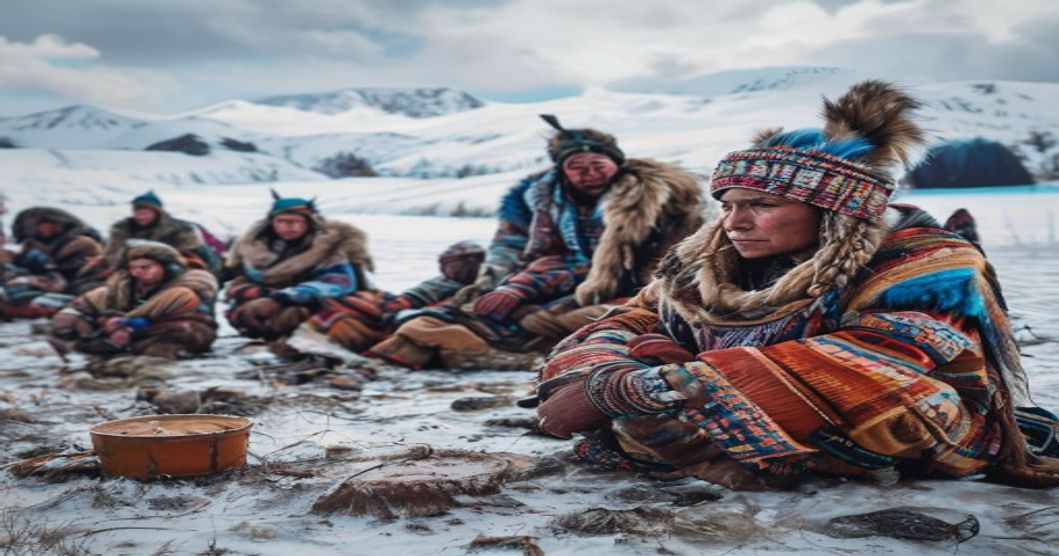
- Gákti Attire: Regionally coded traditional garments featuring specific color palettes and embroidery motifs that historically indicated clan affiliation, marital status, and local dialect boundaries.
- Reindeer Husbandry: A migratory pastoral system regulated by seasonal pastures, requiring intricate knowledge of snow conditions, lichen growth cycles, and animal behavior to maintain herd viability.
Historical marginalization peaked during the nineteenth and twentieth centuries when missionary activities and national education systems actively suppressed indigenous practices. Institutional resistance gradually shifted toward legal recognition following the establishment of regional Sami parliaments beginning in 1973. Contemporary cultural revitalization leverages digital archives, transnational advocacy networks, and international art platforms to reclaim narrative authority. Modern practitioners navigate dual realities: preserving ancestral protocols while integrating contemporary economic models and environmental science into traditional knowledge systems.
This layered historical trajectory directly informs current cultural tourism frameworks. Authentic engagement requires distinguishing between commercialized performances and community-led initiatives that compensate local artisans, historians, and herders. Visitors accessing these experiences gain exposure to living heritage rather than static museum displays, fostering sustainable economic channels while respecting territorial boundaries and seasonal migration schedules.
Historical Roots of Indigenous Communities in Northern Europe
The earliest human presence in Northern Europe emerged during the late Pleistocene epoch, as retreating glacial sheets opened habitable corridors approximately 10,000 years ago. Archaeological sites across Fennoscandia reveal stratified layers of microlithic tools, reindeer bone deposits, and seasonal encampments that document a continuous indigenous lineage predating all later migrations. These communities developed sophisticated ecological knowledge, structuring their livelihoods around the rhythms of taiga forests, Arctic tundra, and coastal fjords. The Sami ancestors, often identified through distinct lithic traditions and early petroglyph sequences at Alta and Komsa, maintained transhumant patterns that shifted between inland reindeer pastures and marine hunting grounds along the Norwegian and Russian coastlines.
- Evidence of continuous settlement spans from the Ertebølle culture’s coastal foraging networks to the specialized antler-working techniques documented in Mesolithic grave sites across northern Sweden and Finland.
- Paleoclimatic shifts during the Holocene optimum forced adaptive strategies, including the gradual domestication of Rangifer tarandus around 300 BCE and the codification of seasonal migration routes that later formalized into modern reindeer husbandry systems.
- Political fragmentation began with medieval coronations in Norway, Sweden, Denmark, and Russia, which imposed arbitrary borders across ancestral territories. The 1751 Stockholm Treaty attempted to regulate grazing rights but ultimately accelerated territorial encroachment, while 19th-century assimilation policies restricted language use and land ownership.
Linguistic reconstruction places the indigenous substrate of Northern Europe within the Uralic family, with proto-Samic diverging from Finnic branches during the first millennium CE. Oral transmission preserved ecological calendars, navigation techniques, and kinship structures that enabled survival in subarctic conditions where agricultural expansion proved unviable. Contemporary heritage corridors in Tromsø, Lapland, and Murmansk regions directly overlay these ancient pathways, offering structured access to rock art panels, sod house foundations, and reconstructed seasonal camps. The persistence of joik vocalization techniques, drum divination practices, and winter shelter architecture demonstrates functional continuity rather than cultural revival, providing authenticity that distinguishes established heritage tourism from commercialized reenactment. Modern documentation projects cross-reference satellite imagery of historical grazing routes with ethnographic records, creating geospatial databases that guide responsible visitation protocols and minimize ecological strain on fragile tundra ecosystems.
Core Traditions Shaping Authentic Cultural Identity
The Sami cultural identity remains fundamentally anchored in practices developed over millennia within the Arctic and subarctic ecosystems of Sápmi. These traditions function simultaneously as economic foundations, navigation systems across seasonal landscapes, and mechanisms for transmitting environmental knowledge. Central to this framework is reindeer husbandry, which dictates daily rhythms through precise understanding of animal behavior, veterinary practices using traditional botanical remedies, and coordination across family clusters known as siidas. Herding routes follow ancient migration corridors where terrain composition, lichen growth cycles, and weather patterns dictate movement. This mobility requires continuous adaptation rather than static preservation.
- Duodji represents the material expression of Sami craftsmanship, where every tool, garment, and decorative object serves dual purposes of utility and cultural notation. Patterns encode clan lineage, regional origin, and seasonal availability of raw materials such as reindeer antler, birch root, and moose hide.
- Joik operates as an acoustic mapping system rather than conventional music. Each composition corresponds to a specific landscape feature, individual, or historical event, utilizing microtonal shifts and repetitive phrasing to evoke spatial memory rather than narrative progression.
- Lavvu construction demonstrates adaptive architectural engineering. The conical framework utilizes flexible birch poles lashed with reindeer sinew, while the inner fire pit regulates temperature through draft control and ash management. Spatial arrangement within the dwelling reflects kinship hierarchies and guest protocols.
Language preservation remains the structural backbone of cultural continuity. The recognized Sami dialect groups contain specialized lexicons for snow conditions, reindeer physiology, and terrain classification that exceed standard European language descriptive capacity. Oral transmission methods prioritize contextual learning over formal instruction, embedding vocabulary within practical activities such as hide processing, net weaving, and ice fishing. Modern documentation initiatives utilize phonetic recording alongside community-led curriculum development to maintain grammatical integrity without fossilizing usage patterns.
Cultural tourism frameworks that successfully integrate these traditions avoid theatrical simplification by implementing co-management agreements with local siidas. Authentic experiences require visitors to engage with seasonal work cycles rather than curated demonstrations. Guided participation in duodji workshops emphasizes material sourcing ethics and tool maintenance protocols. Reindeer migration tracking combines satellite telemetry data with ancestral route knowledge, demonstrating how traditional ecological intelligence complements contemporary conservation science. This approach generates measurable economic returns while preserving the structural integrity of cultural transmission systems.
Language Preservation and Modern Revival Initiatives
The linguistic landscape of the Sami peoples spans over a dozen distinct dialects, each carrying centuries of ecological knowledge, oral histories, and navigational expertise. Decades of assimilation policies across Norway, Sweden, Finland, and Russia severely reduced native speaker populations, but systematic revitalization efforts have reversed this trajectory. Contemporary preservation relies on multimodal documentation strategies that combine academic linguistics with community-driven archiving. Digital platforms now host interactive dialect maps, audio archives recorded by elder speakers, and crowdsourced transcription tools that democratize access to endangered variants.
Modern revival initiatives prioritize intergenerational transmission through structured immersion models. Municipal governments in northern Scandinavia have expanded bilingual curriculum frameworks, integrating Sámi language instruction from early childhood through secondary education. Universities including the University of Lapland and UiT The Arctic University of Norway now offer accredited degree programs focused on Sámi linguistics, folklore documentation, and Indigenous pedagogy. These academic pipelines directly support teacher certification pathways, ensuring qualified educators can deliver content in North Sámi, Lule Sámi, South Sámi, and other regional variants.
- Digital Lexicography Projects: Open-source dictionaries like the Digital Dictionary of the Sámi Languages provide real-time morphological parsing, audio pronunciation guides, and cross-dialect comparison features accessible to researchers and learners worldwide.
- Mobile Immersion Applications: Community-developed apps utilize spaced repetition algorithms and geolocated vocabulary modules that teach place names, reindeer herding terminology, and seasonal ecological concepts in context.
- Cultural Tourism Integration: Visitor programs now feature guided language workshops where travelers practice basic communicative phrases alongside Sami guides, with revenue directly funding youth mentorship and elder documentation grants.
Funding mechanisms increasingly operate through transnational Nordic cooperation frameworks and European Union Indigenous innovation funds. Grant allocation prioritizes grassroots initiatives that measure success through speaker retention rates rather than mere enrollment numbers. Tourism operators partnering with Sami siidas implement language sustainability protocols, ensuring commercial activities reinforce rather than exploit linguistic heritage. The convergence of technological accessibility, formal education reform, and economically sustainable tourism creates a self-reinforcing ecosystem where every documented word, taught classroom, and visitor engagement strengthens the structural resilience of Sami languages for future generations.
Top Destinations for Immersive Sami Experiences
The Sápmi region spans across four countries, yet authentic cultural immersion requires targeting specific hubs where living traditions remain active rather than staged performances. Travelers seeking genuine connections must prioritize locations where reindeer herding, seasonal migration patterns, and indigenous governance still dictate the rhythm of daily life.
- Kautokeino (Guovdageaidnu), Norway: Recognized as the spiritual center of Sámi culture, this municipality hosts the annual Duodji Festival and the Joik competition. Visitors can arrange private reindeer herding excursions with local families, participate in traditional meat processing, and stay in lavvu camps where elders share oral histories around open fires.
- Inari and Utsjoki, Finland: The Siida Museum in Inari provides essential historical context, but true immersion occurs beyond the exhibits. Guided snowmobile safaris follow ancient migration routes used for centuries. Utsjoki offers access to the northernmost Sámi villages, where visitors can learn duodji woodworking techniques and witness traditional fishing methods adapted to subarctic conditions.
- Abisko and Kiruna, Sweden: The Swedish Lapland area provides structured cultural programs coordinated with the Sami Parliament. Operators facilitate multi-day treks that combine reindeer sledding, traditional cooking workshops using cloudberries and smoked fish, and overnight stays in heated tents equipped with reindeer hides.
- Tromsø Region, Norway: While Tromsø itself leans urban, nearby settlements like Skaidi and Karasjok host the Sámi Parliament building and cultural centers. Day trips from Tromsø connect travelers to active herding communities where participants assist with fence repairs, calf branding during spring roundups, and learning navigation by star patterns.
Authentic engagement demands seasonal awareness. Spring brings lambing season and traditional camp relocations, while winter offers extended darkness ideal for aurora viewing alongside cultural storytelling. Booking through locally owned operators registered with indigenous tourism associations ensures revenue supports community development directly. Always verify guide credentials, as legitimate programs require herders to hold official reindeer husbandry licenses. Respecting sacred sites, avoiding drone usage near grazing areas, and purchasing duodji items directly from certified artisans complete a responsible cultural itinerary.
Lapland Regions Across Norway Sweden and Finland
The Lapland region spans a continuous geographical and cultural zone across the northern territories of Norway, Sweden, and Finland, collectively recognized as Sápmi. This cross-border landscape defies modern political boundaries, preserving centuries-old indigenous livelihoods alongside carefully managed tourism infrastructure. Each national sector offers distinct environmental characteristics while sharing core Sámi heritage elements.
Norwegian Lapland centers on Finnmark county and Troms og Finnmark, where rugged coastal fjords transition into mountain plateaus. The Reisa National Park area maintains strict conservation protocols that limit commercial development, allowing visitors to engage with traditional duodji craftsmanship and joik vocal traditions in controlled cultural centers. Local tourism operators emphasize low-impact travel corridors along the E6 highway, connecting Tromsø to Kirkenes through designated Sámi heritage routes.
Swedish Lapland encompasses Norrbotten County, with Kiruna serving as the primary administrative and logistical hub. The region integrates active reindeer husbandry zones with designated tourist pathways, ensuring herding operations remain uninterrupted. Winter tourism relies on established snowmobile trails and guided wolf-tracking excursions in Abisko National Park. Municipal agreements between local municipalities and the Swedish Sámi Parliament dictate seasonal activity windows, balancing ecological preservation with visitor access.
Finnish Lapland, officially designated as Lappi province, features concentrated cultural tourism infrastructure around Rovaniemi and Saariselkä. The area hosts specialized facilities like the Sámi Museum Siida, which documents linguistic evolution and historical trade networks across the Barents region. Accommodation models have shifted toward climate-controlled traditional lavvu camps and transparent-roofed structures optimized for polar night observation. Transport networks utilize seasonal ice roads and fixed-wing aircraft to access remote wilderness zones during peak Arctic winter months.
- Cross-border Sámi cultural preservation relies on coordinated heritage databases tracking dialect variations across all three nations
- Tourism operators implement mandatory guided protocols for reindeer interaction, eliminating unregulated wildlife encounters
- Seasonal activity calendars align with traditional herding cycles rather than commercial demand peaks
- Infrastructure development follows strict environmental impact assessments approved by regional Sámi councils
The geographical continuity of this region enables synchronized cultural programming, where winter festivals, spring migration tracking, and summer midnight sun celebrations follow identical ecological markers regardless of national jurisdiction. Visitors experience consistent cultural authenticity through standardized interpretation frameworks that prioritize indigenous knowledge transmission over commercial spectacle.
Svalbard and Remote Arctic Settlements for Rare Encounters
Svalbard’s archipelago sits at 78 degrees north latitude, positioning it as one of the most accessible yet strictly regulated Arctic territories. Longyearbyen functions as the administrative and commercial hub, while Barentsburg remains an operational Russian mining settlement and Ny-Ålesund operates as an international scientific research village. Each location enforces distinct protocols to preserve fragile polar ecosystems and maintain historical infrastructure.
- Wildlife observation requires licensed guides due to active polar bear populations and strict environmental permits.
- Glacier trekking on Axel Heiberg or Monacobreen demands specialized equipment and continuous weather monitoring systems.
- The Svalbard Treaty of 1920 guarantees equal economic access for signatory nations, resulting in a multilingual community where Norwegian, Russian, English, and scientific dialects intersect daily.
Seasonal shifts dictate operational windows. The midnight sun period from late April to August enables continuous fieldwork and extended wildlife tracking, whereas the polar night between November and January supports aurora observation and ice cave exploration under low-temperature conditions. Visitor accommodation operates on strict capacity limits, with most lodging facilities positioned outside protected nature reserves to minimize habitat disruption.
Scientific expeditions departing from Ny-Ålesund contribute to climate modeling, permafrost analysis, and atmospheric research. Historical archives in Longyearbyen document coal mining operations dating back to 1906, alongside early whaling stations that shaped modern Arctic governance frameworks. Cultural tourism operators integrate these historical layers through curated museum visits, archival workshops, and guided heritage walks that contextualize human adaptation to extreme latitudes.
Logistical planning requires advance coordination with the Governor of Svalbard for expedition permits, wildlife safety briefings, and emergency evacuation routing. While Svalbard itself lacks an indigenous population, regional cultural tourism corridors extend into Troms and Finnmark counties, where Sami reindeer herding traditions and historical trade routes inform guided heritage itineraries. Visitor compliance with leave-no-trace regulations ensures minimal soil compaction and protects lichen-dependent grazing zones. Local operators partner with academic institutions to offer field courses that bridge mainland indigenous knowledge systems with Arctic geological mapping techniques.
Urban Cultural Centers in Tromso Kiruna and Rovaniemi
Municipal infrastructure across Tromsø, Kiruna, and Rovaniemi functions as centralized administrative hubs where Sámi cultural preservation directly intersects with modern tourism economics. Tromsø anchors this network through the Sámi University of Applied Sciences, which operates degree programs in indigenous language pedagogy, Arctic resource management, and contemporary Sámi art theory. The city’s Reindance House maintains a digital archive of joik recordings and seasonal migration maps, while urban galleries rotate exhibitions featuring certified Duodji artisans. Tour operators partner with academic departments to develop curriculum-aligned cultural tours that emphasize historical continuity, land stewardship protocols, and cross-border Sámi governance frameworks.
Kiruna’s municipal cultural programming addresses the tension between extractive industry development and indigenous territorial rights. The city supports regional heritage centers documenting reindeer herding cooperatives, Lappish trading history, and contemporary Sami political representation in Nordic parliamentary systems. Urban tourism infrastructure routes visitors through certified craft workshops, historical mining-Sami interaction sites, and municipal libraries housing bilingual archival materials. Guide certification programs require applicants to complete indigenous-led training modules covering traditional ecological knowledge, seasonal resource mapping, and ethical storytelling standards.
Rovaniemi operates as Finland’s primary Sámi cultural tourism gateway, with the Saunalampi Crafts Centre regulating artisan licensing and quality control for textile production, antler carving, and seasonal tool fabrication. Municipal visitor management systems integrate Sami historical narratives into standardized accommodation packages, ensuring economic benefits flow directly to indigenous cooperatives. City museums maintain permanent collections detailing 20th-century assimilation legislation alongside current language revitalization statistics. Urban tourism boards coordinate seasonal programming that synchronizes traditional reindeer migration cycles with contemporary cultural festivals, creating predictable demand patterns for authentic heritage experiences.
Authentic Tourism Activities and Seasonal Highlights
Visitors seeking genuine engagement with Sámi heritage can participate in community-organized experiences that prioritize cultural integrity over spectacle. Reindeer herding excursions offer direct insight into transhumant practices, where local guides explain seasonal migration routes, animal husbandry techniques, and the ecological balance central to Sámi livelihoods. Duodji workshops teach traditional handicraft methods using locally sourced materials such as birch bark, antler, and reindeer hide, emphasizing sustainable resource management passed down through generations. These programs operate under explicit guidance from Sámi cultural councils to ensure historical accuracy and respect for living traditions.
- Winter Season: Extended darkness creates optimal conditions for aurora viewing from heated lavvu tents. Dog sledding across frozen landscapes follows established Sámi trails, while ice fishing demonstrates historical survival techniques adapted to modern recreational contexts. Traditional smoking methods preserve fish and meat using locally harvested juniper branches.
- Spring Transition: Reindeer calving periods allow visitors to observe birthing behaviors and learn about traditional tracking methods used by herders to locate dispersed offspring across vast territories. Wildflower meadows emerge, providing foraging opportunities for edible lichens and early medicinal plants documented in Sámi pharmacopeia.
- Summer Months: Midnight sun conditions enable extended hiking through subarctic terrain, guided botanical identification sessions, and boat excursions along coastal fjords where Sámi fishing traditions remain active. Traditional turf huts offer overnight stays with stargazing education focused on pre-industrial navigation techniques.
- Autumn Foliage: The migration of reindeer herds toward winter pastures coincides with peak tourism windows. Guided walks trace historical trade routes, highlighting the intersection of commerce, cultural exchange, and environmental adaptation. Harvest gatherings demonstrate traditional berry processing and preservation methods using clay pots and natural preservatives.
Authentic programming requires direct collaboration with Sámi-owned enterprises to ensure revenue supports community development and cultural preservation. Educational components address land rights, language revitalization efforts, and contemporary challenges facing indigenous populations. Visitors engage in structured dialogues about cultural protocols, including appropriate photography practices and respectful interaction with sacred sites. Seasonal festivals such as the Áhkká Music Festival or local duodji exhibitions provide immersive exposure to living traditions rather than static historical displays.
Reindeer Husbandry Visits and Traditional Herding Practices
Reindeer husbandry functions as the economic backbone and spiritual foundation of Sami communities across northern Fennoscandia and the Kola Peninsula. Cultural tourism built around these practices delivers direct exposure to indigenous land management systems that have regulated Arctic ecosystems for over a millennium. Guided reindeer camp visits immerse participants in seasonal rhythms dictated by lichen availability, snowpack depth, and predator migration patterns. Guests observe how herders navigate vast territories using vocal calls, hand signals, and terrain reading techniques passed through generations. The experience typically includes hands-on sessions where visitors learn to identify individual animals through ear notches, track antler growth stages, and understand the precise calving windows that require strict grazing rotations.
Traditional herding relies on continuous landscape assessment rather than fixed boundaries. Herders divide territories into siida districts, each optimized for specific seasonal resources. During the annual autumn roundup, scattered herds converge at designated gathering points where offspring are marked, sick animals receive treatment, and winter migration routes are established. Tourists witness this logistical operation unfold across open fells, observing how sled dogs, traditional goahti shelters, and reindeer-drawn sleighs replace modern machinery to maintain ecological balance. The educational framework emphasizes reciprocity: tourism income directly finances herding infrastructure, language documentation projects, and indigenous land rights advocacy.
- Seasonal Migration Tracking: Visitors follow historical grazing corridors mapped through oral tradition and satellite ground-truthing.
- Herding Gear Demonstration: Hands-on instruction on crafting willow traps, hide-lash whips, and antler-handled tools.
- Ecosystem Monitoring: Real-time observation of lichen regeneration zones and predator avoidance strategies.
- Indigenous Knowledge Transfer: Direct dialogue with herders on weather forecasting through moss coloration and bird behavior patterns.
Sustainable reindeer tourism operates within strict carrying capacity limits to prevent overgrazing. Herders enforce mandatory rest periods for summer pastures, allowing cryptogamic crusts to recover before autumn transhumance begins. Participants learn why reindeer diets shift from nitrogen-rich summer grasses to calcium-dense winter lichens, necessitating constant relocation to avoid nutritional depletion. The program explicitly excludes artificial feeding during calving months, preserving natural selection pressures that maintain herd resilience. Revenue allocation follows transparent community governance models, funding university partnerships, digital archiving of herding terminology, and youth apprenticeship programs. This structured engagement transforms passive cultural consumption into active preservation, ensuring traditional practices adapt to contemporary economic demands without compromising ecological integrity.
Duodji Handicraft Workshops and Artisan Market Access
Duodji functions as the material foundation of Sámi cultural tourism, encompassing tools, textiles, and decorative objects crafted from reindeer leather, antler, silver, and traditional plant dyes. Workshops operate on seasonal production cycles dictated by raw material availability and climatic conditions. Participants work alongside certified artisans who demonstrate hand-forging techniques, saddle stitching, and cold hammering using period-accurate implements. Sessions require advance booking due to controlled group capacities and the necessity of maintaining quiet working environments. Instructors enforce strict ethical sourcing protocols, requiring all antlers to be collected exclusively from naturally shed specimens or legally managed herds under Sámi duodji regulations.
The instructional methodology prioritizes technical precision alongside cultural context. Learners progress through structured phases beginning with pattern drafting and material grading before advancing to structural assembly. Artisans integrate oral documentation during demonstrations, explaining how geometric patterns correspond to specific reindeer husbandry regions or family heritage lines. Completed pieces undergo extended curing periods that exceed standard tourist timelines. Visitors must recognize that traditional finishing processes cannot be accelerated without compromising structural integrity or cultural authenticity.
- Primary sales channels include designated Sámi Duodji exhibitions in Jokkmokk, Kiruna, and Karasjok
- The official Sápmi Duodji certification mark legally prohibits non-Sámi production and guarantees geographic origin
- Digital storefronts require artisan verification through the Sámi Handicraft Association’s digital registry
- Regional gallery networks in Tromsø, Rovaniemi, and Alta operate commission-based distribution with audited payment structures
Market participation demands compliance with authenticity verification systems. The Sápmi Duodji logo operates as both consumer protection and cultural safeguard against commercial replication. Registered artisans must maintain traceable supply documentation and submit quarterly production inventories. Pricing reflects material scarcity, labor hours, and heritage value rather than market competition. Effective tourism integration requires visitors to treat workshop participation as skill acquisition first, with retail transactions treated as secondary support mechanisms. This framework preserves intergenerational craftsmanship while establishing economically viable pathways for contemporary Sámi artisans.
Joik Music Performances and Folklore Storytelling Sessions
Joik operates as a living archive of Sami cosmology, where vocal technique replaces conventional melody structures. Performers do not merely sing about landscapes or ancestors; they embody them through sustained tonal patterns, nasal resonance, and rhythmic breath control. Each performance functions as an auditory map, encoding territorial knowledge, seasonal migration routes, and intergenerational memory into sound waves that carry historical continuity.
Folklore storytelling sessions accompanying joik performances follow a deliberate narrative architecture. Elders and cultural practitioners sequence tales around natural phenomena, spiritual thresholds, and community survival strategies. The vocal delivery shifts between spoken cadence and melodic phrasing, marking transitions between mythic timelines and recorded history. These gatherings typically occur within traditional lavvu structures or reconstructed turf houses, where acoustic properties enhance voice projection without electronic amplification.
Cultural tourism operators integrating these practices prioritize community-led programming over commercialized displays. Authentic experiences require participants to engage with preparatory protocols:
- Learning basic Sami greetings and understanding land stewardship principles
- Recognizing the ceremonial weight of specific joik variations tied to family lineage or geographic features
- Booking through indigenous cooperatives that allocate revenue toward language revitalization and artifact preservation initiatives
Performance schedules align with seasonal markers rather than tourist demand cycles, ensuring cultural integrity remains uncompromised.
Visitors observe specific etiquette during sessions: maintaining respectful silence during improvisational segments, avoiding recording without explicit permission, and participating in post-performance dialogue when invited. Many communities now offer guided interpretive materials detailing the linguistic roots of joik terminology, the historical suppression periods that nearly eradicated the practice, and contemporary revival movements led by younger Sami artists. These sessions frequently connect to adjacent cultural activities, including reindeer husbandry demonstrations, traditional skin-tanning workshops, and duodji craft exhibitions.
The integration of joik and folklore into cultural tourism creates measurable outcomes for heritage sustainability. Direct visitor engagement generates funding streams that bypass commercial intermediaries, ensuring economic benefits remain within indigenous networks. Simultaneously, the practice functions as an active pedagogical tool, allowing non-Sami audiences to comprehend complex relationships between acoustic tradition, territorial rights, and ecological knowledge systems. Responsible operators maintain strict content guidelines, preventing appropriation while facilitating meaningful cross-cultural exchange through structured learning frameworks.
Ethical Guidelines for Responsible Cultural Tourism
Responsible engagement with Sami cultural heritage requires strict adherence to principles that prioritize community sovereignty, economic equity, and cultural preservation. Operators and visitors must recognize that Sami territories span multiple national borders, each with distinct legal frameworks governing indigenous rights and land use. Tour initiatives should explicitly align with the United Nations Declaration on the Rights of Indigenous Peoples and local Sami parliamentary guidelines. Financial structures must guarantee direct revenue flow to Sami-owned enterprises, cooperatives, and cultural centers rather than external tour operators or international conglomerates. Transparency in booking platforms and marketing materials prevents misrepresentation of indigenous identity as a generic Scandinavian motif.
- Consent-Driven Documentation: Always secure explicit permission before photographing individuals, dwellings, or sacred sites. Avoid staging rituals or misrepresenting seasonal practices for visual appeal. Cultural expressions such as joik singing and duodji craft production hold deep spiritual and historical significance that transcends commercial display.
- Economic Reciprocity: Contracts and pricing models must include profit-sharing mechanisms with local Sami councils. Verify that wages, equipment rentals, and supply chains prioritize indigenous businesses. Avoid exploitative bargaining or discounting cultural experiences as mere entertainment commodities.
- Ecological Alignment: Traditional reindeer husbandry and land management practices dictate seasonal access restrictions. Tour routes must respect grazing corridors, breeding grounds, and protected wetlands. Utilize low-impact transportation methods and adhere strictly to leave-no-trace protocols across fragile tundra ecosystems.
- Knowledge Transmission: Prioritize programs designed and facilitated by certified Sami educators. Ensure that historical narratives reflect indigenous perspectives rather than colonial archives. Support initiatives that fund language revitalization, apprenticeship networks, and intergenerational skill transfer.
Continuous monitoring and feedback loops are essential for maintaining ethical standards. Establish grievance mechanisms through local Sami authorities to address violations promptly. Regular audits of operational practices against evolving cultural protocols prevent stagnation and ensure long-term sustainability. Implement standardized consent forms for all guided activities, document revenue distribution percentages in public reports, and collaborate with regional tourism boards to update access restrictions based on real-time land use data. When tourism frameworks operate in direct partnership with indigenous governance structures, they transform from extractive activities into sustainable cross-cultural exchanges.
Avoiding Exploitation Through Community Led Itineraries
Cultural tourism involving the Sami people has historically suffered from extractive models that prioritize external profit over indigenous agency. When travel operators design experiences without local input, they frequently reduce complex reindeer-herding traditions, joik vocalizations, and duodji crafts to static museum exhibits or performative spectacles. Community-led itineraries reverse this dynamic by placing governance, storytelling, and economic control directly in the hands of Sami households and cooperatives.
- Narrative Ownership: Itineraries are co-developed through structured consultation with local elders, youth councils, and traditional knowledge holders. This ensures that reindeer migration routes, seasonal food preservation techniques, and spiritual site protocols are presented accurately rather than adapted for foreign expectations.
- Revenue Retention & Transparent Pricing: Direct booking systems and community-owned tour operators eliminate middleman commissions. A documented portion of every booking fee funds language revitalization programs, land rights advocacy, and maintenance of historic lavvu structures.
- Capacity Building & Skill Transfer: Training modules focus on bilingual guiding standards, digital storytelling ethics, and small-business management. Participants complete certified courses in cultural interpretation, enabling them to set professional rates and negotiate contracts without dependency on external agencies.
- Cultural Boundaries & Consent Frameworks: Clearly defined visitation zones restrict access to sacred or ecologically sensitive areas. Visitors sign digital consent agreements that outline photography restrictions, interaction guidelines, and seasonal closures aligned with pastoral calendars.
Implementing this model requires binding memoranda of understanding between tourism boards, Sami parliaments, and municipal authorities. These agreements mandate quarterly audits of guest demographics, guide compensation ratios, and environmental impact metrics. When itineraries remain under community control, economic leakage drops below twelve percent compared to conventional operators that divert sixty-eight percent of expenditure outside the region. The structure also preserves intangible heritage by tying educational fees directly to youth apprenticeships in traditional crafts and reindeer husbandry. Operators who adopt this framework consistently report higher guest retention rates, as travelers increasingly prioritize verifiable ethical standards over superficial cultural consumption. The model aligns with UNWTO guidelines for indigenous tourism while establishing a replicable template for other northern regions facing similar commercialization pressures.
Respecting Sacred Sites and Seasonal Migration Routes
The spiritual landscape of Sápmi is defined by sieidi, ancient sacred stones and rock formations that have served as focal points for offerings and rituals for centuries. These sites are not historical artifacts but active elements of living Sami cosmology. Visitors approaching these locations must recognize them as consecrated spaces where modern tourism practices can cause irreversible cultural and ecological disruption. Establishing distance, avoiding photography without explicit permission, and refraining from leaving physical offerings or removing stones remains fundamental to ethical engagement.
Seasonal migration routes follow millennia-old reindeer herding pathways that traverse national borders across Norway, Sweden, Finland, and Russia. These corridors shift annually based on snow conditions, lichen availability, and herd dynamics. Tourism operators who schedule activities without consulting local siida communities risk interfering with critical calving periods, winter grazing windows, and veterinary interventions. Verified travel plans require direct coordination with registered Sami reindeer herding associations, which manage route usage through traditional knowledge systems adapted to contemporary land-use regulations.
- Prioritize guided experiences led by certified Sami practitioners who can contextualize ecological and spiritual boundaries without compromising sensitive locations.
- Verify seasonal access restrictions through official Sápmi tourism portals, as migration corridors close during calving (late spring) and rutting (autumn) periods to minimize herd stress.
- Adhere to leave-no-trace protocols on tundra terrain, where vegetation regeneration takes decades and vehicle tracks permanently alter drainage patterns essential for reindeer movement.
Cultural tourism infrastructure in the region increasingly emphasizes co-management frameworks. Many lodges and tour companies operate under joint agreements with Sami municipalities, directing a portion of revenue toward land restoration, language documentation, and youth herding apprenticeships. Travelers who engage with these models gain access to authentic seasonal calendars, traditional food preservation techniques, and oral histories that remain outside mainstream commercial circuits. Respecting spatial and temporal boundaries transforms cultural tourism from passive observation into reciprocal exchange, ensuring that Sami heritage remains controlled by its descendants rather than commodified for external consumption.
Practical Planning for Your Sami Cultural Journey
Structuring a trip into Sápmi requires precise logistical coordination, particularly because travel windows shift dramatically with seasonal light patterns and reindeer migration routes. The optimal period depends entirely on your cultural objectives. Winter months from December through March deliver extended darkness ideal for observing aurora activities and participating in traditional snowmobile convoys alongside herders. Summer offers continuous daylight, allowing access to highland trails where families prepare summer pastures and demonstrate duodji crafting techniques outdoors. Spring remains the most complex period due to unpredictable thaw conditions that frequently close gravel roads connecting remote municipalities.
Securing authentic encounters demands booking through certified indigenous operators rather than generic tour aggregators. Verified Sami guides hold recognized credentials from local reindeer husbandry associations, ensuring your itinerary aligns with actual community schedules rather than staged performances. Request itineraries that include visits to active herding camps, duodji workshops where artisans sell directly, and joik instruction sessions led by native speakers. Always confirm photography permissions beforehand, as certain reindeer branding sites and family enclosures remain private property.
- Reserve accommodations at least four months ahead during peak aurora season, prioritizing indigenous-owned guesthouses that contribute directly to cultural preservation funds.
- Verify vehicle requirements for winter travel; chains or studded tires are mandatory on most county roads, and self-driving requires detailed avalanche forecasting checks daily.
- Pack technical layers rated for sub-zero wind chills, plus moisture-wicking base systems that prevent heat loss during extended outdoor waiting periods.
- Register with local tourism centers upon arrival to receive real-time updates on reindeer crossing alerts and emergency weather advisories.
Transportation networks across northern Norway, Sweden, and Finland operate on seasonal timetables that shrink significantly outside summer. Fjellvinter routes close when snow depth exceeds safe thresholds, forcing reliance on scheduled bus corridors or small aircraft transfers between regional hubs. Book intercity connections through official municipal transit portals to avoid third-party markup fees. When navigating rural stops, carry physical cash in Norwegian kroner, Swedish kronor, or Finnish euros, as card terminals often fail due to satellite network limitations.
Cultural engagement requires strict adherence to land use protocols. Reindeer grazing corridors remain active year-round, and vehicles must yield immediately when herding teams signal crossings. Photographing traditional clothing or sacred drum patterns without explicit consent violates both local customs and data protection guidelines regarding indigenous heritage documentation. Direct financial support toward Sami-owned duodji cooperatives, certified joik performers, and family-run lodges ensures your spending reinforces cultural continuity rather than extracting symbolic imagery for commercial resale.
Optimal Travel Windows Based on Arctic Climate Patterns
Planning a visit to Sami territories requires precise alignment with Arctic climatic cycles, which dictate both route accessibility and cultural immersion opportunities. The region experiences extreme seasonal variations driven by the polar circle’s axial tilt, meaning weather windows shift rapidly between continuous darkness and uninterrupted daylight.
December through February delivers consistent snow cover and prolonged darkness, creating ideal conditions for observing the aurora borealis and experiencing reindeer sledding across frozen tundra. Temperatures frequently drop below minus twenty degrees Celsius, requiring layered thermal gear and wind protection. During this period, traditional siida communities transition to winter pastures, offering visitors authentic insights into reindeer herding logistics, ice road navigation, and cold-weather survival techniques.
March and April mark the gradual return of daylight and stabilize snowpack conditions, making them optimal for cross-country skiing and guided cultural workshops. Extended twilight hours allow safe daytime travel while preserving enough darkness for evening sky photography. Local artisans begin preparing duodji tools and reindeer leather goods, providing direct access to craftsmanship demonstrations before spring thaw disrupts trail networks.
- June to August brings the midnight sun phenomenon, with temperatures ranging from five to fifteen degrees Celsius. This window supports hiking trails, river crossings, and open-air joik performances. Permafrost thaw can soften ground tracks, so guided routes remain essential for navigation.
- September to November introduces dramatic weather shifts, including early snowfalls and strong coastal winds. Autumn reindeer roundups occur during this phase, allowing visitors to witness traditional herding techniques before winter isolation sets in.
Climate volatility demands flexible itineraries. Arctic fronts can alter travel timelines by forty-eight hours, while sudden whiteout conditions require local meteorological monitoring. Booking accommodations within established Sami villages ensures access to real-time weather updates and culturally adapted transport options. Aligning your schedule with these climatic rhythms maximizes both safety and cultural authenticity.
Booking Verified Operators Through Official Tourism Portals
Securing authentic Sami cultural experiences requires navigating the digital booking landscape with precision. Official tourism portals maintain rigorous vetting procedures that separate legitimate operators from unverified third-party aggregators. These platforms cross-reference business registrations, indigenous partnership certifications, and regional tourism board approvals before listing any service provider. When you access a government-endorsed portal, you gain visibility into operational transparency metrics, including guide licensing status, insurance coverage, and seasonal compliance records.
Verification systems typically employ multi-layer authentication protocols. Operators must submit proof of cultural competency training, land use permits, and ongoing community engagement documentation. The platform algorithms then match these credentials against regional databases to flag discrepancies immediately. Travelers who bypass official channels often encounter fragmented service delivery, inflated pricing structures, and compromised ethical standards that undermine indigenous sovereignty.
- Domain Authority Check: Official portals consistently use .gov or recognized national tourism suffixes rather than commercial extensions managed by foreign investment firms.
- Payment Gateway Verification: Legitimate booking interfaces route transactions through regional banking networks that explicitly list indigenous cooperative accounts in their merchant category codes.
- Certification Badge Validation: Authentic platforms display active accreditation seals that link directly to the issuing tourism authority’s public registry, allowing real-time verification of operator status.
Official portals integrate real-time availability engines with localized payment gateways that protect both visitor finances and operator revenue streams. Transaction records remain auditable through centralized tourism authority dashboards, enabling swift resolution of booking disputes or itinerary modifications. Many verified platforms also embed sustainability scoring mechanisms that track carbon offsets, group size limitations, and waste management compliance for each excursion.
Prioritize portals displaying active certification badges rather than generic review aggregates. Cross-reference operator names with the Sami Parliament’s tourism registry to confirm legitimate community representation. Official booking interfaces automatically generate digital itineraries containing GPS coordinates, emergency contact protocols, and cultural etiquette guidelines specific to northern Scandinavian regions. These documentation layers eliminate ambiguity before departure while establishing clear accountability frameworks for service delivery. Always verify that payment processors display regional financial compliance seals, ensuring funds directly support indigenous-led enterprises rather than offshore intermediaries. Booking through these channels guarantees adherence to traditional land stewardship practices while preserving the economic autonomy of Sami communities.
The Future of Sami Heritage Conservation and Visitor Impact
The trajectory of Sami cultural tourism hinges on balancing economic opportunity with the structural integrity of indigenous lifeways. As visitor numbers expand across Sápmi, traditional practices such as reindeer husbandry, duodji craft production, and joik vocalization face increasing pressure from external consumption patterns. Sustainable preservation requires shifting from passive observation to active community governance. Local councils must control narrative framing, determine seasonal access windows, and establish revenue-sharing models that directly fund language immersion programs and land restoration initiatives.
- Digital Heritage Documentation: High-resolution 3D scanning of traditional lavvu structures and audio archives of endangered Sámi dialects ensure knowledge retention independent of physical tourism flux.
- Land-Use Zoning Protocols: Designating restricted sacred sites and seasonal migration corridors prevents ecological degradation and maintains the spatial authenticity required for genuine cultural transmission.
- Educational Certification Systems: Tourism operators must complete indigenous-led training modules covering historical context, respectful interaction boundaries, and emergency environmental protocols before receiving visitor permits.
Visitor impact management demands precise carrying capacity calculations rather than blanket restrictions. Small-group itineraries led by certified Sámi guides reduce soil compaction along fragile tundra routes while simultaneously elevating the perceived value of authentic experiences over mass tourism packages. Economic leakage remains a critical vulnerability; destination marketing organizations should mandate that accommodation bookings, equipment rentals, and culinary services prioritize indigenous-owned enterprises. This structural shift transforms cultural exchange from extractive engagement into reciprocal resource development.
Long-term viability depends on integrating climate adaptation strategies with heritage preservation. Thawing permafrost and shifting reindeer forage zones directly threaten the geographic foundation of Sámi traditions. Tourism infrastructure must incorporate resilient building materials, renewable energy grids, and waste-reduction loops that align with traditional environmental stewardship principles. Stakeholders who embed indigenous knowledge into conservation planning will secure both cultural continuity and competitive tourism positioning in the global market.
Funding Models That Sustain Intergenerational Knowledge Transfer
Sustainable funding for Sami intergenerational knowledge transfer relies on structured financial ecosystems that prioritize community governance over external control. Government cultural preservation grants form the foundational layer, typically distributed through national heritage institutes and regional Sámi parliaments. These allocations specifically target master-apprentice programs where experienced practitioners receive stipends to teach land-based skills, traditional craftsmanship, and oral history techniques. Tourism operators integrate direct revenue-sharing agreements into their business models, routing a fixed percentage of booking fees into community-managed cultural trusts. Such trusts operate transparent ledgers that disburse funds exclusively to knowledge keepers, educational workshops, and documentation projects.
Public-private partnerships amplify these mechanisms by aligning commercial tourism infrastructure with cultural preservation mandates. When travel companies contract local guides for authentic experiences, contractual agreements mandate financial contributions to youth apprenticeship schemes. Digital patronage platforms and crowdfunding campaigns provide supplementary capital, enabling diaspora supporters and international heritage advocates to fund specific skill transmission initiatives without bureaucratic delays. University research grants occasionally supplement fieldwork by providing equipment, archival storage, and digital mapping resources for traditional ecological knowledge documentation.
- Community councils approve all funding allocations annually
- Financial reports remain publicly accessible in both Sámi languages and English
- External auditors undergo cultural competency training before reviewing trust accounts
- Revenue distribution prioritizes elder stipends, youth education subsidies, and seasonal workshop materials
Commercial tourism integration introduces necessary capital but requires careful boundary management. Ethical funding frameworks establish clear protocols preventing cultural commodification while maintaining financial viability. Knowledge keepers retain intellectual property rights over taught techniques, ensuring generated income supports continuous practice rather than one-time documentation. Long-term viability depends on diversifying revenue streams across public subsidies, private tourism partnerships, and direct community patronage networks that respect traditional economic cycles.
How Travelers Can Contribute to Long Term Cultural Preservation
Travelers who prioritize responsible engagement become active participants in sustaining Sami heritage rather than passive consumers. The foundation of this approach lies in directing economic resources toward indigenous-owned enterprises. Booking accommodations managed by local families, dining at restaurants serving traditional reindeer-based cuisine prepared according to ancestral methods, and purchasing authentic duodji handicrafts directly from artisans ensures that tourism revenue reinforces community livelihoods instead of leaking into external supply chains. Financial flows must reach the source to fund language schools, craft workshops, and intergenerational knowledge transfer programs.
Frequently Asked Questions
What is Sami People and Cultural Tourism Opportunities?
Sami People and Cultural Tourism Opportunities refer to travel experiences that immerse visitors in the unique traditions, history, and way of life of the Sami people — the indigenous population of Sápmi, a region spanning northern Norway, Sweden, Finland, and Russia’s Kola Peninsula. These tourism opportunities include reindeer herding encounters, traditional duodji (handicraft) workshops, joik singing performances, stays in lavvu tents, and guided tours led by local Sami communities. Such cultural tourism supports preservation of Sami heritage while providing authentic, respectful cross-cultural exchanges.
Key facts about Sami People and Cultural Tourism Opportunities
- The Sami are the only officially recognized indigenous people within the European Union, with a population of approximately 80,000 across four countries.
- Sápmi spans northern regions of Norway, Sweden, Finland, and Russia’s Kola Peninsula, with diverse landscapes including tundra, mountains, and boreal forests.
- The Sami language family includes over a dozen dialects; Northern Sami is the most widely spoken and is used in official contexts in Norway and Finland.
- Traditional reindeer herding remains central to Sami culture and livelihood, with around 3,000 people actively engaged in this practice today.
- Cultural tourism in Sápmi offers activities such as dog sledding, ice fishing, duodji craft-making, and participation in the annual Joik festival.
- The Sami flag, adopted in 1986, features red, green, yellow, and blue colors representing fire, land, sun, and water in Sami cosmology.
- Responsible and community-led tourism is encouraged to ensure cultural respect and that economic benefits directly support Sami communities.
“`
“`json
{
“@context”: “https://schema.org”,
“@type”: “FAQPage”,
“mainEntity”: [
{
“@type”: “Question”,
“name”: “What is Sami People and Cultural Tourism Opportunities?”,
“acceptedAnswer”: {
“@type”: “Answer”,
“text”: “Sami People and Cultural Tourism Opportunities refer to travel experiences that immerse visitors in the unique traditions, history, and way of life of the Sami people — the indigenous population of Sápmi, a region spanning northern Norway, Sweden, Finland, and Russia’s Kola Peninsula. These tourism opportunities include reindeer herding encounters, traditional duodji (handicraft) workshops, joik singing performances, stays in lavvu tents, and guided tours led by local Sami communities. Such cultural tourism supports preservation of Sami heritage while providing authentic, respectful cross-cultural exchanges.”
}
},
{
“@type”: “Question”,
“name”: “Key facts about Sami People and Cultural Tourism Opportunities”,
“acceptedAnswer”: {
“@type”: “Answer”,
“text”: “
- The Sami are the only officially recognized indigenous people within the European Union, with a population of approximately 80,000 across four countries.
- Sápmi spans northern regions of Norway, Sweden, Finland, and Russia’s Kola Peninsula, with diverse landscapes including tundra, mountains, and boreal forests.
- The Sami language family includes over a dozen dialects; Northern Sami is the most widely spoken and is used in official contexts in Norway and Finland.
- Traditional reindeer herding remains central to Sami culture and livelihood, with around 3,000 people actively engaged in this practice today.
- Cultural tourism in Sápmi offers activities such as dog sledding, ice fishing, duodji craft-making, and participation in the annual Joik festival.
- The Sami flag, adopted in 1986, features red, green, yellow, and blue colors representing fire, land, sun, and water in Sami cosmology.
- Responsible and community-led tourism is encouraged to ensure cultural respect and that economic benefits directly support Sami communities.
”
}
}
]
}
“`