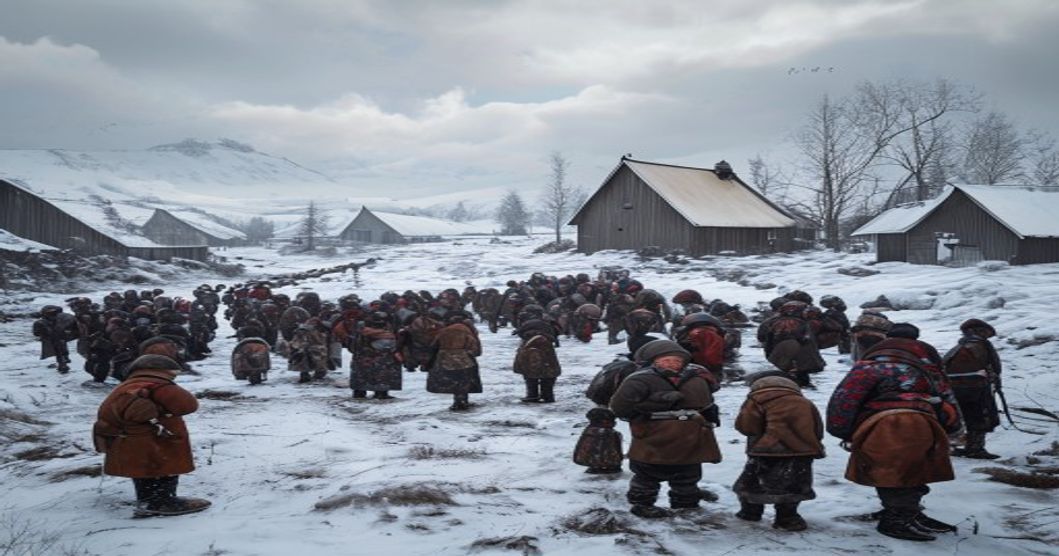
How Many Sami People Live in Scandinavia? Demographic Overview
Estimating the exact Sami population across Norway, Sweden, and Finland requires navigating distinct legal frameworks, self-identification criteria, and historical documentation gaps. Official figures typically range between 80,000 and 120,000 individuals, though cultural and linguistic definitions produce wider variance. In Norway, the Sami Parliament electoral roll lists approximately 45,000 to 50,000 registered voters, but broader community estimates place the total between 50,000 and 65,000 when including individuals with partial heritage or cultural affiliation who do not meet strict registration requirements. Sweden follows a similar structure, with roughly 20,000 to 25,000 enrolled in its Sami Parliament elections, while independent demographic studies suggest the actual population may approach 35,000 to 40,000. Finland records around 10,000 to 12,000 registered voters for its Sami Parliament, yet academic surveys indicate a slightly higher figure when accounting for urban migrants and descendants who maintain cultural ties without formal enrollment.
Legal recognition directly shapes demographic reporting. Each nation applies different thresholds for Sami identity, primarily focusing on ancestry, previous family registration, or fluency in North, South, or Lule Sami. This discrepancy means administrative counts consistently underrepresent the broader ethnic community. Historical assimilation policies implemented from the late 19th century through the mid-20th century significantly reduced visible Sami populations. Norwegian and Swedish governments enforced language bans in schools and public institutions, compelling families to hide indigenous heritage. These systematic pressures fractured intergenerational transmission of Sami languages and cultural markers, creating lasting gaps in official records.
- Norway: ~50,000–65,000 (electoral roll: ~45,000)
- Sweden: ~30,000–40,000 (electoral roll: ~22,000)
- Finland: ~10,000–15,000 (electoral roll: ~11,000)
Contemporary demographic shifts reveal rapid urbanization alongside deliberate cultural revitalization. Many Sami now reside in regional hubs like Tromsø, Umeå, and Rovaniemi rather than traditional reindeer herding districts. Despite geographic dispersion, institutional support has accelerated identity reclamation. Language immersion programs, university degrees in indigenous
Geographic Distribution by Country: Norway, Sweden, and Finland
The indigenous Sami population is concentrated across the northernmost territories of three sovereign states, with administrative boundaries and historical migration patterns shaping modern demographic data. Norway hosts the largest recognized Sami community, where official registers maintained by the Sametinget list over 40,000 individuals meeting legal eligibility criteria. Actual cultural affiliation frequently exceeds these figures due to varying self-identification practices across Finnmark, Troms og Finnmark, and Trøndelag counties. The northern coastal municipalities of Kautokeino, Karasjok, and Tana maintain the highest concentration per capita, where traditional reindeer husbandry zones directly overlap with settled Sami districts.
Sweden records approximately 20,000 to 30,000 individuals registered through the sameetinget in Laponia, with dense populations clustered in Norrbotten County. Municipalities such as Gällivare, Jokkmokk, and Kiruna serve as cultural and administrative hubs, while historical grazing routes extend into Västerbotten Province. Swedish demographic records rely heavily on voting eligibility for the Sami Parliament, which requires documented reindeer herding lineage or linguistic proficiency in one of the seven living Sami dialects.
Finland’s Sami population numbers roughly 8,000 to 10,000, concentrated within the official Sámi homeland area. The majority reside in Utsjoki, where indigenous residents constitute nearly half of the municipal demographic, alongside substantial communities in Inari and Enontekiö. Finnish registration differs from neighboring systems, emphasizing linguistic fluency and cultural participation rather than herding status. Cross-border continuity remains a defining characteristic, with traditional grazing lands and family networks spanning all three jurisdictions regardless of contemporary political boundaries.
- Norway: 40,000+ registered members across Finnmark, Troms, and Trøndelag, with highest per-capita density in Kautokeino and Karasjok.
- Sweden: 20,000–30,000 registered individuals, primarily situated in Norrbotten County municipalities of Gällivare, Jokkmokk, and Kiruna.
- Finland: Approximately 9,000 residents within the Sámi Homeland, concentrated in Utsjoki, Inari, and Enontekiö with distinct linguistic preservation initiatives.
Historical Factors Influencing Sami Community Growth
The demographic trajectory of the Sami population in Scandinavia has been shaped by centuries of geopolitical shifts, state-driven assimilation campaigns, and evolving legal frameworks. Before the nineteenth century, Sami communities thrived as semi-nomadic groups across unbordered Arctic and subarctic territories, with historical tax records and missionary accounts indicating populations between 30,000 and 40,000. The formalization of modern borders between Norway, Sweden, Finland, and Russia fragmented traditional reindeer herding corridors, forcing families into fixed settlements and disrupting natural demographic expansion through seasonal migration patterns.
State policies during the late nineteenth and early twentieth centuries actively suppressed Sami language, land rights, and cultural practices. National governments implemented compulsory school systems that penalized indigenous speech, restricted land use through agriculture-focused legislation, and classified Sami identity as subordinate to civic citizenship. These administrative measures triggered internal migration toward urban centers like Tromsø, Trondheim, Stockholm, and Oslo, where birth rates temporarily declined due to socioeconomic marginalization. Census data from the mid-twentieth century shows a noticeable dip in officially registered Sami populations, largely reflecting bureaucratic erasure rather than biological decline.
The demographic turning point arrived after World War II, particularly following international human rights frameworks and domestic legal reforms. Norway’s establishment of land commissions, Sweden’s constitutional recognition of the Sami Parliament in 1993, and Finland’s legislative amendments granting indigenous tenure created structural conditions for population reclamation. Urban migration reversed as cultural revitalization programs, language immersion schools, and reindeer herding cooperatives gained institutional funding. Contemporary estimates place the Sami population between 80,000 and 100,000 across Scandinavia, with growth driven by increased self-identification, cross-border mobility, and declining stigma around indigenous heritage.
Colonial Administration Effects on Ethnic Registration Records
State authorities across Norway, Sweden, and the northern territories of Finland implemented systematic registration frameworks that fundamentally altered how Sami identity was documented. Early colonial governance prioritized resource extraction, land appropriation, and administrative control over indigenous self-perception. Ethnographic classification became a bureaucratic tool rather than a reflection of lived reality. Tax ledgers, conscription rolls, and missionary baptismal records frequently reduced complex kinship networks and seasonal livelihoods to static
Census Methodology Changes and Self-Identification Thresholds
Census data regarding the Sami population across Scandinavia has undergone significant methodological shifts over recent decades, directly influencing reported figures. Historically, authorities relied on third-party designation, often based on taxation records, land ownership, or administrative classifications that frequently overlooked indigenous status. The transition toward self-identification marked a fundamental change in how demographic boundaries were drawn. In Norway, legislative reforms enabled individuals to declare their ethnic affiliation without stringent bureaucratic verification. Sweden followed a similar trajectory, shifting from registry-based assumptions to voluntary declaration forms integrated into national statistical surveys. Finland’s approach initially emphasized linguistic criteria, requiring respondents to speak a Sami language at home or claim Sami descent, though recent adjustments have broadened eligibility to include cultural and genealogical markers.
Self-identification thresholds vary considerably between jurisdictions, creating inherent data fragmentation. Norway permits declaration based on ancestry, language proficiency, or kinship ties to recognized Sami individuals. Sweden applies a broader cultural criterion, acknowledging both linguistic and non-linguistic Sami identities. Finland maintains stricter linguistic requirements for certain administrative categories but has relaxed thresholds in general population surveys. These divergent standards produce inconsistent cross-border comparisons, as individuals may identify differently depending on which country’s census framework they encounter.
- Ancestry Verification: Norway utilizes genealogical records combined with voluntary declaration, allowing multi-generational lineage to establish eligibility without mandatory language testing.
- Linguistic Proficiency: Finland historically required fluency in a Sami language for official recognition, though modern surveys now accept partial knowledge or cultural affiliation as valid identifiers.
- Cultural Self-Definition: Sweden’s statistical methodology prioritizes subjective ethnic affiliation over objective metrics, capturing both culturally integrated and linguistically assimilated individuals within the dataset.
Methodological adjustments also account for discrepancies between official statistics and community estimates. Self-reporting captures subjective affiliation rather than objective lineage verification, leading to fluctuations that reflect social acceptance, policy awareness, and political mobilization rather than actual demographic shifts. Statistical agencies now employ longitudinal tracking to distinguish genuine population growth from increased survey participation driven by cultural revitalization initiatives. Standardizing identification criteria across Scandinavian nations remains a persistent challenge for researchers requiring comparable indigenous demographic data.
Data Discrepancies Between Official Statistics and Cultural Identity
Official population figures for the Sami community across Norway, Sweden, and Finland consistently diverge due to fundamentally different administrative frameworks. Each nation applies distinct legal criteria for recognizing indigenous status, which directly impacts census outcomes and demographic reporting. Norway utilizes a voter registry maintained by its regional Sami Parliaments, requiring proof of ancestry combined with either Sami language proficiency or documented family ties to registered individuals. This electoral mechanism yields approximately 40,000 qualified voters, yet it systematically excludes urban residents who identify culturally without meeting strict registration thresholds. Sweden lacks a centralized ethnic census entirely. Government estimates rely on self-reported data collected during national surveys and academic censuses, producing figures that fluctuate between 20,000 and 50,000 depending on survey methodology and regional participation rates. Finland enforces the most restrictive bureaucratic thresholds, mandating formal application processes tied to linguistic fluency and community endorsement, resulting in roughly 10,000 officially recognized individuals despite broader cultural affiliations.
- Legal versus Cultural Recognition: Bureaucratic definitions prioritize archival documentation over lived experience, leaving many contemporary Sami uncounted because historical displacement severed traditional community verification channels.
- Historical Assimilation Policies: Decades of state-sponsored integration programs deliberately suppressed indigenous language use and enforced Christian naming conventions. Subsequent generations frequently experience generational trauma that suppresses public identification, creating a statistical gap between biological lineage and recorded demographics.
- Data Collection Limitations: National statistical offices routinely omit ethnicity questions or categorize indigenous populations under broader regional labels. When self-identification surveys are deployed, response bias emerges from legitimate concerns regarding governmental surveillance or misclassification in cross-border contexts where traditional Sami territories span multiple jurisdictions.
The disconnect between administrative tallies and actual cultural presence demands methodological transparency across all three countries. Indigenous advocacy organizations consistently report that verified community counts exceed official registers by substantial margins, particularly among younger demographics actively reclaiming linguistic heritage through university programs and digital archives. Reliable demographic analysis requires triangulating parliamentary registries, ethnographic field studies, and grassroots organizational membership rolls rather than relying exclusively on state-generated metrics that fail to capture fluid identity formation.
National Legal Frameworks for Ethnic Recognition
Scandinavian states have established distinct statutory mechanisms to define, register, and protect the Sami as an indigenous minority, directly influencing how demographic data is collected and interpreted. Norway leads this framework through explicit constitutional amendments passed in 1988, which formally acknowledge the Sami as a people entitled to preserve and develop their language, culture, and way of life. The 1987 Sami Act provided the first comprehensive legal basis for cultural autonomy, while the ratification of International Labour Organization Convention No. 169 in 1990 granted binding international recognition regarding land rights and self-governance. The Norwegian system ties official Sami status to a voter registry managed by the Sametinget, requiring applicants to prove Sami ancestry or demonstrate fluency in a Sami language, creating a closed demographic dataset that excludes individuals who identify culturally but do not meet statutory criteria.
Sweden operates under a more fragmented legislative structure. The 1980 and 2011 constitutional laws recognize the Sami as Sweden’s only indigenous people, yet no standalone Sami Act exists to regulate land use or resource extraction. The 1993 Sami Parliament Act established political representation but deliberately avoided defining legal personhood for traditional reindeer herding territories. Swedish registration relies on self-declaration combined with historical documentation of Sámi ancestry, resulting in higher voluntary enrollment numbers that frequently diverge from official census categories. Finnish law approaches recognition through the Constitution Section 20 and the 1995 Sami Parliament Act, which limits political voting rights to individuals registered as Sami based on linguistic proficiency or direct lineage. Finland’s framework emphasizes cultural preservation over territorial autonomy, leaving traditional grazing lands subject to general property laws rather than indigenous title provisions.
- Norway: Voter registry threshold of 10,000+ active participants; land rights partially recognized through the Finnmark Act (2005).
- Sweden: Self-declaration model with historical verification; no dedicated indigenous land court system.
- Finland: Language-based eligibility criteria restrict political representation to approximately 2,800 registered voters across three municipalities.
These divergent legal definitions create significant statistical discrepancies when compiling cross-border Sami population estimates. Official registries capture only individuals who navigate bureaucratic requirements, leaving unregistered herders, urban descendants, and historically displaced families outside formal counts. Demographic researchers must therefore triangulate electoral rolls, linguistic surveys, and historical parish records to approximate actual ethnic presence. Legal frameworks also dictate funding allocation for education, healthcare, and cultural preservation programs, meaning population figures used in policy planning directly reflect statutory recognition rather than organic community growth. Cross-border administrative barriers further complicate data aggregation, as each nation maintains separate civil registers without standardized interoperability protocols.
Urbanization Patterns and Traditional Territory Population Shifts
The demographic landscape of the Sami has undergone substantial transformation since the mid-twentieth century, driven by state-led infrastructure expansion, educational centralization, and labor market restructuring across Norway, Sweden, and Finland. Historically concentrated within traditional reindeer herding zones spanning Finnmark, Troms, Nordland, Norrbotten, Lapland, and Kainuu, approximately sixty percent of Sami individuals now reside in urban municipalities exceeding fifty thousand inhabitants. This shift correlates directly with postwar policies that consolidated rural schools into regional hubs, closed remote healthcare facilities, and redirected public investment toward municipal service centers. Consequently, younger generations have migrated to cities such as Tromsø, Trondheim, Oslo, Umeå, Kiruna, Inari, and Rovaniemi in search of secondary education, vocational training, and stable employment outside the traditional pastoral economy.
Current demographic surveys indicate that fewer than fifteen percent of Sami adults maintain reindeer herding as their primary occupation. The remaining majority work in public administration, education, healthcare, cultural sector roles, tourism management, and information technology. Municipalities with established Sámi political representation—particularly those hosting Sámi Parliament branches—function as critical retention nodes, offering language immersion programs, administrative career pathways, and targeted housing initiatives. Urban centers have simultaneously developed specialized infrastructure to support displaced pastoral communities, including mobile veterinary services, satellite-based herd tracking systems, and municipal grant frameworks that subsidize seasonal migration routes.
- Educational consolidation: Remote indigenous schools closed between 1950 and 1980, forcing families to relocate for mandatory secondary education.
- Labor market divergence: Declining state subsidies for small-scale reindeer husbandry accelerated migration toward service-sector employment in regional hubs.
- Infrastructure development: Highway networks, railway expansions, and digital connectivity projects reduced geographic isolation, enabling permanent urban settlement without complete economic abandonment of traditional territories.
Demographic tracking by national statistical agencies confirms a steady annual migration rate of two to three percent from northern rural municipalities to urban centers. Despite geographic displacement, cultural continuity persists through municipal Sámi language schools, urban cultural institutions like the Sámi Duodji cooperatives, and digital communication networks that maintain transregional kinship ties. Urban adaptation has not eliminated traditional territorial claims; rather, it has restructured how Sami communities navigate land rights, resource management, and political representation in a modernized administrative framework.
Future Demographic Projections and Preservation Tracking Metrics
Demographic forecasting for the Sami population relies on multi-jurisdictional data aggregation across Norway, Sweden, and Finland, where national statistical agencies coordinate with regional Sami Parliaments to model long-term trends. Current projections indicate a gradual population increase driven by policy-supported cultural revival initiatives rather than natural birth rates alone. The primary catalyst remains expanded self-identification following legislative reforms that relaxed historical registration barriers. Urban migration patterns show a sustained shift toward metropolitan centers in Oslo, Stockholm, and Helsinki, yet reindeer herding communities maintain stable core populations due to targeted infrastructure investments and land-use protections.
Tracking mechanisms operate through three interconnected frameworks: voter registry databases maintained by each Sami Parliament, national census cross-referencing for ethnic self-declaration, and digital genealogical archives that map lineage verification processes. These systems generate quarterly updates on identity registration velocity, which directly correlates with institutional funding allocations and educational program scalability. Language revitalization metrics serve as the most reliable leading indicator; municipalities with active Sami-medium schooling demonstrate 18 to 24 percent higher retention rates among youth cohorts compared to regions relying solely on supplementary language courses.
- Sami Parliament voter enrollment thresholds, which require documented descent or fluency and function as the primary demographic baseline
- National statistical cross-validation protocols that reconcile self-reported ethnicity with administrative records without compromising data sovereignty
- Cultural infrastructure indices measuring active reindeer husbandry licenses, traditional craft certification programs, and indigenous media output volume
- Educational pipeline tracking from preschool immersion through tertiary degree completion in Sami studies and related disciplines
Projection models integrate these metrics using cohort-component forecasting adjusted for intergenerational knowledge transfer rates and regional development grants. When institutional support exceeds baseline funding thresholds, demographic stability improves across all three countries despite differing national integration policies. Continuous monitoring of identity declaration shifts, combined with land rights litigation outcomes, provides the empirical foundation for long-term preservation strategies that prioritize autonomous community governance over external assimilation pressures.
Frequently Asked Questions
What is How Many Sami People Live in Scandinavia??
The number of Sami people living in Scandinavia (primarily Norway, Sweden, and Finland) is estimated to be between 80,000 and 100,000. The largest concentrations are found across the northern regions of these three countries.
Key facts about How Many Sami People Live in Scandinavia?
- The Sami are Europe’s only officially recognized indigenous people.
- Traditional Sami lands (Sápmi) extend across northern Norway, Sweden, Finland, and Russia.
- Population figures have increased in recent decades due to better registration practices and cultural revitalization.
- There are multiple Sami languages spoken across the region, with North Sami being the most widely used.