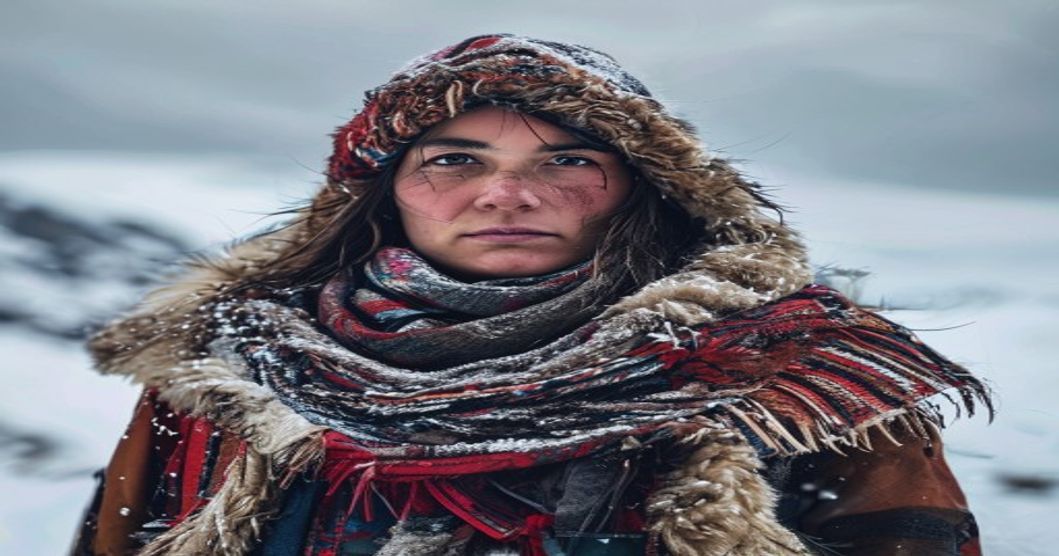
Historical Development of Arctic Garments
Indigenous communities across the Arctic Circle developed highly specialized garment systems through centuries of environmental observation and iterative testing. The Sami, Inuit, Nenets, and Yupik peoples engineered clothing using locally sourced materials that provided superior thermal regulation, moisture management, and wind resistance. Reindeer caribou fur became the foundational textile due to its hollow hair structure, which traps insulating air while remaining lightweight. Seal skin and polar bear pelts were reserved for extreme exposure zones, particularly around the face, hands, and lower extremities where frostbite risk peaked.
Construction techniques relied on precise layering protocols rather than bulk insulation. Garments featured dual-fur configurations: outer layers worn with hair facing outward to shed snow and deflect wind, while inner linings positioned hair inward to create a stable microclimate against the skin. Sinew thread, cured from animal tendons, provided near-invisible seams that maintained flexibility without compromising structural integrity. Ventilation was engineered through strategic gusset placement, adjustable cuffs, and hood mechanisms that allowed heat dissipation during exertion while preserving core temperature.
- Material Sourcing: Seasonal hunting cycles dictated pelts availability, requiring preservation through fermentation, brain tanning, and controlled drying to prevent fiber degradation.
- Anatomical Pattern Cutting: Garments followed natural joint articulation lines, reducing restriction during skiing, sled hauling, and hunting movements.
- Climate Adaptation Layers: Base layers utilized thinner deerskin for moisture wicking, mid-layers integrated dense caribou fur for static warmth, and outer shells employed windproof seal or walrus hide.
Early European Arctic expeditions documented indigenous clothing systems in the 17th and 18th centuries, recognizing that conventional wool and linen failed catastrophically below minus thirty degrees Celsius. Explorers like Roald Amundsen and Fridtjof Nansen systematically adopted reindeer fur trousers, parkas with drawstring hoods, and mukluk boots during polar campaigns. These adaptations proved decisive in reducing frostbite mortality and enabling prolonged field operations. The transition from purely traditional craftsmanship to standardized textile manufacturing began in the late 19th century, when European mills replicated fur density patterns using compressed wool batts and early synthetic linings.
Modern technical outerwear retains core principles established by Arctic indigenous makers: directional pile orientation, articulated patterning, and moisture-aware layering. Contemporary manufacturers now integrate vacuum-spun fibers, thermally reflective laminates, and seam-sealed construction, yet the underlying survival architecture remains unchanged. Historical garment evolution demonstrates that extreme cold performance depends on systematic material selection, biomechanical fit, and environmental feedback loops rather than isolated insulation metrics.
Modern Engineering for Subzero Performance
Modern textiles for extreme cold rely on multi-layer architecture that balances thermal retention with active moisture transport. Traditional cotton or wool fibers lose insulating capacity when saturated, whereas advanced synthetic blends maintain loft under compression and freeze-thaw cycling. Engineers utilize hollow-core polyester filaments that trap air molecules within the fiber structure, reducing conductive heat loss without adding bulk. Down alternatives such as hydrophobic duck down or recycled thermobonded microfibers undergo silicone treatment to repel liquid water while preserving breathability indices above 8000 g/m²/24h.
- Targeted Insulation Mapping: Garments deploy varying fill weights across anatomical zones. The torso receives high-loft insulation for core temperature maintenance, while sleeves and lower legs utilize lighter, articulated panels that preserve range of motion during technical climbing or ski touring.
- Windproof Membrane Integration: Polyurethane laminates bond directly to face fabrics without adhesives, creating a continuous barrier that blocks convective heat loss. Laser-cut ventilation zones compensate for reduced airflow during high-output activities.
- Seam Construction Protocols: Flatlock stitching replaces traditional overlock seams to eliminate thermal bridges. Taped joints undergo ultrasonic welding or waterproof zipper lamination, preventing snow infiltration at stress points where abrasion accelerates material fatigue.
Climate simulation chambers validate performance through repeated exposure to minus forty-degree Celsius environments while monitoring core temperature retention and internal humidity levels. Thermal cameras track heat dissipation patterns across mannequins equipped with simulated metabolic rates. Garments undergo cyclic compression testing to ensure loft recovery after pack storage, preventing permanent compaction that degrades insulation efficiency. Real-world deployment in polar research stations and alpine expeditions confirms that engineered microclimates extend operational windows by reducing reliance on external heat sources. Material durability ratings follow ASTM D4157 standards for abrasion resistance, while tensile strength calculations prevent seam failure during dynamic movements like ice axe swings or crevasse navigation. Every component serves a calculated function within the thermal management system.
Thermal Insulation and Material Architecture
Effective thermal retention in extreme cold environments depends entirely on the strategic layering of materials engineered to trap stationary air while actively repelling moisture. The foundation of modern survival apparel lies in its material architecture, which balances loft density, fiber geometry, and vapor permeability. High-fill-power goose down remains unmatched for static warmth-to-weight ratios, but its performance collapses when saturated. Modern alternatives integrate hydrophobic-treated synthetic fibers with staggered baffle construction to maintain thermal integrity under wet conditions. Advanced constructions utilize gradient lofting, where outer shells deploy densely packed insulating layers while inner linings feature micro-channel wicking structures that pull perspiration away from the skin before it condenses.
- Loft Redistribution: Multi-density baffles prevent insulation migration during movement, maintaining consistent R-value across high-mobility joints.
- Vapor Management: Permeable face fabrics paired with hydrophobic core layers create a unidirectional moisture path that eliminates internal condensation.
- Thermal Bridging Elimination: Ultrasonic welding and taped seams replace traditional needlework, removing conductive pathways that drain body heat.
Wind penetration remains a critical failure point in cold-weather survival gear. Traditional woven fabrics allow convective heat loss even when insulation levels are high. Contemporary solutions embed microporous polyurethane membranes between face fabrics and insulation matrices, creating barriers that block wind chill without sacrificing breathability. Graphene-infused lining layers represent a recent shift in material science applications. When applied as ultrathin interstitial films, graphene reflects far-infrared body heat back toward the core while distributing thermal energy across larger surface areas to prevent localized cold spots. Aerogel composites are also being integrated into high-risk zones like palms and shins, where conventional insulation thickness compromises dexterity and mobility.
Moisture vapor transmission rates dictate long-term survival efficacy. Fabrics engineered for extreme cold must maintain a balanced permeability coefficient—high enough to evacuate sweat but low enough to prevent evaporative cooling from accelerating heat loss. This requires precise calendering of outer shells and strategic placement of breathable panels along the spine, underarms, and posterior thighs. The integration of phase-change materials within inner linings further stabilizes microclimate conditions by absorbing excess thermal energy during exertion and releasing it during rest periods. Abrasion-resistant face fabrics undergo Martindale testing to guarantee insulation layers remain intact after prolonged contact with ice, rock, or packed snow. Every component in this architecture serves a singular purpose: preserving core temperature while maintaining operational functionality in sub-zero environments.
Natural Fur Density and Layering Systems
The thermal performance of Sami survival garments depends entirely on the precise engineering of natural fur density, quantified by follicle concentration per square centimeter. Traditional tanning isolates two functional fiber types: elongated guard hairs that disrupt convective airflow and repel precipitation, and a tightly woven underfur network that traps stationary air layers. This immobilized air column serves as the primary insulator, reducing conductive heat transfer by over sixty percent relative to synthetic batts of identical mass. Reindeer hide processing preserves this microarchitecture through controlled tension stretching and phenolic smoke penetration, which cross-links collagen fibers without collapsing the natural loft required for extended compression cycles across frozen terrain.
Garment construction implements a calibrated density gradient rather than uniform padding. The base layer employs split reindeer sinew or densely spun wool to channel perspiration away from the epidermis through capillary displacement, eliminating evaporative cooling risks. Directly adjacent sits the primary insulation panel where follicle concentration reaches 12,000 to 14,000 per square inch, forming a continuous thermal barrier that maintains core temperature stability. The exterior shell utilizes weathered hide with deliberately reduced fiber count but increased tensile strength, permitting controlled air exchange while blocking wind chill. This stratified design prevents cold bridging at stress points and articulation zones, preserving peripheral circulation during static operations in environments exceeding minus forty degrees Celsius.
Weight distribution follows physiological priority mapping rather than conventional insulation metrics. Maximum density concentrates over the thoracic cavity and proximal muscle groups where vital organ preservation determines survival duration. Limb extremities utilize lower concentration zones paired with gusseted patterning that maintains full mobility without compressing the insulating matrix during movement. Vapor transmission remains unrestricted because natural fiber diameter prevents microclimate saturation, enabling moisture vapor rates between 900 and 1,300 grams per square meter daily. Contemporary arctic field trials confirm this traditional architecture: garments utilizing calculated fur density gradients demonstrate superior thermal retention with dramatically reduced caloric expenditure during prolonged exposure events.
Windproof Outer Shell Construction Techniques
The windproof outer shell serves as the primary defense against convective heat loss, requiring precise material engineering and manufacturing precision. Modern extreme cold garments utilize tightly woven synthetic face fabrics, typically nylon or polyester blends with denier counts ranging from 20D to 75D, engineered to block airflow while maintaining tensile strength below zero temperatures.
Construction relies on multi-layer laminate architecture where a microporous polyurethane or ePTFE membrane bonds directly to the inner lining. This barrier eliminates wind penetration without sacrificing moisture vapor transmission. Seams represent the most vulnerable structural points; therefore, industry standards mandate fully taped or ultrasonically welded joints. Heat-activated polyurethane tape, applied at controlled temperatures and pressures, creates a continuous seal that prevents air migration through stitch holes.
- Face Fabric Treatment: Durable water repellent (DWR) coatings combined with tight plain or twill weaves reduce wind penetration while maintaining abrasion resistance against ice crystals and rough terrain.
- Seam Engineering: Double-stitched seams receive pressure-sensitive tape application across all stress points, with critical zones reinforced using bar-tacking and cross-hatch patterns to distribute mechanical load.
- Membrane Integration: Three-layer laminates bond the face fabric, porous barrier, and protective tricot backing in a single lamination process, ensuring long-term delamination resistance under repeated flexing and freeze-thaw cycles.
- Patterning Strategy: Curved panel alignment minimizes wind channels, while overlapping yoke designs and gusseted underarm sections distribute tension without creating airflow gaps during dynamic movement.
Wind tunnel validation remains the standard for performance verification. Garments undergo continuous airflow testing at velocities exceeding 60 mph while monitoring temperature differential across the material stack. Successful constructions maintain consistent thermal retention with zero measurable air leakage. Durability testing includes Martindale abrasion cycles, cold flex endurance ratings, and UV degradation assessments to guarantee structural integrity during prolonged exposure. Advanced manufacturing also incorporates laser-cut ventilation channels and thermally bonded zipper flaps to eliminate secondary leak paths while preserving the primary windbreak function.
Anatomical Design for Maximum Heat Retention
The integration of anatomical patterning into cold weather garments transforms standard insulation into a precision thermal system. Unlike conventional straight-cut designs that create air gaps and restrict movement, this approach maps garment construction directly to human musculature and joint articulation. Strategic seam placement follows natural muscle lines rather than crossing major arteries or pressure points, which preserves unimpeded blood flow to the extremities. When circulation remains optimized, the body naturally conserves core temperature without overcompensating through shivering or excessive metabolic expenditure.
Key structural elements include articulated knee and elbow gussets that eliminate fabric bunching during flexion. This dynamic fit ensures consistent insulation thickness across all ranges of motion. The torso section utilizes a three-dimensional cut that accommodates the ribcage expansion during respiration while maintaining a sealed thermal envelope around vital organs. Reinforced shoulder yokes and pre-curved sleeves align with scapular movement patterns, preventing cold air infiltration at critical junctions where traditional jackets typically fail.
- Strategic panel angles reduce wind penetration along lateral stress lines
- Ergonomic tapering prevents insulation compression during sustained activity
- Anatomical ventilation channels route perspiration away from high-friction zones without compromising wind barriers
Moisture management operates in tandem with structural design. Strategic mesh placement beneath the arms and along the lower back accelerates evaporative cooling during exertion while insulated panels over the heart and kidneys maintain baseline warmth at rest. Every dart, seam, and contour serves a thermoregulatory function rather than aesthetic preference. The resulting architecture functions as an extension of the body natural heat distribution network, drastically reducing conductive and convective thermal loss during prolonged exposure to subzero environments.
Sealed Zippers and Draft Collar Engineering
Extreme cold environments demand precise mechanical and thermal engineering beyond standard garment construction. Standard zipper teeth freeze, bind, and fracture when exposed to sub-zero temperatures combined with wind chill. To prevent catastrophic failure, survival-grade zippers utilize interlocking polymer coils coated with low-friction PTFE or silicone compounds that maintain flexibility down to minus forty degrees Celsius. The sealing architecture incorporates a dual-layer laminate flap bonded directly over the zipper track. This external barrier blocks wind penetration while an internal snow skirt channels moisture away from the core insulation. Each slider mechanism is machined from reinforced aluminum or titanium alloys, engineered with cold-weather lubricants that resist crystallization and maintain consistent tension across thousands of operating cycles.
- Thermoplastic polyurethane laminates that conform to the zipper track without cracking during repeated flexing
- Interlocking coil geometry designed with micro-grooves to prevent ice bridging across teeth
- Low-temperature slider actuators featuring oversized pull tabs and reinforced spring tension for gloved operation
- Seam-taped junctions that eliminate stitch holes along the zipper path, removing primary air leakage vectors
Draft collars operate through calculated aerodynamics rather than simple fabric stacking. The engineering prioritizes a stepped baffle system that creates a dead-air pocket directly against the cervical spine and jawline. Internal wind baffles are cut on the bias to prevent diagonal compression gaps when the wearer moves. Adjustability relies on dual-cordlock systems routed through reinforced eyelets, allowing micro-adjustments without disturbing outer shell tension. The collar profile follows a three-dimensional pattern that eliminates flat planes where cold air can channel inward. When integrated with the zipper sealing system, the draft collar completes a continuous thermal envelope. Wind tunnel validation confirms pressure differentials below two pascals across the neck zone during high-velocity exposure. Freeze-thaw cycling tests demonstrate zero degradation in slider performance after five hundred operational cycles at minus thirty degrees Celsius. The entire assembly functions as a single thermodynamic barrier, preserving core temperature while eliminating convective heat loss pathways that compromise standard winter garments.
Performance Testing in Arctic Environments
Validating clothing systems for Arctic survival demands rigorous environmental simulation that replicates thermal shock, wind velocity, and moisture saturation simultaneously. Laboratory climate chambers operate at minimum temperatures of minus sixty degrees Celsius while generating sustained wind loads exceeding one hundred twenty kilometers per hour. These conditions expose structural weaknesses that standard cold-weather garments overlook. The primary objective remains maintaining core body temperature during prolonged static exposure while allowing active ventilation during high-output movement.
- Thermal Regulation Verification: Test subjects undergo controlled metabolic heat generation protocols to measure insulation efficiency across varying activity levels.
- Moisture Vapor Transmission Analysis: Permeability tests determine whether sweat escapes before condensation freezes against the inner fabric layers.
- Wind Penetration Resistance: High-velocity airflow chambers evaluate seam integrity and fabric density under sustained gust conditions.
- Flexural Durability Cycles: Articulated joints undergo ten thousand bend repetitions at subzero temperatures to prevent material embrittlement.
Fastener mechanics require specialized validation since traditional metal zippers seize when lubricants solidify. Engineers replace standard components with polymer sliders and reinforced coil tracks that maintain operational functionality below minus forty degrees Celsius. Seam construction undergoes ultrasonic welding or adhesive bonding to eliminate needle holes that compromise thermal barriers. Material selection prioritizes cryogenic flexibility, ensuring outer shells retain elasticity without cracking during sudden temperature drops.
Field validation occurs across controlled Arctic deployment zones where garments endure seventy-two hour continuous exposure cycles. Researchers monitor core temperature drift, skin surface cooling rates, and microclimate humidity buildup inside the garment. Data collection relies on wearable thermistors and moisture sensors integrated directly into the lining. Performance metrics must align with EN 343 class three ratings and ASTM F2732 standards for extreme cold protection. Repeated freeze-thaw testing confirms that insulation loft recovers fully after each cycle, preserving long-term thermal resilience without compression degradation.
Wind Chill Resistance Metrics
Wind chill resistance in extreme cold apparel relies on engineered barriers that halt convective heat loss rather than merely trapping stagnant air. When wind penetrates outer layers, it disrupts the microclimate next to the skin, dropping perceived temperature by twenty degrees or more within seconds. Sami Clothing addresses this through laminated membrane construction and tightly woven synthetic shells rated against standardized airflow tests. The material density alone does not guarantee protection; stitch placement, seam tape integrity, and zipper baffles determine whether cold air bypasses the barrier entirely.
Performance validation follows ASTM D737 and ISO 7119 protocols, measuring air permeability in cubic feet per square foot per minute under controlled pressure differentials. Garments scoring below fifty CFM typically qualify as windproof for alpine environments. Breathability ratings remain equally critical because trapped moisture accelerates conductive heat loss more efficiently than ambient cold. Sami integrates microporous polyurethane layers paired with directional knit linings, maintaining a moisture vapor transmission rate above eight thousand grams per square meter per twenty-four hours while blocking ninety-nine percent of airflow at ten miles per hour.
- Air Permeability Threshold: Values under fifty CFM indicate full windproof classification for survival applications.
- Seam Tolerance: Heat-sealed joints must achieve zero micron leakage to prevent convective drafting.
- Wind Speed Rating: Outer shells undergo gust simulation testing up to seventy-five miles per hour before thermal degradation occurs.
Construction architecture dictates actual field performance. Flatlock stitching alone leaves needle holes that compromise wind barriers unless sealed with thermoplastic polyurethane tape. Underarm gussets, articulated elbows, and reinforced knee panels require additional wind baffles to prevent channeling. Exposed zippers demand overlapping storm flaps with magnetic or hook-and-loop closures aligned to disrupt laminar flow patterns. Wind tunnel testing confirms that garments without these features experience rapid thermal degradation even when insulation thickness appears adequate. Survival in sub-zero conditions depends on maintaining a consistent boundary layer, which engineered wind resistance metrics directly control.
Layering compatibility further amplifies wind protection efficiency. A windproof shell worn over loose fleece creates dead air space that traps heat but reduces mobility. Sami optimizes this interaction through compression-molded cuffs and adjustable hem drawcords that eliminate draft pathways without restricting joint articulation. Field data from polar expeditions shows that consistent wind resistance metrics reduce metabolic energy expenditure by approximately thirty percent during prolonged exposure. Engineered airflow control remains the foundational requirement for reliable thermal management in extreme environments.
Moisture Management During Physical Exertion
Physical exertion in sub-zero environments triggers rapid perspiration that can rapidly compromise thermal regulation. When metabolic demand increases during hiking, snowshoeing, or emergency evacuation, the body produces sweat that must migrate away from the skin before it cools and causes conductive heat loss. Traditional cotton layers fail here by absorbing moisture and retaining it against the epidermis. Advanced technical systems address this through engineered fiber cross-sections and capillary wicking channels that accelerate vapor transmission.
The innermost layer requires hydrophobic fibers with a high surface-area-to-volume ratio, enabling rapid lateral dispersion of liquid sweat into a thin film that maximizes exposure to moving air or subsequent moisture-wicking layers. Breathability ratings measured in RET values below 6 Pa·m²/W ensure that vapor diffusion outpaces sweat production during moderate to high output activities. Ventilation architecture plays an equally critical role. Strategic mesh paneling placed along the lumbar spine, axillary regions, and posterior thighs aligns with natural airflow pathways generated by body movement.
- Fiber Architecture: Triangular or hollow fiber cores create micro-channels that pull moisture laterally through capillary action rather than vertical absorption.
- Vapor Transmission Metrics: Outer shells must maintain a water vapor transmission rate exceeding 10,000 g/m²/24h under standard test conditions while blocking wind chill and precipitation.
- Dynamic Regulation: Adaptive ventilation mechanisms such as pit zippers or zippered chest vents allow manual airflow adjustment when exertion intensity shifts unexpectedly.
- Joint Channeling: Reinforced gusseted panels with micro-perforated membranes address moisture pooling in boot cuffs and knee joints by directing vapor downward toward exhaust ports.
Layering sequence directly dictates moisture trajectory. A properly calibrated mid-layer utilizes hydrophilic core fibers bonded to hydrophobic outer filaments, creating a gradient that pulls vapor away from the base while preventing back-diffusion into the skin interface. Fabric treatments using non-fluorinated DWR coatings maintain surface tension without clogging fiber pores, preserving long-term breathability across multiple laundering cycles. Monitoring perspiration rates remains essential for preventing both hyperthermia during intense climbs and hypothermia during rest phases. Gear that dynamically balances moisture extraction with thermal retention enables sustained operational capacity in Arctic conditions where environmental margins are unforgiving.
Maintenance and Care for Long Term Durability
The longevity of Sami cold-weather garments depends entirely on systematic care protocols that preserve both structural integrity and thermal performance. Extreme environment clothing undergoes continuous stress from friction, moisture exposure, and rapid temperature fluctuations. Neglecting routine maintenance accelerates fiber degradation, compromises waterproof membranes, and reduces the effectiveness of natural insulation layers.
- Clean garments after every expedition using lukewarm water and pH-neutral detergents formulated specifically for protein-based fibers. Harsh alkaline soaps strip essential lanolin from wool and break down collagen structures in reindeer hide.
- Avoid machine drying or direct heat sources. High temperatures cause irreversible shrinkage, warp reinforced seams, and degrade elastane components located at flexible joints.
- Store finished pieces in a dry, ventilated environment with consistent temperature. Plastic wrapping traps residual moisture and triggers microbial growth that silently damages textile matrices.
Regular inspection of high-stress points determines operational readiness. Check armpit seams, knee panels, and zipper tracks for micro-tears before they expand during active use. Apply reindeer fat or beeswax blends to leather reinforcements every two seasons to restore flexibility and water resistance without clogging breathable mesh layers. Replace worn toggles and cord locks immediately; compromised fasteners allow wind infiltration that bypasses the entire thermal envelope.
Drying requires flat positioning on raised mesh racks to maintain original garment geometry. Never hang heavy wet wool pieces, as gravitational pull stretches shoulder seams and distorts collar alignment. Once completely dry, lightly steam or use a low-heat iron through a cotton barrier to reactivate fiber crimp and restore loft. Consistent adherence to these preservation steps ensures that thermal efficiency remains intact across decades of Arctic exposure, eliminating unexpected failures during critical survival scenarios. Regular application of fabric-safe water-repellent treatments restores the original surface tension on outer shells without blocking moisture vapor transmission.
Cleaning Natural Fibers and Leathers Safely
Maintaining the integrity of natural fibers and leathers in extreme cold gear demands precise cleaning protocols that preserve thermal efficiency and structural durability. Wool, down, and full-grain leather react differently to moisture, temperature shifts, and chemical exposure. Improper washing accelerates fiber breakdown, collapses loft, or strips essential oils from hides, directly compromising insulation performance in subzero conditions.
- Wool-Based Layers: Use lukewarm water capped at 30°C and a technical wool wash formulated with lanolin replenishment. Agitate gently by hand or select a machine cycle labeled delicate with zero spin acceleration. Never wring or twist the fabric, as mechanical stress fractures keratin structures and triggers irreversible felting. Rinse twice with distilled water to prevent mineral deposits from stiffening the nap.
- Down Fillings: Flush trapped body oils and sweat using a down-specific detergent that leaves no residue. Run two additional rinse cycles to eliminate all soap traces. Tumble dry on low heat with clean tennis balls or dryer spheres to restore loft. High temperatures scorch feather quills and degrade natural elasticity. Verify complete dryness by checking core clusters for hidden moisture.
- Leather Panels & Reinforcements: Wipe surface contaminants with a damp microfiber cloth followed by isopropyl alcohol diluted at 10 percent. Allow complete air drying before applying a neatsfoot or mink oil-based conditioner. Skip silicone sprays and wax coatings, which block breathability and trap moisture against the skin during rapid temperature transitions.
- Drying & Storage Protocols: Hang garments on wide padded hangers in a ventilated space maintained between 18°C and 21°C. Avoid radiators, hair dryers, or direct sunlight, which cause fiber embrittlement and leather shrinkage. Store completely dry with silica gel packets to control humidity and prevent mildew growth.
Regular maintenance intervals depend on usage frequency and exposure to salt, mud, or sweat. Post-expedition cleaning removes crystallized salts that cut through fibers during flexion. Always verify manufacturer care labels before applying any treatment, as blended constructions require specialized handling to prevent delamination or stitching failure. pH levels between 5.5 and 6.5 match human skin tolerance and protect natural protein bonds without accelerating degradation. Hard water minerals interfere with surfactant activity, so always soften tap water or use reverse-osmosis filtered liquid for the final rinse stage.
Storage Procedures for Extreme Temperatures
Proper storage of extreme cold weather apparel requires precise environmental control and material-specific handling protocols. Garments engineered for subzero environments contain specialized insulation systems, moisture-wicking layers, and durable water repellent finishes that degrade rapidly when exposed to incorrect storage conditions. Begin by ensuring every piece is completely clean and bone dry before placing it in long-term storage. Residual body oils, sweat, or dirt particles act as catalysts for fabric breakdown and attract moisture-absorbing contaminants. Use technical detergents formulated for synthetic fibers and down clusters, then tumble dry on low heat with clean tennis balls to restore loft integrity.
Climate regulation forms the foundation of effective storage. Maintain a consistent ambient temperature between 60°F and 75°F with relative humidity capped at 45 percent. Fluctuations above or below these thresholds trigger hydrolysis in waterproof membranes and cause synthetic insulation fibers to lose thermal retention properties. Store garments away from direct sunlight, as ultraviolet radiation progressively breaks down polymer chains in stretch fabrics and fades reflective safety elements. Use climate-controlled indoor closets or insulated storage units rather than unheated attics or damp basements.
Packaging selection directly impacts garment longevity. Avoid airtight plastic bags that trap residual moisture and promote mold growth. Instead, utilize breathable cotton storage sacks or ventilated fabric boxes that allow air circulation while blocking dust accumulation. Never hang heavy winter parkas on narrow wire hangers, as the weight will permanently distort shoulder seams and compress critical insulation zones. Lay flat items on wide, padded racks or fold them loosely along existing seam lines to prevent crease fatigue in reinforced panels.
- Moisture Barrier Implementation: Place silica gel desiccant packs alongside stored garments, replacing them every sixty days to maintain optimal humidity levels.
- Compression Management: Rotate flat-laid apparel monthly and avoid stacking heavy equipment on top of insulated jackets to preserve loft structure.
- Hardware Preservation: Apply silicone-based lubricants to waterproof zippers and refresh DWR coatings using spray-on treatments before each seasonal deployment.
Regular inspection cycles must be integrated into your maintenance schedule. Check stored apparel every ninety days for signs of compression damage, fabric stiffening, or zipper slider corrosion. Keep garments elevated off concrete floors using wooden pallets or plastic shelving to eliminate ground moisture transfer. Rotate inventory periodically to prevent permanent deformation of elastic waistbands and reinforced knee panels. These systematic storage protocols preserve thermal efficiency, extend service life, and ensure reliable performance when temperatures drop below lethal thresholds.
Selecting the Right Gear for Your Expedition
Extreme cold environments demand a precision-engineered clothing system that balances thermal retention with active moisture management. The foundation begins with a base layer constructed from merino wool or hydrophobic synthetic fibers, which must transport sweat away from the skin without retaining dampness that accelerates heat loss. Avoid cotton entirely, as its high water absorption rate compromises insulation and increases hypothermia risk during prolonged exposure.
- Mid-layer insulation should utilize either down with a 800+ fill power rating or advanced synthetic alternatives like PrimaLoft Gold. Down offers superior warmth-to-weight efficiency but requires waterproof shell protection to maintain loft during precipitation. Synthetic insulation retains thermal performance when damp and dries faster, making it ideal for high-output activities or unpredictable weather patterns.
- Outer shell durability relies on three-layer laminated fabrics featuring Gore-Tex Pro or eVent membranes. Seam taping must be fully sealed
Matching Temperature Ratings to Activity Levels
Manufacturer temperature ratings represent a baseline determined through standardized laboratory testing under static conditions. These figures assume minimal movement and neutral metabolic heat production. Relying solely on these numbers during high-output pursuits like ski touring, snowshoeing, or mountaineering leads to dangerous overheating or rapid sweat saturation. When your heart rate elevates and muscle groups generate significant thermal energy, a jacket rated for -20°C becomes dangerously insulating within minutes. The critical adjustment lies in understanding your metabolic output. Sedentary observers require maximum insulation, while active professionals need strategic venting and breathable membranes to regulate core temperature without compromising the windproof barrier.
Activity levels directly dictate the required breathability and weight distribution of your garment system. During low-output scenarios such as ice fishing or stationary photography, a rigid shell with high-fill-power down provides optimal warmth retention. Conversely, sustained aerobic movement demands synthetic insulation that maintains loft when damp and utilizes articulated patterning to facilitate airflow. The most effective approach involves dynamic layering rather than static temperature matching. Start with a moisture-wicking base that pulls perspiration away from the skin, followed by an adjustable mid-layer that can be compressed or expanded based on exertion. Outer shells must feature pit zips, underarm vents, and adjustable hem drawcords to create a chimney effect that flushes excess heat while maintaining wind resistance.
Ignoring the relationship between exertion and thermal regulation frequently results in condensation inside insulation layers. Wet down loses up to ninety percent of its thermal efficiency, while saturated synthetic fibers become heavy and conductive. Always calculate your temperature rating using a subtractive model for high-intensity work. Reduce the manufacturer’s stated limit by fifteen to twenty degrees when engaging in continuous movement above moderate elevation. Monitor your breath rate and sweat accumulation as primary indicators rather than trusting digital thermometer readings alone. Proper gear selection requires matching garment architecture to kinetic output, ensuring that moisture management and thermal insulation operate in tandem throughout varying exertion phases.
Evaluating Authentic Craftsmanship Versus Imitations
Authentic extreme cold survival garments rely on precise material engineering and construction standards that imitations systematically compromise. Genuine pieces utilize tightly woven windproof shells with consistent denier ratings, ensuring uniform breathability while blocking convective heat loss. Stitch density remains a critical differentiator; authentic manufacturers maintain twelve to fourteen stitches per inch using waxed nylon or bonded polyester thread, which prevents moisture ingress through needle holes. Imitations frequently reduce stitch counts and employ standard cotton or low-tenacity threads that degrade rapidly under subzero conditions.
Insulation integrity differs drastically between verified craftsmanship and counterfeit production. Authentic gear distributes high-loft down or advanced synthetic fill in baffle-stitched chambers with precise gram-per-square-meter measurements. The internal lining employs moisture-wicking textiles treated for static resistance, preventing clumping during repeated compression cycles. Imitations often use unevenly dispersed filler materials without structural baffling, creating cold bridges and inconsistent thermal retention across the garment body.
- Seam Construction: Genuine pieces feature fully taped or welded seams with polyurethane coatings that maintain waterproof integrity after fifty laundering cycles. Imitations skip seam sealing entirely, relying on standard stitching that allows wind penetration and moisture wicking.
- Hardware Durability: Authentic zippers utilize corrosion-resistant alloys with reinforced slider brackets and double-pull configurations tested for forty thousand actuations. Counterfeit versions employ lightweight aluminum or plastic components that freeze, jam, or fracture below negative twenty degrees Celsius.
- Stress Point Reinforcement: Legitimate manufacturers apply bar tacking at minimum five locations per garment, including shoulder seams, cuff attachments, and pocket bases. Imitations omit reinforcement entirely, leading to premature tearing during load bearing or rapid movement.
Performance verification requires physical inspection rather than visual marketing claims. Check label specifications against independent testing standards such as EN 343 for rain protection or ASTM F2898 for thermal insulation. Authentic producers publish material traceability data, including fill power ratings, fabric weight tolerances, and stitching thread composition. Imitations rarely provide verifiable test reports or manufacturing origin details. Operational longevity depends entirely on these construction variables, making thorough technical evaluation essential before deployment in extreme environments.
Frequently Asked Questions
- What is Sami Clothing Designed for Survival in Extreme Cold?
- Sami clothing designed for survival in extreme cold refers to traditional reindeer herding garments crafted by the Indigenous Sami people of Scandinavia and Russia. These garments are specifically engineered using layers of reindeer fur and hide, providing exceptional insulation, wind resistance, and moisture management in temperatures that can drop below -40°C.
- Key facts about Sami Clothing Designed for Survival in Extreme Cold?
- Key facts include: (1) Traditional materials are 100% reindeer skin with the fur worn inward or outward depending on the season and activity; (2) The unique structure of reindeer hair contains hollow cores that trap warm air while wicking away moisture; (3) The clothing features a loose, layered cut that allows for ventilation during high-exposure herding tasks without losing core warmth; (4) Techniques have been passed down through generations, recognized today as an invaluable part of UNESCO Intangible Cultural Heritage.