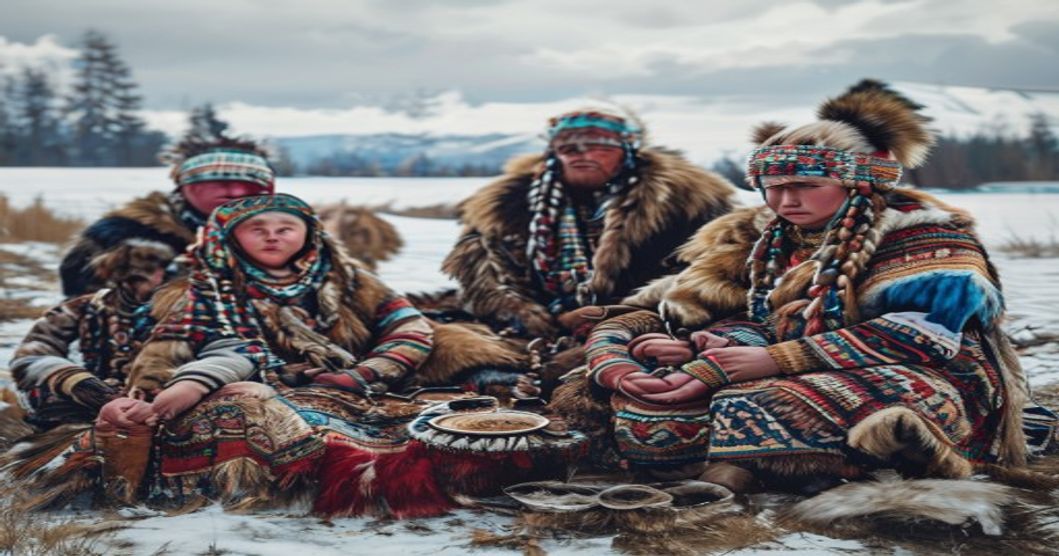
Discover Finnish Sámi Culture: Traditions, Heritage & Daily Life
Indigenous Roots & Geographic Distribution Across Lapland
The Finnish Sámi people represent one of Europe’s oldest indigenous populations, with archaeological and linguistic evidence confirming continuous habitation in northern Fennoscandia for over two millennia. Within Finland, the Sámi population is officially concentrated in four municipalities: Inari, Utsjoki, Sodankylä, and Enontekiö, collectively forming the Sámi homeland area. This region spans subarctic ecosystems characterized by taiga forests, fells, and river valleys that have shaped distinct cultural adaptations. The Sámi population in Finland numbers approximately 10,000 individuals, with two primary linguistic groups holding constitutional recognition: the Inari Sámi (anarâškielâ) and the Skolt Sámi (sääʹmkielâ). Both languages belong to the Uralic family, closely related to Finnish but entirely distinct in grammar and phonology. Historical marginalization during the 19th and 20th centuries led to assimilation policies that restricted language use and land rights, yet cultural resilience persisted through oral transmission, seasonal livelihoods, and clandestine community networks.
Historical Settlement Patterns & Cross-Border Identity
Sámi territorial continuity predates modern nation-state borders established in 1809 (Finland-Sweden) and 1920 (Finland-Russia). Traditional siida systems functioned as decentralized, kinship-based governance units that managed grazing lands, fishing waters, and seasonal migration corridors across what is now Finland, Norway, Sweden, and Russia. The 1947 Paris Peace Treaty divided Sámi territories, yet cross-border cultural exchange remained vital through shared reindeer pastures, marriage networks, and ceremonial gatherings. Contemporary Sámi identity in Finland emphasizes indigenous self-determination, codified in the Finnish Constitution (Section 20) and the Act on the Sámi Parliament of Finland (1995), which grants legislative authority over language, education, culture, and reindeer herding legislation.
Sustainable Livelihoods & Economic Heritage
Traditional Sámi economies were built on multi-resource subsistence strategies adapted to extreme subarctic conditions. Reindeer herding, fishing, hunting, and seasonal gathering formed an interdependent ecological system that minimized environmental impact while maximizing nutritional yield. Modern legal frameworks recognize reindeer husbandry as a constitutionally protected livelihood, with approximately 3,000 registered reindeer owners operating in Finland under the Reindeer Husbandry Act. Herding is not merely economic but deeply cultural, governing social organization, seasonal calendars, and intergenerational knowledge transfer.
Reindeer Herding Dynamics & Seasonal Migration Routes
Finnish Sámi reindeer herding follows a strict bimodal migration cycle: summer pastures in highland fells (typically July–September) prevent insect harassment and support calf growth, while winter pastures in sheltered pine forests (October–June) allow access to ground lichen through snow clearing. Herders utilize specialized equipment including duodji knives, reindeer-leather boots, and radio collars for herd tracking. The practice requires mastery of animal behavior, weather prediction, and terrain navigation, with knowledge traditionally transmitted through apprenticeship rather than formal schooling. Climate change increasingly threatens this system through ice-locked pastures, unpredictable thaw cycles, and expanded forestry operations encroaching on traditional grazing zones.
Material Culture & Artistic Expressions
Sámi duodji (traditional handicraft) represents a sophisticated fusion of utility and symbolism, produced exclusively from locally sourced materials: reindeer antler, bone, wood, birch bark, and wool. Each region exhibits distinct stylistic markers; Inari Sámi duodji features bold geometric motifs and silver coin embellishments, while Skolt Sámi work emphasizes intricate beadwork and cross-stitch patterns derived from Orthodox Christian influences. The gákti, or traditional dress, functions as a visual dialect indicating the wearer’s siida, marital status, and economic role through precise color coding, belt width, and brooch placement. Modern duodji artisans continue to supply both cultural institutions and contemporary design markets, maintaining strict authenticity standards defined by the Sámi Duodji certification mark.
Duodji Crafts, Gákti Textiles & Symbolic Motifs
Sámi visual symbolism draws from nature observation and cosmological principles. The sun wheel (beaivi), river spiral, and reindeer antler motifs appear consistently across duodji, textiles, and drum designs, representing cyclical time, waterways as life conduits, and the sacred animal. Traditional garment construction employs hand-cut patterns that eliminate fabric waste, with seams positioned to prevent snow accumulation during outdoor work. The gákti requires up to 40 meters of woolen cloth, dyed using lichen-based pigments (yellow, red, blue) and stitched with reinforced double-thread techniques. Contemporary Sámi fashion designers integrate these elements into modern silhouettes while preserving traditional cutting methods and symbolic color boundaries.
Language Revitalization & Spiritual Worldview
The Sámi language landscape in Finland comprises Inari Sámi (approximately 400 fluent speakers) and Skolt Sámi (roughly 320 speakers), both classified as severely endangered by UNESCO. Revitalization efforts since the 1980s include immersion kindergartens, university degree programs at the University of Lapland, and standardized orthographies developed through community linguists. Language preservation directly correlates with cultural continuity, as Sámi terminology encodes precise ecological knowledge: over 50 distinct words describe reindeer coat conditions, snow textures, and seasonal transitions that lack direct translations in Finnish or English.
Sámi Linguistic Diversity & Animistic Traditions
Traditional Sámi spirituality centered on animistic cosmology and noaidi (shamanic) practices, with the world divided into three realms: the upper world of spirits, the middle world of humans, and the lower world of water beings. The drum (goavddes) served as a ritual instrument for divination and healing, featuring painted cosmograms that mapped spiritual geography. Core concepts include saivo (sacred water spirits), tiejvuo (holy peaks), and luossa (reindeer spirit guardian). While Christian missionary activity in the 17th–19th centuries suppressed public ritual practice, ecological reverence persisted through taboos against wasting resources, seasonal fasting periods, and oral narratives emphasizing human-animal reciprocity. Modern Sámi spiritual revival emphasizes environmental stewardship as cultural duty, linking linguistic preservation to ecosystem protection.
Contemporary Daily Life & Cultural Preservation Efforts
Modern Sámi communities navigate dual existence between traditional livelihoods and digital-era infrastructure. Urban migration for education and employment has created diaspora networks in Rovaniemi, Oulu, and Helsinki, prompting grassroots initiatives like Sámi radio broadcasting (Yle Saamirkivi), mobile language apps, and virtual joik archives. Rural settlements maintain year-round cultural operations including winter markets, reindeer slaughter ceremonies, and seasonal festival cycles aligned with the midnight sun and polar night rhythms.
Modern Governance, Education & Digital Activism
The Sámi Parliament of Finland operates as an elected political body representing Sámi interests in legislation, funding allocation, and international indigenous forums. Educational frameworks now mandate Sámi language instruction in homeland municipalities, with bilingual signage, official document translation services, and university research centers dedicated to Sámi law and history. Digital activism employs satellite mapping to document grazing rights violations, social media networks to coordinate cultural events, and open-source databases preserving joik recordings and duodji patterns. Contemporary Sámi youth organizations prioritize intergenerational knowledge transfer through technology, combining GPS herd tracking with traditional weather reading, while advocating for indigenous data sovereignty and land repatriation policies.
Frequently Asked Questions
What is Finnish Sami Culture and Traditions?
Finnish Sami Culture and Traditions encompass the indigenous heritage of the Sámi people, who have inhabited the northern regions of Finland for millennia. This vibrant culture is characterized by reindeer herding, the ancient art of joik singing, distinctive gákti clothing, intricate duodji handicrafts, and a deep spiritual connection to the Arctic environment.
Key facts about Finnish Sami Culture and Traditions
Key facts include: the Sámi are Europe’s only officially recognized indigenous people; their traditional livelihoods are closely tied to reindeer herding, fishing, and hunting; they speak several distinct languages belonging to the Uralic family; and modern Finland actively supports Sámi rights, language preservation, and cultural autonomy through institutions like the Sámi Parliament.