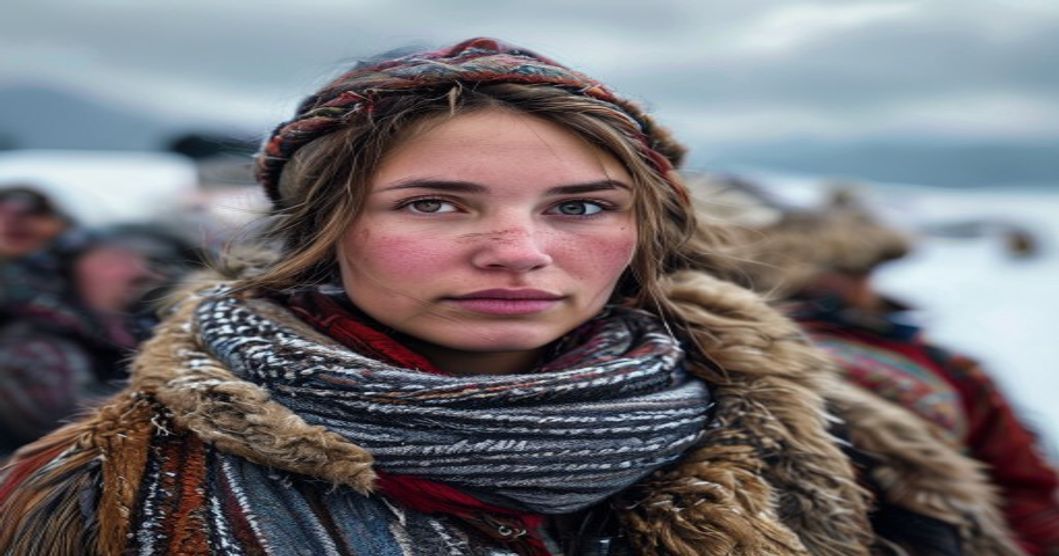
Historical Foundations of Sámi Social Structures
Sámi social organization developed through distinct ecological adaptations across northern Fennoscandia, with gender roles defined by practical necessity rather than rigid hierarchy. In inland reindeer pastoral communities, labor distribution followed seasonal migration cycles where men traditionally managed large herd movements and hunting expeditions, while women controlled dairy processing, textile production, and domestic logistics during extended transhumance periods. This division operated as a functional interdependence system rather than a subordinate framework, with household resource allocation remaining under female oversight.
- Coastal Sámi populations in Troms and Finnmark regions maintained fishing-based economies where gender boundaries proved remarkably permeable. Women routinely operated boats, processed cod and halibut catches, and managed winter storage systems that sustained entire kinship networks during Arctic winters.
- Agricultural Sámi settlements in inland valleys developed mixed farming practices that required synchronized labor patterns. Both genders participated in hay harvesting, livestock breeding programs, and timber collection for traditional turf construction.
Spiritual leadership within early Sámi cosmology frequently bypassed gender restrictions. The noaidi or shamanic practitioners emerged from both male and female lineages, with historical accounts documenting female seers who mediated between human settlements and reindeer herds through drum rituals. These spiritual authorities commanded equal respect across social strata, demonstrating that religious influence operated independently of domestic labor divisions.
Economic autonomy remained central to traditional Sámi family structures before nineteenth-century colonial administration imposed foreign property laws. Women retained independent ownership of reindeer herds, fishing weirs, and craft workshops throughout the pre-modern period. Household decision-making regarding marriage alliances, resource distribution, and seasonal migration routes required consensus between spouses rather than unilateral male authority.
Regional variations shaped these historical patterns significantly. Southern Sámi groups practiced intensive agriculture with clearly defined property inheritance lines, while northern pastoral communities maintained flexible kinship networks where gender roles adapted to environmental pressures. The introduction of fixed tax registers and mission school systems gradually disrupted these complementary arrangements by enforcing European nuclear family models that marginalized traditional female economic participation.
Traditional Division of Labor and Economic Systems
Within Sami communities, the traditional division of labor operated as a highly interdependent system rather than a rigid hierarchy. Survival in the subarctic environment required precise coordination between genders, with each role contributing directly to household wealth and community resilience. Men typically managed long-distance reindeer migrations, pursued large game hunting, and conducted seasonal fishing expeditions along coastal and riverine routes. Their responsibilities extended to crafting essential tools, constructing boats, and maintaining sleds necessary for winter mobility.
Women controlled the domestic economy and processed the majority of reindeer-derived resources. They milked reindeer, transformed hides into durable textiles, tanned leather for clothing and footwear, and prepared meat for preservation through smoking or drying. The production of duodji, traditional Sami handicrafts, remained predominantly female-led and functioned as both a domestic necessity and a trade commodity. Women also regulated household resource allocation, managed grain storage systems, and coordinated local reindeer herding operations during seasonal absences.
- Reindeer milk processing required specialized knowledge passed through maternal lines, generating high-value dairy products traded in regional markets.
- Hunting strategies relied on male navigation skills while women organized camp logistics, fuel procurement, and emergency food reserves.
- Trade networks operated on reciprocal exchange principles, with women often negotiating the distribution of furs, antler carvings, and woven goods in coastal trading posts.
Economic structures across Sami territories adapted to ecological zones, creating distinct but complementary labor patterns. Coastal groups focused on marine resource extraction while inland populations prioritized pastoral management. Gender roles shifted dynamically during migration cycles, with women frequently assuming herd leadership when men undertook extended hunting trips. This flexibility prevented economic collapse during seasonal fluctuations and maintained continuous production cycles. Household wealth accumulation depended on synchronized contributions rather than individual specialization, establishing an economic framework where gendered responsibilities reinforced mutual survival strategies.
Kinship Networks and Interpersonal Dynamics
Sami kinship networks historically operated through bilateral descent systems, where lineage traced equally through maternal and paternal lines. This structural foundation directly shaped gender roles by establishing complementary economic responsibilities rather than rigid hierarchies. Within traditional reindeer herding households, men typically directed large-scale seasonal migrations and hunting expeditions, while women managed dairy processing, textile production, child education, and the construction of specialized dwelling frameworks. Both genders participated in critical clan decisions, particularly regarding grazing rights and resource allocation across shared territories.
Kinship ties extended beyond immediate families through strategic marriage alliances that connected distant herding groups. These networks functioned as decentralized economic safety nets, enabling communities to navigate harsh Arctic conditions through reciprocal labor exchange. Women frequently orchestrated inter-household cooperation during calving seasons and winter feeding periods, coordinating food distribution and childcare across multiple dwellings. The interpersonal dynamics within these clusters emphasized mutual obligation over individual accumulation, with gender-specific tasks viewed as equally vital to group survival.
- Descent and Inheritance: Property rights, including reindeer herds and fishing grounds, passed through both bloodlines, granting women direct economic agency and land stewardship responsibilities.
- Missionary and State Interventions: Seventeenth-century Christianization campaigns systematically replaced bilateral kinship recognition with patrilineal legal frameworks, marginalizing women’s traditional authority in clan councils.
- Contemporary Reorganization: Modern Sami parliaments and cultural revitalization programs actively reconstruct historical kinship models to address gender imbalances in resource distribution and political representation.
Interpersonal communication within these networks relied on seasonal rhythm synchronization and distributed decision-making protocols. Elders mediated disputes through consensus-building practices that acknowledged both genders’ contributions to cultural continuity. Colonial land dispossession disrupted traditional kinship geography, forcing many families into wage labor systems that temporarily inverted historical gender divisions. Current anthropological studies document how younger Sami generations are remapping these interpersonal structures, blending ancestral reciprocity principles with modern legal frameworks to preserve equitable social organization.
Regional Variations Across Sápmi Territories
Traditional Sámi societies operated on interdependent labor divisions that adapted directly to ecological zones and subsistence strategies. In the coastal regions of Finnmark and Tromsø, fishing and marine resource management historically shaped distinct male and female responsibilities. Women managed net maintenance, fish processing, and household logistics, while men focused on deep-sea navigation and seasonal migration patterns tied to salmon runs. These roles were not rigid hierarchies but complementary functions necessary for survival in harsh maritime climates. Moving inland toward the Scandinavian Mountains and the Finnish Lapland fell landscapes, reindeer herding dictated a different gender framework. Historically, male herders led large migratory routes across international borders, yet Sámi women controlled herd accounting, veterinary care, calf branding, and the distribution of dairy products. This economic control granted substantial decision-making authority within family units and local duodji cooperatives.
National border divisions have further fragmented these regional patterns. In Norwegian Sápmi, state-led assimilation policies during the twentieth century accelerated gender role shifts, introducing formal education systems that initially pushed women into teaching and nursing while men entered public administration. Swedish Sámi territories experienced parallel industrialization pressures, yet strong local reindeer grazing associations preserved traditional female economic influence through collective dairy enterprises. Finnish Lapland saw deeper agricultural integration, which gradually normalized mixed-gender farming practices and reduced strict occupational segregation. On the Russian Kola Peninsula, Soviet-era collectivization erased many customary gender distinctions, replacing them with standardized labor assignments that later required cultural revival efforts to reconstruct pre-colonial roles.
Contemporary Sápmi regions now reflect layered gender dynamics. Urban centers like Tromsø, Kiruna, and Utsjoki host active feminist movements that merge Indigenous rights with environmental advocacy. Rural municipalities maintain seasonal role distributions tied to tourism, duodji markets, and language revitalization programs. Digital communication networks have accelerated cross-regional knowledge exchange, allowing younger Sámi women in coastal areas to adopt herding management techniques traditionally reserved for inland male lineages. These evolving patterns demonstrate how ecological necessity, colonial policy, and modern economic integration continuously reshape gender expectations across Sápmi.
Coastal Maritime Practices and Gendered Occupations
The coastal Sami populations, historically concentrated along the northern shores of Norway, Sweden, and Finland, developed a maritime economy fundamentally shaped by seasonal rhythms and environmental constraints. Fishing, particularly for cod, herring, and salmon, formed the backbone of subsistence and trade. Men typically operated offshore vessels during spring and summer migrations, navigating dangerous waters to secure pelagic catches. This division of labor emerged from practical necessities: extended voyages required physical endurance and specialized seamanship, roles traditionally passed through paternal lineages.
Women’s contributions anchored the maritime value chain onshore and in shallow coastal zones. They managed fish processing facilities, operating drying racks, smoking pits, and fermentation vats that preserved surplus catches for winter months. Net mending, rope crafting, and boat repair constituted daily labor, while women also directed gillnet operations near shorelines and harvested shellfish, seaweed, and seabird eggs. Historical parish records from the 18th and 19th centuries reveal that widows frequently inherited fishing licenses and vessel ownership, demonstrating fluid boundaries in occupational assignment.
- Cod drying required precise airflow management, a skill systematically taught to daughters through generational practice.
- Seal hunting expeditions occasionally included female hunters who specialized in tracking ice patterns and operating small hunting skiffs.
- Maritime trade networks relied on women’s negotiation skills when exchanging dried fish for grain and iron tools with southern Norwegian merchants.
Industrial fishing and state-imposed quotas in the 20th century disrupted traditional knowledge transmission. Modern coastal Sami communities now integrate scientific marine management with ancestral techniques, yet gendered occupational patterns persist in seasonal labor distribution. Contemporary fisheries still reflect historical divisions, though educational access and cooperative ownership models have gradually expanded female participation in vessel operation and resource management. Maritime cooperatives increasingly document oral histories to preserve distinct gender-based technical vocabularies related to tide navigation, ice reading, and fish grading standards.
Inland Forest Herding Customs and Family Roles
The inland forest and mountain regions of Sami territory established a pastoral system fundamentally shaped by extreme climatic conditions, vast terrain, and the seasonal movement patterns of wild and semi-domesticated reindeer. Within these communities, family roles emerged from practical necessity rather than rigid social hierarchy. Survival depended on precise task allocation across the entire household, with responsibilities shifting according to age, expertise, and the demands of the annual pastoral cycle.
Traditional labor distribution reflected a highly interdependent structure. Men typically undertook long-distance migration routes, managed large herd assemblies, conducted seasonal slaughters, and handled negotiations with external trading networks. These duties required extensive knowledge of topography, weather forecasting, and reindeer behavior across hundreds of kilometers. Women maintained the operational core of the camp. They processed hides, preserved meat through smoking and drying, constructed lavvu tents, prepared meals using locally foraged botanicals, and oversaw the education of younger children. Crucially, women also monitored herd health, identified stragglers, and managed supplementary feeding during critical winter months.
- Migration logistics: Route planning and territory negotiation historically fell to male elders, though women evaluated campsite suitability based on fuel availability, water access, and shelter conditions.
- Herd management: Both genders participated in rounding up reindeer during autumn muster. Women frequently handled tagging, gender separation, and calf identification using traditional duodji marking techniques.
- Resource processing: Antler carving, hide tanning, and textile production remained predominantly female domains. These crafts directly supported winter survival and facilitated intra-community exchange.
Decision-making regarding grazing rights and seasonal movement required consensus within the family unit. While public assemblies historically favored male representation, internal household strategies relied on continuous consultation between partners. The inland forest herding model demanded equal operational competence from all adults. Knowledge transfer occurred through direct apprenticeship rather than formal instruction, ensuring that sons and daughters both acquired comprehensive skills in tracking, animal husbandry, and environmental adaptation. Contemporary shifts toward sedentary lifestyles and state-regulated reindeer management have altered daily routines, yet the foundational principle remains unchanged: effective herding depends on coordinated family labor where every role sustains the collective survival strategy.
Mountain Pastoral Traditions and Seasonal Adaptation
The mountainous territories historically inhabited by the Sámi dictated a highly specialized pastoral economy centered on reindeer husbandry, where survival depended on precise synchronization with ecological rhythms. Seasonal migration routes spanned hundreds of kilometers across alpine plateaus, taiga forests, and coastal zones, requiring meticulous labor distribution that evolved into distinct yet interdependent gender frameworks. During spring calving seasons, male herders led long-range tracking operations, utilizing skis and sled dogs to locate scattered newborns across frozen terrain. Simultaneously, women established fixed base camps where they processed reindeer milk, cured meat for winter preservation, and manufactured insulated garments using hides and sinew. Autumn migrations demanded coordinated movement of large herds, with men managing stamping techniques and boundary navigation while women oversaw resource allocation, trade negotiations, and the maintenance of seasonal stores.
Economic authority within mountain pastoral households rarely followed external patriarchal models. Women controlled the distribution of preserved foods, managed duodji craft production for regional markets, and directed household finances derived from reindeer product exchanges. Their expertise in tanning, sewing, and medicinal plant knowledge made them indispensable to community resilience during harsh winters or failed grazing years. Age and physical capacity often superseded rigid gender boundaries; older women frequently assumed herding leadership roles when younger men were unavailable, while teenage girls participated in calf branding and fence maintenance alongside male counterparts.
- Spring Operations: Male-led long-distance tracking paired with female-managed camp logistics and milk processing facilities.
- Summer Grazing Periods: Women directed pasture rotation strategies based on lichen growth patterns, while men maintained boundary markers and predator deterrent systems.
- Autumn Migration Phases: Coordinated herd driving required synchronized gender cooperation, with decision-making power shifting to whichever member possessed superior tracking knowledge or weather forecasting skills.
Environmental volatility forced adaptive labor allocation rather than fixed occupational segregation. When extreme snowpack delayed migrations, women temporarily assumed reindeer handling duties previously reserved for men, demonstrating a pragmatic approach to survival that prioritized functional competence over prescriptive gender expectations. This flexibility ensured continuous herd management without disrupting seasonal economic cycles.
Colonial Impact and Systemic Transformations
European state expansion into indigenous northern territories from the seventeenth century onward initiated a deliberate restructuring of local social hierarchies, with gender relations undergoing profound alteration. Colonial administrations in Norway, Sweden, and Finland implemented assimilation frameworks that systematically dismantled traditional kinship networks and economic autonomy. Missionary institutions played a central role in this transformation, introducing rigid Christian moral codes that categorized pre-colonial spiritual practices as heretical while enforcing patriarchal household models. Women, who historically managed reindeer calving seasons, controlled family resource distribution, and operated regional trade networks, faced legal and social restrictions that confined domestic spheres. State education policies, particularly the establishment of residential boarding schools in the nineteenth and twentieth centuries, severed intergenerational knowledge transfer. Children were punished for speaking native languages and practicing customary gender-based labor divisions, effectively erasing culturally specific role expectations.
- Livelihood Restructuring: Colonial land appropriation laws transferred grazing territories to state-controlled forestry and mining concessions, undermining the cooperative herding systems where gender roles were historically task-specific rather than hierarchical.
- Administrative Exclusion: Government appointments and legal documentation prioritized male heads of household in official records, marginalizing women’s traditional authority over resource allocation and community dispute resolution.
- Religious Moralization: Lutheran and Orthodox missions redefined female purity and labor value through European Victorian norms, displacing indigenous concepts of spiritual leadership that previously included older women as shamanic practitioners and council advisors
Missionization and the Erosion of Indigenous Frameworks
Christian missionization initiated across the Scandinavian peninsula during the seventeenth and eighteenth centuries fundamentally restructured Sámi social organization. Missionaries operated under state-sponsored mandates that classified indigenous cosmology, seasonal migration patterns, and domestic arrangements as spiritual deficiencies requiring correction. Lutheran doctrinal frameworks replaced relational kinship networks with rigid hierarchical boundaries, directly targeting family labor distribution and community governance.
Traditional Sámi societies utilized adaptive gender assignments determined by ecological zones, seasonal demands, and specialized skill sets. Reindeer herding, coastal fishing, inland hunting, textile production, and spiritual mediation functioned through complementary partnerships rather than fixed binaries. Ecclesiastical authorities systematically dismantled this flexibility. Clergy enforced Nordic marriage statutes that privileged male property accumulation while restricting female economic decision-making. Children extracted from communal households received instruction that labeled indigenous labor divisions as morally unacceptable.
- Conversion protocols required households to abandon traditional naming practices, adopt European clothing standards, and restructure living spaces to align with Protestant domestic ideals.
- Ecclesiastical tribunals imposed fines, land revocation, or forced relocation on families preserving customary mating arrangements, winter camp structures, or indigenous healing ceremonies.
- State-funded boarding institutions replaced intergenerational skill transmission with standardized curricula that elevated masculine agricultural labor while devaluing feminine craft production and ecological knowledge.
The cumulative institutional pressure accelerated the transition from reciprocal gender cooperation to legally enforced patriarchy. Colonial administrators embedded missionary frameworks into civil legislation, ensuring that economic rights, inheritance patterns, and political representation followed European male-dominated templates. Contemporary demographic studies consistently link current economic disparities within Sápmi directly to these coordinated assimilation campaigns.
Academic research emphasizes that missionization did not merely shift religious affiliation. It reengineered the foundational architecture of Sámi communities, replacing ecological responsiveness with doctrinal compliance. The systematic dismantling of indigenous governance structures permanently altered how gendered responsibilities were documented, economically valued, and transmitted across generations.
State Policies and Legal Marginalization
State-driven assimilation campaigns across Norway, Sweden, and Finland systematically dismantled traditional Sami social structures, including gender-specific responsibilities. During the late nineteenth and early twentieth centuries, educational laws mandated that indigenous children attend state-run boarding schools where speaking native languages or practicing cultural customs resulted in corporal punishment. This institutional erasure disrupted intergenerational transmission of knowledge, particularly affecting women who traditionally managed household economies, crafted functional textiles, and maintained seasonal migration patterns alongside male herders. Legal frameworks at the time recognized only patriarchal civil codes, rendering customary gender arrangements invisible to state authorities.
Territorial legislation further entrenched legal marginalization by prioritizing state ownership over indigenous land tenure. Reindeer husbandry acts in Norway and Sweden historically restricted herding rights to registered male heads of household, effectively excluding women from official recognition as economic actors despite their documented contributions to herd management, veterinary care, and seasonal processing. Property inheritance laws followed patrilineal models that ignored Sami kinship networks, where resource distribution traditionally balanced male hunting and female domestic production. Consequently, women’s labor was systematically excluded from legal compensation, licensing, and decision-making processes within official indigenous institutions.
Modern statutory reforms have yet to fully address historical gendered disparities in indigenous governance. Although international instruments such as UNDRIP and the ILO Convention No. 169 affirm collective rights, domestic implementation remains fragmented. Sami parliaments operate with advisory status rather than legislative authority, limiting their capacity to amend outdated land codes or family law provisions that still reflect colonial gender assumptions. Legal documentation of traditional practices continues to rely on ethnographic archives rather than living community testimony, perpetuating a gap between statutory recognition and actual cultural continuity. Without explicit legal mechanisms that acknowledge complementary gender roles in subsistence activities, economic participation, and cultural preservation, marginalization persists within contemporary indigenous policy frameworks.
Language Suppression and Cultural Displacement
Historical assimilation policies enacted by Scandinavian governments during the late nineteenth and twentieth centuries systematically dismantled traditional Sami social structures, with profound consequences for gender roles. The Norwegian “Norwegianization” policy, Swedish settlement acts, and Finnish language laws mandated the exclusive use of state languages in education, administration, and religious institutions. These policies directly targeted the Sami joik tradition, drum chants, and everyday dialects that historically encoded gender-specific knowledge. Women traditionally managed household economies, crafted reindeer leather garments, and preserved oral genealogies through rhythmic storytelling. Men dominated seasonal migration routes, hunting protocols, and inter-community diplomatic exchanges. When schooling forced children to speak only Norwegian, Swedish, or Finnish, the linguistic frameworks carrying these gendered responsibilities fractured.
The displacement of language accelerated cultural erosion. Children removed from their families in residential schools experienced direct punishment for speaking Sami, severing the primary transmission channel for domestic roles and communal duties. Matriarchal knowledge regarding textile dyeing, snow navigation, and seasonal resource allocation disappeared alongside vocabulary terms that defined women’s authority within clan councils. Simultaneously, patriarchal hunting terminology and territorial mapping phrases lost their contextual utility as reindeer herding shifted from autonomous family units to state-regulated cooperatives. This linguistic vacuum forced gender roles into rigid colonial frameworks. Sami men increasingly adopted male-dominated wage labor in mining and municipal sectors, while women faced compounded marginalization as both cultural mediators and economic providers. The loss of distinct
Contemporary Shifts and Modern Identity Formation
The transformation of gender dynamics within Sámi societies reflects a complex negotiation between historical traditions and modern socio-political frameworks. Legal recognition of indigenous rights across Norway, Sweden, Finland, and Russia has enabled Sámi women and non-binary individuals to occupy political offices, lead cultural institutions, and shape policy agendas that directly impact community governance. Sámi parliaments have increasingly integrated gender equity metrics into resource allocation, education funding, and language preservation initiatives. This institutional shift coincides with a broader economic transition. Traditional livelihoods such as reindeer husbandry, fishing, and seasonal agriculture historically assigned distinct labor divisions based on gender. Contemporary mobility, higher education access, and digital entrepreneurship have dissolved rigid occupational boundaries. Sámi women now dominate fields previously inaccessible to them, including renewable energy projects, Arctic law, environmental science, and cultural tourism development.
Identity formation has simultaneously moved beyond binary classifications. Urban migration patterns have created transnational Sámi networks where youth organizations utilize social media platforms to challenge assimilationist narratives and redefine cultural authenticity. Digital archives and open-access linguistic databases allow younger generations to reclaim ancestral knowledge without relying on patriarchal gatekeepers. The following developments illustrate how modern identity construction operates across multiple sectors:
- Media Representation: Independent film production, literature, and visual arts increasingly center Sámi women’s perspectives, disrupting external stereotypes that historically reduced indigenous cultures to static ethnographic subjects.
- Educational Reform: Curricula in Sápmi now incorporate indigenous feminism into teacher training programs, emphasizing how gender equity strengthens linguistic vitality and land stewardship.
- Legal Advocacy: Grassroots organizations address domestic violence prevention, reproductive rights, and labor market discrimination through cross-border coalitions that align with international human rights standards while respecting customary law.
Research institutions collaborate with community elders to document oral histories that highlight matriarchal decision-making practices predating colonial administrative systems. Despite progress, structural barriers persist. Geographic isolation in northern municipalities limits access to specialized healthcare and professional networking opportunities. Intergenerational tension emerges when younger community members prioritize individual career trajectories over collectivist obligations traditionally expected in pastoral economies. External funding mechanisms sometimes impose Western feminist frameworks that fail to align with indigenous epistemologies, creating friction in policy implementation. Nevertheless, the convergence of legal advocacy, digital connectivity, and institutional reform continues to reshape Sámi gender roles into dynamic, self-determined constructs rather than inherited prescriptions.
Educational Reform and Youth Cultural Revival
The shift from state-mandated assimilation to localized educational frameworks has fundamentally altered how Sámi communities approach cultural transmission. Traditional gender expectations, once rigidly defined by seasonal labor divisions and reindeer husbandry requirements, now intersect with contemporary pedagogical models designed to preserve linguistic and artistic heritage. Modern curriculum development in Finnmark, Norrbotten, and Kainuu emphasizes bilingual instruction where gender-neutral skill acquisition replaces historical occupational segregation. Youth programs specifically target the documentation of older generations’ knowledge, allowing young men and women to participate equally in craft preservation, oral history recording, and ecological management practices.
Institutional support through Sámi universities and vocational colleges has introduced structured pathways that validate indigenous knowledge systems alongside standard academic credentials. These institutions actively dismantle historical barriers by funding research projects led by female scholars focusing on gendered weaving patterns, male-led drum craftsmanship, and non-binary storytelling traditions within joik performance. Educational administrators recognize that cultural continuity depends on adapting rather than freezing historical practices. Community-driven workshops now integrate digital literacy with traditional textile arts, enabling youth to archive endangered techniques while negotiating contemporary identity markers.
- Curriculum developers embed gender-responsive pedagogy into teacher training programs across the Sápmi region, addressing historical displacement patterns and contemporary enrollment disparities.
- School boards collaborate with local elders to map traditional ecological knowledge onto science standards, ensuring resource management practices reflect both historical gender divisions and modern collaborative approaches.
- Youth participation in cultural documentation projects correlates directly with reduced dropout figures in remote municipalities, demonstrating how culturally grounded education stabilizes community retention.
Digital archives managed by student collectives now host thousands of hours of recorded interviews, weaving demonstrations, and seasonal migration patterns, all tagged for academic research while remaining accessible to local learners. Policy evaluations indicate that schools implementing these integrated frameworks report stronger peer collaboration networks and improved mental health indicators among adolescents navigating dual cultural identities. Grassroots initiatives operate parallel to formal schooling networks, creating mentorship ecosystems where intergenerational knowledge transfer occurs outside standardized testing frameworks. Youth councils in reindeer herding districts implement rotational leadership models that decouple authority from historical gender norms, allowing educational reform to function as a living laboratory rather than a static preservation effort.
Political Representation and Legislative Advances
The institutionalization of Sami political representation has fundamentally reshaped gender dynamics within indigenous governance structures. The establishment of the Sámediggi in Norway (1989), Sweden (1993), and Finland (2004) created formal channels for legislative participation, though early electoral outcomes heavily favored male delegates. Subsequent electoral reforms introduced voluntary gender quotas and targeted recruitment initiatives, gradually increasing female representation to approximately thirty percent across all three parliaments by the late 2010s. These shifts coincided with domestic policy frameworks mandating gender mainstreaming in indigenous affairs, compelling legislative bodies to address historically marginalized concerns such as childcare infrastructure for reindeer herding families, maternal healthcare access in remote municipalities, and anti-violence protocols tailored to indigenous women.
- Election Law Amendments: Norway’s Sami Parliament Act was revised to require balanced candidate lists, while Sweden implemented party-level gender parity agreements that directly influenced Sámi Democratic Union nominations.
- Labor & Economic Legislation: Recent amendments to reindeer husbandry laws now recognize co-ownership by women, dismantling patriarchal inheritance customs that previously restricted land and livestock control to male lineage holders.
- Cultural Institution Governance: Public funding allocations for Sámi universities and media outlets now enforce gender-balanced editorial boards and leadership appointments, ensuring policy narratives reflect diverse lived experiences.
International human rights instruments, particularly ILO Convention 169 and the UN Declaration on the Rights of Indigenous Peoples, provided critical legal leverage for Sami advocacy groups pushing intersectional gender reforms. Organizations such as the Sámi Women’s Association have consistently documented systemic barriers in municipal councils where traditional decision-making processes excluded female voices. In response, several Nordic countries integrated indigenous-specific gender impact assessments into regional budgeting processes. Contemporary legislative advances also address LGBTQ+ Sami individuals, with recent parliamentary resolutions explicitly protecting same-sex partners in reindeer herding cooperatives and expanding anti-discrimination statutes to cover cultural and linguistic discrimination alongside gender-based bias. Despite these structural improvements, rural municipalities still lag in implementing inclusive care systems, and electoral participation among young Sami women remains below national averages due to transportation costs and limited digital infrastructure in northern territories.
Urban Migration and Shifting Household Structures
The transition from traditional reindeer-herding territories to Scandinavian urban centers has fundamentally reconfigured gendered labor expectations within Sami households. Historically, pastoral economies required a strict functional division: men managed long-distance herding routes and livestock logistics, while women controlled food processing, textile production, and domestic resource allocation. Urban relocation disrupts this equilibrium by replacing subsistence-based specialization with wage-dependent employment models. Men frequently enter construction, transportation, or municipal sectors, while women increasingly pursue education and healthcare administration roles that were historically inaccessible in remote winter camps. This economic realignment dissolves rigid occupational boundaries but simultaneously introduces new performance pressures tied to urban labor market standards.
Household architecture has concurrently transformed from multi-generational dwelling units into nuclear or single-parent configurations. Extended kin networks that previously distributed childcare, eldercare, and craft transmission across gender lines now face geographic fragmentation. Urban apartments lack the spatial infrastructure for traditional reindeer processing or loom workshops, forcing cultural preservation efforts into formalized community centers rather than domestic spheres. Consequently, women often assume primary responsibility for maintaining linguistic continuity and ceremonial knowledge while navigating dual-career expectations. Men encounter identity recalibration when pastoral authority loses its economic relevance, prompting a pivot toward administrative leadership within Sami political organizations or educational initiatives.
Municipal welfare systems further accelerate these structural adjustments. Childcare subsidies, university access programs, and standardized healthcare delivery reduce reliance on kin-based support networks but increase dependency on state infrastructure. This shift empowers younger generations to negotiate gender expectations independently of traditional pastoral obligations. However, it also generates intergenerational friction regarding cultural transmission timelines and domestic decision-making authority. Urban Sami households now operate within a hybrid framework where ancestral roles are selectively preserved, economically adapted, or entirely redefined based on occupational mobility, educational attainment, and proximity to indigenous governance institutions.
Economic data from northern municipalities indicates that urbanized Sami families exhibit higher female labor force participation rates, yet report increased domestic workload redistribution during transitional generations. Demographic surveys confirm that third-generation urban Sami residents demonstrate measurable shifts in inheritance patterns and property ownership, further normalizing fluid gender roles across professional and domestic domains. Policy interventions targeting housing allocation and vocational training now explicitly account for these demographic realignments to prevent cultural erosion while supporting economic integration.
Academic Research and Indigenous Methodologies
Historical scholarship on Sami gender dynamics frequently relied upon external anthropological frameworks that filtered cultural practices through colonial taxonomies. Early twentieth-century studies often categorized women primarily as craft producers or domestic laborers, marginalizing their economic contributions to pastoral economies and spiritual leadership. These publications treated Sami social structures as static artifacts rather than adaptive systems, producing a fragmented understanding of gendered responsibilities across reindeer husbandry, fisheries, and trade networks.
Contemporary academic inquiry has shifted toward decolonizing research design by centering Indigenous epistemologies and community-driven documentation. Scholarly teams now prioritize collaborative knowledge production, where Sami researchers, elders, and cultural institutions co-design study parameters. This methodological transition replaces extractive fieldwork with reciprocal partnership models that recognize oral transmission, seasonal migration patterns, and intergenerational skill transfer as valid academic data.
- Participatory ethnography enables researchers to document gendered labor without imposing external classifications, capturing how women manage herd logistics, negotiate market access, and maintain linguistic continuity.
- Archival triangulation combines missionary records, municipal tax registers, and family correspondence with contemporary interviews to trace evolving expectations around marriage, inheritance, and public representation.
- Spatial mapping techniques visualize how gendered mobility patterns shape settlement development, resource allocation, and ceremonial site usage across Sápmi territories.
Ethical research protocols now mandate explicit community consent mechanisms and data sovereignty agreements. Academic publications increasingly credit Sami knowledge holders as co-authors or formal advisors, ensuring that interpretations remain grounded in lived experience rather than theoretical speculation. University programs operating in northern Scandinavia have established review boards specifically trained to evaluate methodology through Indigenous governance standards, reducing historical power imbalances in knowledge extraction.
The cumulative effect of these methodological reforms has clarified how Sami gender roles function as dynamic economic and cultural strategies rather than fixed traditional categories. Scholarly output now demonstrates how women actively shape pastoral decision-making, lead environmental advocacy initiatives, and reinterpret spiritual practices for contemporary contexts. This academic realignment strengthens both cultural preservation efforts and policy development by providing empirically grounded insights that respect community autonomy while meeting peer-reviewed academic standards.
Oral History Archives and Community-Led Research
Sami oral history archives function as primary documentation for tracing historical labor division, spiritual responsibilities, and social hierarchy within indigenous Nordic populations. These repositories rely on participatory methodologies that prioritize community sovereignty over external data collection. Researchers collaborate directly with knowledge keepers to record extended interviews, transcribe yoik performances, and catalog duodji crafting techniques. This methodology captures how gendered tasks evolved during state assimilation policies while maintaining core cultural frameworks.
Community-led initiatives utilize standardized metadata schemas that reflect Sami linguistic structures rather than imposing Western taxonomies. Field teams employ consent-driven recording protocols, ensuring elders control access to sensitive narratives about household management, reindeer migration routing, and seasonal resource allocation. Archival projects frequently document complementary role systems where women governed textile production, childcare logistics, and regional trade negotiations alongside men’s hunting expeditions and herd navigation.
- Digital collections integrate dialect-specific terminology to preserve nuanced distinctions in gendered vocabulary across North Sami, Lule Sami, and South Sami communities.
- Intergenerational workshops bridge archival materials with contemporary education, allowing younger participants to analyze historical expectations versus modern adaptations.
- Ethical stewardship frameworks align research practices with UNDRIP guidelines, guaranteeing indigenous data sovereignty and preventing extractive documentation methods.
- Cross-referencing techniques map oral accounts against regional climate records and trade ledgers to verify economic participation patterns
Digital Preservation and Cross-Cultural Dialogue
The digitization of indigenous knowledge systems has fundamentally reshaped how researchers and global audiences examine historical and contemporary gender roles in Sami communities. Digital archives now serve as critical infrastructure for preserving oral traditions, textile patterns, reindeer husbandry practices, and ceremonial protocols that traditionally dictated gendered responsibilities across Sápmi. By converting ethnographic field recordings, historical photographs, and community-generated narratives into searchable databases, institutions reduce reliance on fragmented colonial-era documentation that often distorted indigenous family structures.
These digital repositories enable direct cross-cultural dialogue by bypassing traditional academic gatekeeping. Indigenous curators now control metadata classification, ensuring terms like noaidi, goarru, and davvi retain their cultural context rather than conforming to Western binary frameworks. Multilingual tagging systems allow scholars, educators, and diaspora members to access layered documentation that contrasts pre-colonial egalitarian practices with modern socio-economic shifts.
- Interactive genealogy platforms map kinship networks across Norway, Sweden, Finland, and Russia, revealing how migration patterns influenced gendered labor distribution.
- Digital storytelling projects pair elder interviews with youth-generated content, documenting evolving household decision-making models.
- Open-access academic portals facilitate peer review between Sami researchers and international anthropologists, prioritizing community consent over extractive data collection.
Sustainability in digital preservation requires ongoing technical maintenance alongside ethical governance frameworks. Blockchain-verified ownership protocols and decentralized storage networks prevent cultural commodification while ensuring that gender-specific knowledge remains accessible to authorized community members. When cross-cultural dialogue emerges from these controlled environments, it generates measurable shifts in policy development, educational curricula, and indigenous rights advocacy globally.
Effective digital strategies also integrate semantic web standards, allowing algorithms to recognize contextual relationships between Sami gendered occupations and environmental stewardship roles. This technical precision improves search engine visibility for academic queries while protecting sensitive ceremonial data through tiered access controls. Communities leverage these platforms to publish counter-narratives that challenge external stereotypes, directly influencing museum acquisition policies and university syllabus revisions.
Future Trajectories and Sustainable Cultural Continuity
The evolution of gender roles within Sámi communities is no longer confined to historical documentation but actively shapes contemporary social structures. Urban migration, climate-driven ecological shifts, and transnational indigenous rights movements have accelerated a recalibration of traditional expectations. Younger generations are navigating a complex landscape where customary pastoral duties, craft production, and vocal traditions intersect with modern educational pathways and professional sectors. This transition does not signify cultural erosion; rather, it demonstrates adaptive resilience. Community-led initiatives prioritize flexible participation models that allow individuals to engage in reindeer husbandry, textile arts, or linguistic revitalization without rigid gender constraints.
Institutional frameworks across Norway, Sweden, Finland, and Russia increasingly recognize gender equity as integral to cultural sustainability. The Sámi Parliaments have implemented policy guidelines that mandate balanced representation in cultural funding allocations, museum governance, and educational curriculum development. Higher education programs at institutions like the Sámi University of Applied Sciences integrate indigenous epistemologies with contemporary gender studies, producing researchers who bridge ancestral knowledge systems and modern academic standards. Youth councils operate parallel to formal governance structures, ensuring that decision-making processes reflect diverse lived experiences rather than monolithic cultural narratives.
Digital platforms have emerged as critical vectors for cultural continuity. Sámi creators utilize podcast networks, independent publishing houses, and social media archives to document linguistic variations, craft techniques, and performance traditions. These digital repositories function as dynamic ecosystems where gender expression is decoupled from prescriptive roles. Algorithms favoring indigenous content amplification further support community autonomy, allowing grassroots movements to control narrative production rather than relying on external anthropological interpretations.
- Economic sustainability strategies directly influence cultural preservation outcomes through cooperatives focused on ethical textile markets and sustainable tourism enterprises.
- Financial independence reduces dependency on state subsidies while reinforcing community-defined priorities for long-term viability and resource allocation.
- Policy mechanisms must recognize that gender role evolution functions as an extension of adaptive survival strategies rather than a deviation from tradition.
Long-term continuity depends on institutionalizing flexible cultural practices within legal frameworks that protect indigenous sovereignty. Continuous monitoring of linguistic vitality, craft transmission rates, and youth participation metrics provides measurable indicators for evaluating sustainability initiatives. When economic structures align with cultural values, intergenerational knowledge transfer gains structural stability rather than remaining reliant on sporadic grant cycles.
Economic Empowerment and Traditional Livelihood Integration
Traditional Sami livelihoods have historically operated within clearly defined gender frameworks, yet contemporary economic initiatives are actively reshaping these boundaries. Reindeer herding, once predominantly managed by men due to seasonal migration patterns and herd management logistics, now welcomes female participation through structured training programs and cooperative ownership models. Women in northern Scandinavia and Russia are establishing independent herding groups, leveraging modern veterinary practices alongside ancestral grazing knowledge to maintain herd sustainability during climate-shifted pasture cycles.
The craft economy represents another critical pathway for economic empowerment. Traditional duodji—handcrafted tools, clothing, and jewelry using reindeer antler, leather, and silver—has transitioned from domestic subsistence to a regulated commercial sector. Female artisans now dominate digital marketplaces and international design fairs, where cultural authenticity commands premium pricing. This shift requires mastering both traditional techniques and modern supply chain logistics, including e-commerce platforms, intellectual property registration, and export compliance.
- Cooperative Ownership Structures: Women-led reindeer herding cooperatives in Sápmi negotiate better meat distribution contracts and access EU agricultural subsidies previously unavailable to female operators.
- Cultural Tourism Integration: Female guides specialize in experiential tourism, blending traditional fishing techniques with ecological education, generating revenue streams that directly fund community development projects.
- Digital Craft Certification: Official duodji labels protect against mass production while enabling female makers to access high-margin export markets across Europe and North America.
Economic empowerment in this context does not require abandoning traditional livelihoods. Instead, it demands strategic adaptation. Young women are bridging generational knowledge gaps by combining GIS mapping for grazing land management with indigenous seasonal calendars. Financial literacy programs tailored to indigenous economies teach asset pooling, micro-lending circles, and grant writing for cultural preservation funds. These mechanisms reduce dependency on external wage labor while maintaining control over culturally significant resources. The result is a resilient economic model where gender equity strengthens, rather than erodes, traditional livelihood systems.
Intergenerational Knowledge Transfer Mechanisms
Knowledge transmission within Sami societies operates through tightly structured cultural frameworks that historically mapped onto distinct yet interdependent gendered pathways. Elders serve as primary custodians of ecological, linguistic, and craft-based expertise, delivering instruction through prolonged immersion rather than formal curricula. Seasonal reindeer herding cycles establish the foundational learning environment where adolescents observe tracking patterns, weather interpretation, and animal husbandry techniques. Male-dominated routes typically emphasize sled construction, firearm maintenance, and large-scale livestock management, while female-led transmission channels preserve joik vocalization traditions, duodji craftsmanship, drum symbolism, and plant identification for medicinal and dietary use. These domains require reciprocal validation; successful herding depends on textile durability for winter gear, and community cohesion relies on narrative frameworks that encode survival ethics.
The core mechanisms sustaining this transfer include:
- Participatory Immersion: Learning occurs through shared labor during seasonal migrations, where adolescents mirror elder movements before receiving explicit instruction.
- Linguistic Encoding: Dialect-specific lexicons for terrain, animal behavior, and weather patterns function as cognitive maps, ensuring technical concepts survive translation across generations.
- Ceremonial Role Assignment: Ritual gatherings designate responsibilities that parallel practical skills, linking spiritual practice to ecological stewardship.
- Material Apprenticeship: Tool maintenance and resource processing require years of supervised practice, with quality standards enforced through community feedback rather than formal assessment.
Contemporary adaptations now incorporate digital documentation and youth-led cultural initiatives, yet the core dependency on elder mentorship persists. Land rights negotiations and bilingual education programs have introduced structured archival projects that record elder narratives, ensuring female-led textile techniques and male-dominated navigation methods receive equal institutional recognition. These formalized efforts operate alongside traditional camp-based learning, preserving the experiential foundation that historically sustained gender-specific knowledge networks while adapting to modern regulatory frameworks.
Global Indigenous Networks and Policy Advocacy
International indigenous coalitions have fundamentally reshaped how gender dynamics operate within Sami governance structures. The Sami Council established a dedicated Gender Equality Working Group in 2014, which systematically documents disparities in land rights, reindeer herding access, and political representation across Norway, Sweden, Finland, and Russia. These organizations leverage UNDRIP Article 3 and Article 22 to demand gender-responsive policy frameworks that recognize women as primary cultural transmitters and economic actors. National implementations vary significantly. The Norwegian Sami Parliament introduced gender parity requirements for committee appointments in 2019, resulting in a measurable shift toward female leadership in resource allocation decisions. Swedish advocacy networks utilize the ILO Convention 169 to challenge historical exclusion of Sami women from herding districts, while Finnish institutions integrate gender impact assessments into all indigenous language revitalization programs.
- UN Declaration on the Rights of Indigenous Peoples (2007): Explicitly mandates gender-sensitive implementation across member states, providing legal leverage
“`html
Frequently Asked Questions
What is Gender Roles in Sami Communities?
Gender roles in Sami communities are shaped by centuries of Arctic life, reindeer herding, fishing, and hunting traditions. Traditionally, Sami society was relatively egalitarian compared to surrounding European cultures. Men typically handled reindeer herding, hunting, and long-distance trade, while women managed household duties, crafting textiles (such as the iconic gákti clothing), childcare, and local resource management. However, these roles were flexible and often overlapped depending on seasonal needs and regional variations among the four main Sami groups: North, South, Lule, and Inari Sami.
Key facts about Gender Roles in Sami Communities?
- Sami culture historically allowed significant gender flexibility, with women holding respected roles in decision-making and economic activities.
- The traditional Sami garment called gákti features distinct color patterns that can indicate a wearer’s region, marital status, and gender.
- In many Sami households, women managed the family economy, including trade of handmade crafts and local resources.
- Sami mythology includes powerful female figures such as Besti (a goddess) and shamanic seers known as noaidis, some of whom were women.
- Colonization pressures from Norway, Sweden, and Finland during the 18th–20th centuries imposed more rigid, patriarchal gender norms that gradually eroded traditional Sami practices.
- Contemporary Sami communities are actively reclaiming and redefining gender roles through cultural revival movements, education programs, and political activism.
“`
“`json
{
“@context”: “https://schema.org”,
“@type”: “FAQPage”,
“mainEntity”: [
{
“@type”: “Question”,
“name”: “What is Gender Roles in Sami Communities?”,
“acceptedAnswer”: {
“@type”: “Answer”,
“text”: “Gender roles in Sami communities are shaped by centuries of Arctic life, reindeer herding, fishing, and hunting traditions. Traditionally, Sami society was relatively egalitarian compared to surrounding European cultures. Men typically handled reindeer herding, hunting, and long-distance trade, while women managed household duties, crafting textiles (such as the iconic gákti clothing), childcare, and local resource management. However, these roles were flexible and often overlapped depending on seasonal needs and regional variations among the four main Sami groups: North, South, Lule, and Inari Sami.
”
}
},
{
“@type”: “Question”,
“name”: “Key facts about Gender Roles in Sami Communities?”,
“acceptedAnswer”: {
“@type”: “Answer”,
“text”: “- Sami culture historically allowed significant gender flexibility, with women holding respected roles in decision-making and economic activities.
- The traditional Sami garment called gákti features distinct color patterns that can indicate a wearer’s region, marital status, and gender.
- In many Sami households, women managed the family economy, including trade of handmade crafts and local resources.
- Sami mythology includes powerful female figures such as Besti (a goddess) and shamanic seers known as noaidis, some of whom were women.
- Colonization pressures from Norway, Sweden, and Finland during the 18th–20th centuries imposed more rigid, patriarchal gender norms that gradually eroded traditional Sami practices.
- Contemporary Sami communities are actively reclaiming and redefining gender roles through cultural revival movements, education programs, and political activism.
”
}
}
]
}
“`