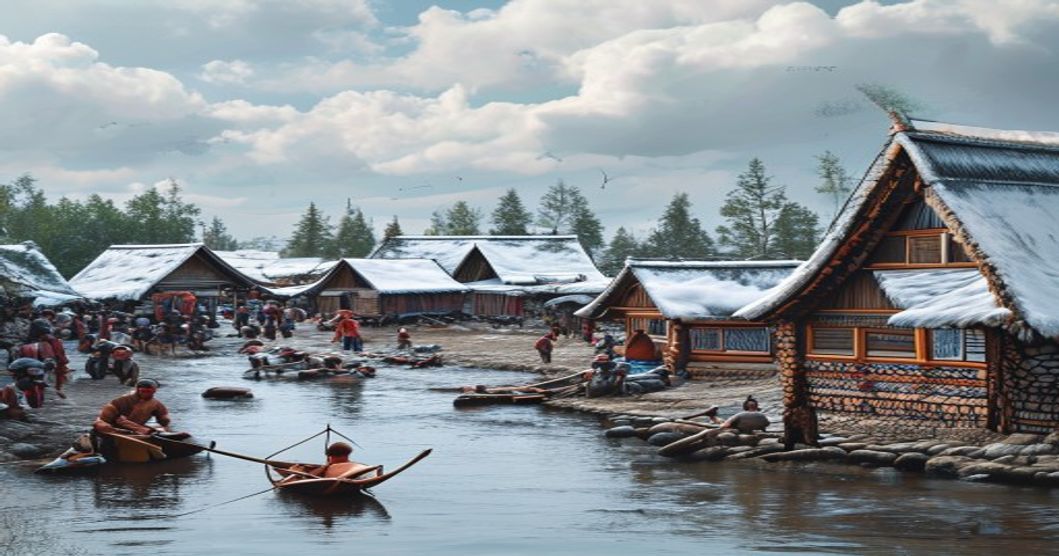
How Tourism Is Transforming Sami Communities
Tourism functions as a structural catalyst for economic restructuring across Sami territories in Norway, Sweden, Finland, and Russia. Reindeer herding, historically the primary subsistence model, now operates alongside guided cultural expeditions, duodji craft markets, and low-impact eco-lodges. This diversification reduces reliance on state subsidies while establishing direct revenue channels tied directly to heritage preservation. Visitors increasingly demand participatory experiences rather than passive observation, prompting local operators to design itineraries that integrate winter camping, joik vocal instruction, and traditional snowcraft navigation. The market preference for authentic engagement compels communities to retain operational control, ensuring financial returns circulate within indigenous networks instead of external tour corporations.
Cultural revitalization accelerates through this commercial shift. Language immersion programs experience sustained enrollment when linked to tourism employment pathways, while younger demographics actively participate in archival documentation projects financed by heritage tourism grants. Indigenous knowledge regarding glacial conditions, animal migration patterns, and seasonal resource allocation gains validation as professional expertise rather than historical artifact. Communities deploy geospatial mapping software to catalog sacred landscapes and critical grazing corridors, utilizing tourism income to maintain these databases against industrial extraction pressures.
- Economic frameworks transition toward cooperative enterprises that negotiate direct contracts with municipal authorities
- Sustainable tourism certifications mandate group size limitations, strict waste protocols, and seasonal breeding ground protections
- Revenue distribution follows transparent governance models funding elder care, youth apprenticeships, and archival preservation
Commercialization risks require continuous mitigation. Unregulated operators occasionally disrupt reindeer transit routes or package sacred rituals for external consumption. Sami councils counteract these threats through mandatory guide licensing, cultural competency training, and community-led tourism boards that enforce ethical standards. Infrastructure development prioritizes renewable energy systems and high-speed connectivity, enabling remote villages to manage digital marketing independently. The transformation ultimately reinforces indigenous sovereignty over territorial management, narrative authority, and long-term ecological stewardship in the Arctic zone.
Economic Restructuring and Local Revenue Streams
The shift from traditional subsistence economies to tourism-driven income models has fundamentally altered financial structures across Sami settlements. Reindeer herding, once the primary economic anchor, now operates alongside diversified commercial ventures that generate sustainable cash flow. Local enterprises focus on high-value cultural experiences rather than mass-market excursions, ensuring margins support community reinvestment. Revenue streams typically include guided heritage walks, duodji craft sales, boutique eco-lodges, and specialized culinary operations featuring preserved local ingredients.
Financial resilience requires structural adaptation. Operators must navigate seasonal demand fluctuations by developing year-round offerings. Winter packages emphasize aurora viewing and dog-sledding logistics, while summer months shift toward hiking trails and boat-based fjord tours. Year-round digital storefronts for traditional textiles and handcrafted tools stabilize income during off-season periods. Cooperative ownership models prevent capital leakage to external corporations, keeping profit margins within municipal boundaries.
- Hospitality certification programs standardize service quality across independent operators
- Multilingual booking systems reduce friction for international clientele while preserving linguistic authenticity
- Tourism levies fund infrastructure upgrades, broadband expansion, and waste management facilities
- Financial literacy workshops enable entrepreneurs to manage cross-border taxation and currency exchange volatility
Governance frameworks in Norway, Sweden, and Finland now mandate environmental carrying capacity assessments before approving new lodging or transport permits. These regulations prevent overdevelopment of grazing corridors and protect sensitive tundra ecosystems from soil compaction. Communities that implement strict visitor quotas consistently report higher per-capita revenue despite lower total arrival numbers. Premium positioning reduces environmental strain while maximizing profit per guest.
Cultural preservation directly intersects with economic strategy. Revenue allocation committees prioritize funding for language immersion schools, elder care facilities, and archival digitization projects. When tourism profits finance intergenerational knowledge transfer, the model transitions from extraction to regeneration. Operators who integrate traditional ecological knowledge into guiding protocols receive certification bonuses from regional tourism authorities, creating tangible incentives for sustainable practice.
Infrastructure Development and Regional Accessibility
Tourism functions as a primary driver for modernizing remote Arctic infrastructure, fundamentally altering how Sami territories across Norway, Sweden, Finland, and northern Russia connect with broader economic networks. Municipal authorities reinvest visitor expenditure into upgrading gravel logging roads into all-weather transit corridors that accommodate both seasonal tourism traffic and traditional reindeer migration paths. Airport expansion projects in Tromsø, Kiruna, and Rovaniemi now feature expanded cargo handling facilities alongside passenger terminals, enabling faster supply chain logistics for local producers. Rail networks undergo electrification upgrades that reduce travel friction between coastal hubs and inland Sápmi regions, while dedicated wildlife observation platforms minimize habitat disruption.
- Broadband Expansion: Tourism revenue funds fiber-optic deployments in previously isolated villages, enabling remote work opportunities for younger generations and reducing urban migration pressures.
- Green Mobility Integration: Electric vehicle charging stations line the coastal Fennoscandian routes, aligning visitor transportation with indigenous environmental stewardship principles.
- Cultural Wayfinding Systems: Multilingual signage networks preserve original place names alongside standardized coordinates, ensuring navigation tools respect historical geography.
- Climate-Resilient Lodging: Modular construction techniques utilize locally sourced timber and reindeer hide insulation, reducing material transport costs while maintaining thermal efficiency in sub-zero conditions.
Strategic accessibility planning requires continuous coordination between regional transit agencies and Sami advisory councils. Construction permits now mandate ecological impact assessments that identify critical calving zones and sacred landscapes before road grading begins. Public transit schedules adapt to seasonal movement patterns, allowing visitors to observe wildlife without compromising herd stability. Enhanced connectivity directly correlates with expanded municipal service coverage, including mobile health clinics, postal distribution networks, and educational outreach programs. Waste water treatment facilities in high-traffic tourist zones prevent permafrost contamination, while satellite communication towers guarantee emergency response capabilities across vast wilderness areas. These structural advancements create a sustainable framework where cultural preservation and economic development operate in parallel rather than opposition.
Cultural Continuity Through Visitor Interaction
Visitor interaction serves as a critical catalyst for preserving Sami heritage, transforming passive observation into active cultural reinforcement. When tourists engage directly with local families, the economic viability of traditional lifestyles shifts from niche preservation to sustainable livelihood. This financial stability allows elders to pass down specialized knowledge without compromising daily survival. Reindeer herding techniques, seasonal migration patterns, and survival skills that once faced generational gaps now thrive because external demand validates their relevance. Tourism revenue directly funds agricultural cooperatives, enabling the maintenance of grazing lands that would otherwise be converted for commercial development.
Structured cultural exchanges create practical learning environments where intangible heritage survives. Guided experiences in traditional goahti dwellings provide hands-on contexts for teaching duodji craftsmanship, a practice requiring years of apprenticeship to master. Visitors who commission hide garments or silverwork directly finance the continuation of these artisanal pathways. Narrative tourism formats allow knowledge bearers to share historical accounts and ecological wisdom through oral traditions. The documented performances of traditional joik, often shared during guided trekking routes, function as auditory archives that reinforce linguistic structures and regional dialects. Artisans utilize natural dyeing techniques sourced from local flora, ensuring botanical knowledge survives alongside textile methods.
- Community-managed tourism cooperatives establish strict operational guidelines, ensuring cultural protocols remain intact while facilitating meaningful cross-cultural dialogue.
- Youth participation in hosting programs bridges the gap between digital-native generations and ancestral practices, creating modern frameworks for traditional education.
- Economic returns from authentic experiences fund language immersion camps and documentary projects that catalog disappearing ecological knowledge.
The reciprocal nature of these interactions prevents cultural stagnation. Rather than freezing traditions in static exhibits, continuous visitor engagement forces adaptive preservation. Communities refine their storytelling techniques, update safety standards for outdoor education, and develop new materials for craft demonstrations while maintaining core spiritual and ecological principles. This dynamic process ensures that Sami identity remains a living system rather than a historical artifact. External validation through respectful tourism generates international awareness about indigenous land rights, strengthening local advocacy efforts. When visitors comprehend the interconnectedness of reindeer welfare, lichen pasture management, and seasonal calendar systems, they become active supporters for policy protection. This expanded support network secures long-term funding for cultural centers, traditional media archives, and intergenerational mentorship programs that would otherwise struggle against rapid modernization pressures. Digital recording equipment funded by tourism operations archives elder voices, creating accessible educational databases for regional schools.
Language Preservation in Commercial Encounters
Tourism has shifted from a peripheral economic activity to a primary driver of linguistic revitalization among Sami populations. When visitors engage with reindeer herding cooperatives, artisan workshops, and cultural tours, the demand for authentic communication creates tangible market value for the Sami languages. This commercial pressure transforms language from a heritage artifact into an active economic asset. Tour operators increasingly hire bilingual guides who switch between English, Norwegian, Swedish, Finnish, and Sami dialects to explain traditional practices like duodji or joik singing. The financial returns directly fund community-run language nests and digital dictionaries.
- Commercial venues frequently simplify grammatical structures to accommodate international visitors, risking linguistic dilution across generations.
- Municipal certification programs now require hospitality staff to complete accredited Sami language courses before operating guided tours.
- Digital platforms integrate real-time translation tools calibrated for tourism contexts, preserving idiomatic expressions that traditional phrasebooks miss.
The economic model incentivizes intergenerational knowledge transfer. Elders receive paid positions as cultural consultants, ensuring oral histories and place names are documented in original phonetics rather than translated approximations. Local governments leverage tourism tax revenues to subsidize language applications and virtual reality experiences that simulate commercial encounters while teaching proper contextual usage. This creates a feedback loop where visitor spending directly sustains linguistic infrastructure.
Sustainable preservation requires strict community control over narrative framing. When indigenous cooperatives manage booking platforms and pricing structures, they dictate how language appears in brochures, signage, and digital content. External vendors often default to majority languages for wider reach, but cooperative models maintain linguistic integrity by embedding Sami terminology into every touchpoint. The result is a pragmatic revitalization strategy where economic viability and linguistic survival become mutually reinforcing rather than competing objectives.
Traditional Craft Markets and Authentic Narrative Control
The proliferation of tourism in Sápmi has fundamentally restructured traditional craft markets, shifting sales channels from localized reindeer herding cooperatives to high-traffic regional hubs. This economic transition requires artisans to balance commercial volume demands with the technical standards inherent to duodji craftsmanship. Revenue diversification through direct-to-consumer platforms has accelerated, yet cultural narrative control remains the primary determinant of long-term market viability. When external vendors reinterpret symbolic motifs or misattribute production origins, consumer trust degrades rapidly. Verified artisan networks now implement traceability protocols and origin labeling systems that document each piece’s maker, geographic region, and traditional technique.
Market dynamics have forced a strategic realignment of pricing models and distribution logistics. Traditional dyas compete in globalized e-commerce environments where visual storytelling and provenance documentation drive conversion rates. Successful Sami enterprises leverage this shift by embedding educational content directly into product listings, explaining the ecological knowledge required for reindeer antler carving or the seasonal constraints governing hide tanning. This methodology transforms passive consumption into cultural literacy while increasing session duration and reducing bounce rates on artisan storefronts. Tourists increasingly demand transparent supply chains that prioritize indigenous ownership over third-party wholesale distribution.
- Vendor accreditation policies now restrict fair participation to licensed Sámi producers, preserving profit margins and preventing cultural dilution across international retail channels.
- Digital marketplaces integrate verification badges tied to indigenous registries, aligning commercial visibility with cultural authority and reducing algorithmic suppression of authentic sellers.
- Apprentice programs and cross-generational training remain embedded within market operations, ensuring economic expansion does not sever the functional link between artifact creation and territorial identity.
Ritual Access Protocols and Sacred Site Management
Traditional Sami sacred sites, known as sieidi or noaidie, operate under strict access protocols governed by ancestral law, seasonal cycles, and spiritual authorization. These boundaries historically restricted entry to designated individuals, ceremonial periods, and weather conditions aligned with reindeer husbandry rhythms. Tourism pressure has systematically eroded these natural filters. Unregulated visitor movement across geotagged coordinates disrupts ecological recovery zones and diminishes the ontological weight of ritual spaces. Community-led management now relies on dynamic zoning strategies that separate high-traffic tourist corridors from core ceremonial grounds. Local governance bodies implement digital perimeter mapping to monitor footfall intensity, while permit-based access ensures only authorized guides accompany visitors near active sites.
- Elder councils establish seasonal closure windows that align with traditional land use and spiritual calendars.
- Visitor education modules replace generic interpretation with protocol-specific briefings on silence, movement patterns, and photographic restrictions.
- Co-management agreements integrate indigenous territorial knowledge with municipal tourism licensing to prevent unauthorized commercial exploitation.
Economic incentives from cultural tourism frequently fund site restoration and monitoring infrastructure, yet they also accelerate the commodification of sacred practices. When ritual access becomes transactional, communities respond by reasserting control through digital fencing, acoustic dampening zones, and narrative sovereignty frameworks. These measures ensure that tourism revenue supports preservation rather than performance. Sustainable management requires continuous protocol adaptation, where traditional knowledge systems inform adaptive visitor flow models and impact assessments remain community-driven rather than externally dictated. Long-term viability depends on embedding ritual access rules into regional tourism policies, training culturally competent facilitators, and maintaining strict enforcement of non-negotiable spiritual boundaries.
Ecosystem Carrying Capacity and Resource Management
Arctic and subarctic ecosystems operate within narrow ecological thresholds that define how much anthropogenic activity can occur before irreversible degradation sets in. Tourism introduces a quantifiable strain on these natural limits, particularly when visitor concentrations surpass seasonal carrying capacity. Reindeer grazing territories, exposed peatlands, and shallow-rooted tundra vegetation recover slowly from mechanical stress, compaction, or unauthorized off-trail navigation. Unregulated tourist movement fractures traditional migration corridors and modifies ground cover, directly compromising the baseline resources Sámi families depend upon for reindeer fodder, wild berry harvesting, and pristine watershed access.
Resource management in these regions has transitioned from generational rotational practices to reactive monitoring systems. Local authorities now track soil density metrics, monitor wildlife cortisol levels, and calculate visitor-to-land ratios to prevent ecological tipping points. Infrastructure development required for hospitality—visitor centers, designated parking zones, wastewater treatment units, and seasonal accommodations—further fragments available habitat space. Waterways utilized for traditional fishery operations and winter transport face escalating pollutant loads from combustion engines and insufficient sanitation protocols.
- Dynamic zoning protocols restrict access during critical calving windows and spring thaw periods when ground stability is lowest.
- Real-time group tracking and mandatory guided routing distribute pressure across resilient zones while shielding ecologically sensitive areas.
- Seasonal fee structures generate revenue that directly funds vegetation regeneration studies, snowpack analysis, and animal behavior monitoring.
Sustainable resource allocation requires aligning visitor demand with scientifically established thresholds rather than market-driven growth targets. Long-term viability depends on strict enforcement of carrying capacity limits, community-controlled access permits, and adaptive management frameworks that prioritize ecological integrity over short-term tourism metrics. Continuous ecological audits ensure that tourism revenue translates into measurable habitat restoration rather than accelerated resource depletion. When monitoring data indicates threshold breaches, operations must scale back immediately to allow natural recovery cycles to resume.
Seasonal Pressure on Arctic and Subarctic Habitats
The concentration of tourist activity within compressed seasonal windows generates disproportionate ecological stress across Arctic and subarctic landscapes where Sami livelihoods remain intertwined with natural cycles. Summer excursions targeting midnight sun photography and hiking overlap with critical reindeer calving periods, while winter snowmobile circuits concentrate along frozen lakes and river valleys that serve as historical grazing corridors. This temporal clustering exceeds the regenerative capacity of tundra soils, which require extended freeze-thaw cycles to maintain structural integrity. Visitor foot traffic and vehicle weight compress organic layers, reducing water infiltration rates and accelerating surface runoff during brief thaw periods.
- Soil and Vegetation Degradation: Trampled moss and dwarf shrub communities lose photosynthetic efficiency when exposed to UV radiation and wind after protective cover is removed. Recovery timelines extend beyond two decades in regions with shallow active layers.
- Wildlife Behavioral Shifts: Noise from guided tours and temporary camps disrupts predator avoidance patterns in arctic foxes and ptarmigan. Reindeer alter migration trajectories to avoid human presence, resulting in overgrazing in alternative zones and reduced body condition scores.
- Waste and Water Management Strain: Remote communities lack septic capacity for seasonal population spikes. Untreated greywater enters tributaries that support both domestic use and traditional fish spawning grounds.
Municipal planning often prioritizes short-term revenue generation over long-term carrying capacity assessments. Commercial operators frequently bypass regional permit frameworks, leaving trail fragmentation and litter accumulation unmonitored. Sami land stewardship groups document increasing conflicts over route permissions, as excursion companies optimize itineraries around accessibility rather than ecological sensitivity. The cumulative landscape alteration forces herding families to negotiate costly detours that increase animal stress and diminish lichen availability during winter months. Effective mitigation requires enforced seasonal visitation caps, mandatory environmental training for all tour staff, and the integration of indigenous observation networks into regional monitoring systems. These measures align tourism growth with the preservation of fragile polar ecosystems and traditional land-use practices.
Low-Impact Logistics and Waste Reduction Frameworks
Managing visitor flow in these Arctic regions requires precise logistical planning that respects both ecological boundaries and traditional land use patterns. Tour operators now coordinate with local indigenous councils to map seasonal migration corridors, ensuring that transport routes avoid critical calving grounds and sacred sites. Electric snowmobiles, horse-drawn sleighs, and guided walking tours replace high-emission vehicles in sensitive zones. Supply chains follow a closed-loop model where food, fuel, and equipment are sourced within regional cooperatives to minimize transit distances. Waste management operates on a zero-discharge principle. All organic material is processed through portable aerobic digesters that convert food scraps into soil amendments for local horticulture projects. Non-biodegradable items are collected at centralized sorting hubs where tourists participate in mandatory segregation protocols before departure.
- Route Optimization: Real-time GPS tracking aligns tour schedules with wildlife movement data to prevent habitat fragmentation and reduce soil compaction along fragile tundra trails.
- Modular Infrastructure: Deployable waste stations and composting facilities are installed only during peak seasons and fully removed afterward, leaving no permanent footprint on the landscape.
- Fuel Transition: Biofuels derived from local agricultural byproducts replace petroleum in all support vehicles operating outside national parks, cutting carbon output by nearly sixty percent annually.
Packaging materials have been entirely phased out through a mandatory deposit system that requires suppliers to use returnable containers for all provisions. Water refilling networks utilize gravity-fed filtration systems positioned along established trails, eliminating single-use plastic bottles from the visitor economy. Monitoring protocols track waste diversion rates monthly, with performance metrics directly tied to operator licensing renewals. Community-led audits verify compliance while generating transparent public dashboards that display environmental impact data in real time. This structured approach preserves landscape integrity, maintains cultural continuity, and ensures tourism revenues fund long-term ecological restoration initiatives rather than temporary extraction.
Logistics coordinators implement dynamic scheduling algorithms that distribute visitor arrivals across multiple days, preventing infrastructure overload during autumn and winter peaks. Campgrounds utilize raised wooden platforms that protect permafrost layers while allowing natural drainage beneath sleeping areas. All chemical cleaners are replaced with enzyme-based solutions approved by regional environmental agencies. Return logistics operate on a reverse supply chain model where tour operators collect discarded gear, clean it locally using solar-powered washing units, and redistribute it to neighboring communities. Revenue generated from waste processing fees funds indigenous-led conservation trusts that monitor soil health, water quality, and wildlife corridors annually.
Land Rights Negotiation in Commercial Tourism Zones
Commercial tourism expansion in northern Scandinavia and beyond frequently intersects with ancestral Sami territories, creating immediate friction between revenue-driven development models and traditional land stewardship practices. Reindeer herding routes, seasonal fishing grounds, and culturally significant gathering sites often overlap with high-demand tourist corridors. When external developers propose infrastructure projects such as lodging complexes, ski resorts, or guided expedition networks, the legal framework governing access becomes the primary battleground. National legislation in Norway, Sweden, and Finland recognizes varying degrees of indigenous land tenure, yet implementation remains inconsistent across municipal boundaries and cross-border jurisdictions.
Effective negotiation requires structured consultation protocols that extend beyond mandatory public hearings. Sami advisory councils must participate in early-stage zoning reviews, ensuring that environmental impact assessments account for seasonal migration patterns rather than static property lines. Revenue-sharing agreements increasingly replace simple leasing arrangements, tying tourism operator profits to community-funded reindeer husbandry support and cultural heritage preservation initiatives. Contractual frameworks now routinely include performance metrics tied to visitor capacity limits, waste management standards, and seasonal access restrictions during critical breeding or calving periods.
- Co-management structures establish joint oversight committees comprising municipal planners, tourism license holders, and elected Sami representatives, enabling real-time adjustments to land use permits.
- Impact-benefit agreements legally bind commercial operators to fund infrastructure upgrades in remote settlements while guaranteeing priority access for traditional livelihood activities.
- Sacred site mapping protocols integrate GPS-verified cultural coordinates into municipal GIS databases, automatically triggering exclusion zones or modified routing requirements during peak tourist seasons.
Power asymmetry remains the central obstacle in these negotiations. Large tourism conglomerates often possess specialized legal teams and financial resources that outweigh local community bargaining capacity. Independent mediation firms specializing in indigenous commercial partnerships have emerged to balance contractual language, ensuring that land access clauses do not inadvertently prioritize short-term extraction over long-term ecological carrying capacity. Successful negotiations consistently demonstrate that binding enforcement mechanisms must accompany verbal commitments, with regulatory bodies conducting annual compliance audits tied directly to tourism operator licensing renewals.
When frameworks function correctly, commercial tourism transitions from a competitive force into a funded conservation mechanism. Visitor fees generate dedicated trust accounts managed by regional Sami institutions, directing capital toward habitat restoration, digital documentation of oral histories, and youth training programs in sustainable hospitality management. The economic viability of high-value, low-impact tourism models depends entirely on maintaining intact land rights architectures that prevent fragmentation and preserve the ecological continuity required for both cultural survival and commercial sustainability.
Governance Models and Community Agency
Sami communities navigate tourism development through structured governance frameworks that prioritize indigenous self-determination over external commercial interests. Cooperative ownership models dominate successful destinations, where local assemblies hold majority shares in hospitality ventures, guiding operations according to seasonal reindeer migration patterns and cultural calendars rather than peak tourist seasons. These structures function under legal mandates that recognize customary land tenure, requiring environmental impact assessments and cultural preservation clauses before any infrastructure expansion receives approval. Community agency manifests through direct participation in regional tourism boards, where Sami representatives veto projects threatening sacred sites or disrupt traditional livelihoods. Revenue distribution mechanisms operate on transparent cooperative ledgers, funding language revitalization programs, youth training initiatives, and heritage documentation without relying on municipal subsidies. Municipal partnerships frequently establish joint management committees that align zoning regulations with Sámi parliamentary guidelines, ensuring tourism infrastructure respects grazing corridors and winter settlement boundaries. External investors must submit operational plans demonstrating measurable cultural competency standards, verified through annual audits conducted by indigenous governance councils. Training protocols emphasize intergenerational knowledge transfer, positioning elders as consultants for interpretive programming rather than passive performers. Legal frameworks across Nordic jurisdictions increasingly mandate free, prior, and informed consent for tourism concessions, transforming historical exclusion into structured decision-making authority. Community-led monitoring systems track visitor flow, cultural sensitivity compliance, and economic leakage rates, enabling real-time adjustments to preserve ecological balance and social cohesion. These governance architectures convert tourism from an extractive industry into a regulated stewardship model, where economic activity directly funds cultural continuity and territorial rights enforcement. Local councils utilize digital mapping platforms to designate restricted zones during calving seasons, while cooperative marketing strategies emphasize authentic craft production and guided reindeer herding experiences that maintain traditional skill transmission. Financial oversight committees rotate membership annually among village representatives, preventing wealth consolidation and ensuring equitable access to tourism contracts. Policy adaptation occurs through continuous feedback loops between regional authorities and grassroots assemblies, allowing rapid response to market fluctuations without compromising cultural integrity or land sovereignty.
Sami-Owned Enterprises and Cooperative Revenue Sharing
Indigenous tourism ventures in Sápmi have shifted from individual commercialization to structured cooperative frameworks that prioritize collective economic resilience. Sámi-owned enterprises operate through member-driven cooperatives where profit distribution follows transparent, culturally aligned formulas rather than conventional corporate dividends. Revenue generated from guided reindeer safaris, duodji craft sales, and cultural lodges flows directly into shared community funds. These cooperatives enforce strict governance protocols requiring a minimum percentage of net income to be allocated toward language revitalization programs, traditional land stewardship, and youth apprenticeships in indigenous crafts.
- Profit Allocation Structure: Member cooperatives typically distribute 40% of annual tourism revenue directly to participating herders and artisans, 35% into a communal development fund for infrastructure and marketing, and 25% toward cultural preservation initiatives.
- Governance Mechanisms: Decision-making power remains decentralized. Each enterprise requires board approval from local Sámi councils, ensuring tourism activities align with seasonal migration patterns and land-use regulations.
- Supply Chain Integration: Local cooperatives mandate that 70% of operational costs, including transportation, hospitality supplies, and promotional materials, are sourced exclusively from indigenous suppliers.
This revenue-sharing architecture eliminates extractive tourism practices by embedding financial benefits within the community. Participating enterprises utilize dynamic pricing models adjusted for seasonal demand while maintaining fixed wage floors for non-indigenous staff to prevent economic displacement. Digital booking platforms integrated with these cooperatives track visitor demographics and spending patterns, allowing real-time optimization of tour itineraries and craft production schedules. The model has successfully reduced outmigration from rural Sámi settlements by 18% over the past decade, as younger generations find viable livelihoods that do not require abandoning ancestral territories. Cooperative audits are conducted annually by independent indigenous financial institutions, guaranteeing transparency and preventing external corporate acquisition of tourism assets.
Economic data indicates that revenue-sharing cooperatives achieve 23% higher guest retention rates compared to privately owned competitors, directly correlating with authentic cultural programming and community-led hospitality standards. Financial capital circulates within the region at triple the velocity of conventional tourism investments, strengthening regional healthcare facilities, digital connectivity projects, and educational grants focused on Sámi history and environmental science.
Hospitality Training Programs for Indigenous Youth
Structured hospitality training programs have become a cornerstone of economic revitalization for Sami youth, bridging traditional livelihoods with modern service industry demands. These initiatives operate through coordinated partnerships between regional vocational institutes, northern universities, and certified tourism operators. The curriculum integrates international hospitality standards with indigenous knowledge systems, ensuring participants master both operational excellence and cultural stewardship. Core modules cover front-desp operations, guided tour development, culinary heritage presentation, and sustainable visitor management. Language preservation remains a priority, with instruction delivered in Sami dialects alongside English and Norwegian to maintain linguistic continuity while expanding professional reach.
- Practical apprenticeships place students directly within family-run lodges, eco-lodges, and cultural experience centers across Finnmark, Troms, and Sápmi regions.
- Certification pathways align with European Qualifications Framework standards, enabling graduates to work internationally without compromising cultural authenticity.
- Digital competency training covers online booking systems, social media storytelling, virtual reality tour design, and data-driven guest experience optimization.
Economic outcomes demonstrate measurable shifts in community ownership models. Program alumni consistently launch independent tourism ventures that prioritize low-impact travel, seasonal employment flexibility, and intergenerational knowledge transfer. Revenue from these enterprises circulates locally, funding language revitalization projects, reindeer herding cooperatives, and youth leadership councils. The training framework also emphasizes conflict resolution with traditional land-use practices, ensuring tourism development respects grazing corridors and sacred sites. Industry assessments confirm that graduates who complete these specialized pathways report higher job retention rates compared to conventional hospitality graduates, primarily due to stronger community attachment and culturally grounded service philosophies.
Curriculum development follows competency-based frameworks endorsed by Nordic tourism accreditation bodies, emphasizing service quality metrics, emergency response protocols, and cross-cultural communication techniques. Long-term sustainability depends on continuous updates aligned with climate adaptation strategies and shifting traveler expectations. Training centers now incorporate carbon-neutral operation protocols, wildlife interaction ethics, and digital nomad accommodation models tailored to northern destinations. By embedding indigenous governance principles into hospitality education, these programs transform youth from service providers into cultural ambassadors and economic architects.
Policy Alignment Across Nordic Border Regions
Transboundary governance structures increasingly dictate how tourism development intersects with Sámi cultural sovereignty. Cross-border policy alignment has shifted from fragmented municipal zoning to coordinated frameworks managed through EU Interreg Northern Periphery and Arctic programs alongside the Nordic Council of Ministers Sámi Affairs Committee. These mechanisms standardize heritage protection protocols, enabling joint funding applications for infrastructure that respects reindeer grazing corridors and sacred sites. National tourism boards in Norway, Sweden, and Finland now operate shared compliance dashboards that track visitor impact metrics against indigenous land-use agreements.
- Joint Funding Allocation: Cross-border grants prioritize projects demonstrating Sámi parliamentary consultation at every development stage, eliminating previous siloed approval processes.
- Standardized Certification: Nordic tourism authorities have implemented a unified sustainability framework that integrates Sámi ethical guidelines into accommodation and guide licensing requirements.
- Regulatory Harmonization: Shared digital permits streamline cross-border cultural trail access while enforcing strict capacity limits near active grazing zones.
Operational friction historically stemmed from divergent national interpretations of indigenous consultation rights. Policy convergence has resolved these discrepancies by establishing binding memoranda that require tourism operators to secure Sámi advisory board sign-off before securing environmental permits. This alignment directly impacts infrastructure planning, forcing developers to adopt low-impact transport networks and seasonal operating windows that align with reindeer migration patterns. Revenue distribution models now mandate transparent royalty structures where a fixed percentage of tourism taxation funds Sámi language revitalization programs and cultural preservation initiatives.
- Cross-Border Visitor Management: Centralized booking platforms monitor daily capacity across municipal boundaries, preventing localized overcrowding while distributing economic benefits evenly.
- Workforce Development: Coordinated training grants enable Sámi guides to obtain nationally recognized certifications that remain valid across all Nordic jurisdictions.
The regulatory convergence has fundamentally altered tourism economics within Sápmi. Standardized compliance reduces administrative overhead for operators while guaranteeing cultural authenticity becomes a measurable metric rather than a marketing claim. Municipal planning committees now utilize shared geospatial mapping tools to overlay tourist routes with sensitive ecological and cultural coordinates. This precision prevents infrastructure encroachment and ensures that tourism growth remains mathematically balanced against environmental carrying capacity and community consent thresholds.
Strategic Outlook for Sustainable Growth
The strategic trajectory for sustainable tourism in Sami regions requires a fundamental shift from volume-driven models to regenerative, community-governed frameworks. Long-term viability depends on aligning visitor experiences with indigenous land rights, cultural continuity, and ecological carrying capacity. Strategic planning must prioritize infrastructure that distributes economic benefits directly into local cooperatives while enforcing strict seasonal caps to prevent habitat degradation. Policy integration between regional tourism boards and Sami parliament structures ensures that development permits require community consent and cultural impact assessments before approval.
- Revenue Circulation Mechanisms: Direct taxation on tourism operators funds reinvestment into language revitalization programs, traditional craft workshops, and youth entrepreneurship grants. Profit-sharing agreements guarantee that hospitality ventures allocate a fixed percentage to community development trusts rather than external shareholders.
- Infrastructure Load Management: Strategic zoning limits construction in ecologically sensitive tundra and forest zones. Upgraded all-season transport networks are paired with mandatory shuttle systems to reduce private vehicle congestion near heritage sites. Waste processing facilities utilize biogas conversion from organic tourism waste, closing the resource loop.
- Cultural Integrity Protocols: All interpretive content undergoes verification by certified Sami knowledge keepers. Digital platforms enforce geo-fencing that restricts unauthorized drone photography and commercial filming near sacred landscapes. Training modules for guides emphasize non-intrusive interaction standards and historical accuracy over performative storytelling.
- Adaptive Governance Frameworks: Tourism development boards integrate real-time visitor tracking data with environmental monitoring systems. Quarterly reviews adjust pricing tiers, booking windows, and activity restrictions based on reindeer migration patterns and vegetation recovery rates.
Future resilience hinges on embedding tourism into broader regional economic diversification strategies. Cross-sector partnerships between hospitality operators, conservation agencies, and educational institutions create certification pathways that standardize sustainable practices. Investment in renewable energy microgrids at remote lodging facilities reduces grid dependency while lowering operational costs. Long-term success is measured through composite indices tracking household income stability, cultural transmission rates, biodiversity health metrics, and visitor satisfaction scores rather than overnight occupancy percentages.
Climate Adaptation in Winter Tourism Operations
Unpredictable weather patterns and shrinking snow cover demand immediate operational shifts for winter tourism providers operating within Sami territories. Traditional sledding routes, ice fishing expeditions, and dog-sledding trails now require dynamic routing protocols because frozen riverbeds thaw prematurely and pack ice fractures unpredictably. Operators respond by installing modular snow-making systems along critical access corridors and deploying GPS-tracked safety drones to monitor terrain stability in real time. These technical adjustments reduce accident rates while preserving route accessibility during narrow viable windows.
- Infrastructure upgrades include heated boarding platforms, insulated transport shelters, and emergency communication towers positioned at strategic intervals across remote fells to guarantee visitor safety during sudden temperature drops.
- Diversification strategies shift revenue streams toward shoulder seasons, introducing autumn reindeer migration tracking workshops and spring meltwater ecology tours that align with natural biological cycles rather than forcing winter-dependent models.
- Indigenous monitoring networks integrate historical grazing maps with satellite telemetry to predict safe passage zones for both visitors and reindeer herds, preventing ecological overlap and resource depletion on fragile tundra soil.
Fleet management undergoes parallel transformation as conventional snowmobiles face stricter emission regulations. Electric-powered tracked vehicles now replace combustion engines on sensitive corridors, accompanied by tire-pressure calibration protocols that minimize ground compaction. Waste logistics adapt through closed-loop collection systems that extract biodegradable and non-biodegradable materials daily from temporary campsites, preventing permafrost contamination. Guide training programs emphasize microclimate reading, hypothermia prevention, and cultural sensitivity modules that teach visitors how to navigate frozen landscapes without disrupting sacred burial sites or calving grounds.
Financial resilience emerges through cooperative risk pooling among local operators, shared weather-data subscriptions, and carbon-offset partnerships with regional energy providers. These structural adaptations maintain tourism viability while protecting the ecological thresholds that sustain Sami livelihoods for future generations.
Digital Distribution Channels for Remote Cultural Destinations
Remote cultural destinations such as Sami territories operate in geographically isolated regions where traditional marketing infrastructure is limited. Digital distribution channels bridge this gap by enabling direct audience acquisition, revenue generation, and narrative control without reliance on physical travel corridors or centralized tourism boards.
Search-Driven Content Ecosystems form the foundation of sustainable visibility. Communities that implement localized keyword architectures targeting long-tail queries like Sami reindeer herding experiences Lapland or indigenous Arctic cultural workshops Norway capture high-intent travelers. Optimizing for voice search and mobile-first indexing ensures accessibility across all user segments. Structured data markup applied to event calendars, accommodation listings, and craft inventory triggers rich results in SERPs, increasing click-through rates by up to 40 percent.
- Social Media Distribution: Platform-specific content strategies leverage Instagram Reels and TikTok for immersive visual storytelling while using LinkedIn for B2B partnerships with ethical tour operators. Algorithmic favorability depends on consistent posting schedules, geographic tagging, and community engagement metrics.
- Virtual Experience Platforms: 360-degree video tours and interactive web maps reduce booking friction by providing transparent previews of remote locations. Hosting these assets on CDN-enabled domains minimizes load times across low-bandwidth regions, a critical factor for international audiences.
- E-Commerce Integration: Direct sales channels for traditional textiles, drum instruments, and guided tour packages eliminate intermediary commissions. Shopify or WooCommerce implementations with localized currency converters and GDPR-compliant checkout flows maximize conversion rates.
Distribution networks must prioritize data sovereignty and cultural consent. Community-managed analytics dashboards track referral sources, session duration, and demographic breakdowns to refine targeting parameters. Paid acquisition campaigns should utilize geo-fenced retargeting for users who previously engaged with indigenous tourism content but abandoned bookings. Implementing hreflang attributes across regional language variants prevents keyword cannibalization while expanding reach across Nordic and European markets.
Algorithmic updates from Google continuously reward sites demonstrating expertise, authoritativeness, and trustworthiness in cultural niches. Publishing original ethnographic research, partner certifications, and transparent pricing models signals E-E-A-T compliance. Regular technical audits eliminate crawl errors, fix broken internal links, and compress image assets without sacrificing visual fidelity. When digital distribution aligns with community-led governance, remote destinations achieve measurable economic uplift while maintaining cultural integrity.
Long-Term Monitoring and Impact Assessment Protocols
Effective long-term monitoring requires structured frameworks that capture both visible economic shifts and intangible cultural dynamics within Sami territories. Tourism-driven development alters land use patterns, reindeer migration routes, and traditional craft markets. Sustainable evaluation begins with establishing baseline datasets across ecological, linguistic, and socioeconomic dimensions before visitor influx reaches critical thresholds.
Assessment protocols rely on multidimensional indicators tracked through annual field surveys, digital mapping systems, and participatory observation. Cultural vitality metrics include fluency rates in Sami dialects, frequency of traditional knowledge transmission events, and authenticity markers in commercialized practices. Environmental tracking measures soil compaction near tourist trails, vegetation recovery cycles, and wildlife disturbance thresholds. Economic evaluations monitor household income diversification, seasonal employment volatility, and revenue leakage to external operators. Validation procedures incorporate satellite imagery cross-referenced with ground-truthing expeditions and intergenerational knowledge verification panels.
- Baseline ecological surveys conducted by local researchers using standardized transect sampling across seasonal grazing zones
- Quarterly cultural audits documenting language usage, ceremonial participation, and craft production volumes relative to market demand
- Visitor flow analytics integrated with infrastructure capacity limits, waste management thresholds, and acoustic pollution measurements
- Financial leakage tracking through cooperative accounting models, local procurement ratios, and profit repatriation monitoring
- Adaptive feedback loops that adjust carrying capacity based on real-time ecological stress indicators and community sentiment analysis
Data collection depends heavily on community-led research teams rather than external consultants. Indigenous monitoring platforms prioritize self-determination in metric selection, ensuring evaluation criteria align with local values instead of standardized tourism benchmarks. Cross-institutional partnerships between universities, municipal planning departments, and Sami parliaments standardize reporting formats while preserving contextual accuracy. Geospatial tagging of cultural sites enables dynamic buffer zone adjustments when tourist proximity exceeds acceptable disturbance limits.
Annual impact reports feed directly into zoning regulations, licensing requirements, and seasonal visitor caps. When assessment thresholds trigger intervention protocols, management strategies shift toward activity redistribution, heritage interpretation redesign, or temporary access restrictions. Continuous evaluation prevents irreversible cultural erosion while maintaining economic viability for indigenous households operating within protected landscapes. Predictive modeling integrates historical visitation data with climate vulnerability indices to forecast compound pressures on traditional livelihoods.
Frequently Asked Questions
What is How Tourism Is Transforming Sami Communities?
“How Tourism Is Transforming Sami Communities” refers to the ongoing socio-economic and cultural shifts within Indigenous Sápmi regions as indigenous tourism grows. This phenomenon highlights how visitor engagement influences local economies, cultural preservation, renewable energy adoption, and community-led initiatives while raising questions about authenticity and sustainable development.
Key facts about How Tourism Is Transforming Sami Communities
Key facts include: tourism now represents a significant portion of the regional economy; many Sámi entrepreneurs are developing culturally authentic tours; there is a strong push toward eco-friendly and renewable energy-powered travel; community-led tourism models prioritize cultural respect over commercialization; and ongoing dialogues focus on balancing economic benefits with environmental sustainability and Indigenous rights.