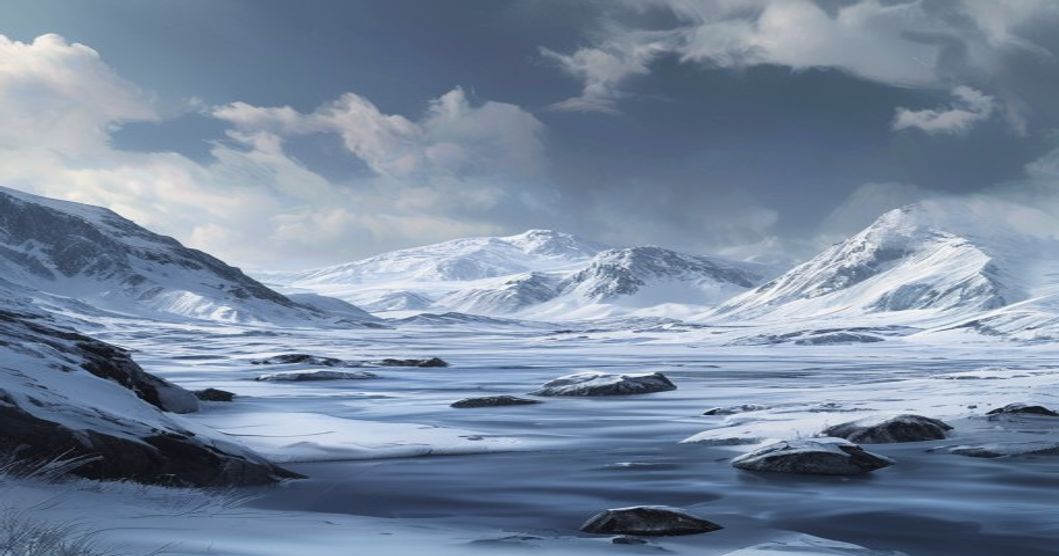
Understanding Sami Legends About the Arctic Landscape
The Sami relationship with the Arctic environment transcends subsistence; it operates within a cosmological framework where every ridge, fjord, and frozen lake functions as a narrative repository. Indigenous Sami mythology refuses to separate physical terrain from spiritual agency. Mountains are conceptualized as ancient beings, often referred to as duottar, while lakes and rivers act as living entities that require ritual respect rather than exploitation. These legends serve as ecological archives, encoding generations of observational data regarding seasonal migration corridors, reindeer calving zones, and hazardous weather formations. When a community identifies a valley as the residence of a mountain spirit, they are simultaneously charting safe passage, marking avalanche risk areas, and establishing territorial limits through mythic geography.
- The Mielkkálmas constellation directs winter reindeer movements across the tundra, aligning celestial observation with terrestrial navigation.
- Water spirits inhabit deep lakes, demanding silence and non-interference to maintain hydrological balance.
- Storm deities reshape coastlines through seasonal gales, transmitting knowledge about erosion patterns and wind dynamics.
- Sacred stones mark spiritual thresholds where human activity pauses for ritual observation and environmental assessment.
Oral transmission remains the primary mechanism for preserving these narratives. Elders recite ancestral tales that bind specific topographical features to historical events, divine interventions, or moral directives. Place names in Sami languages are highly descriptive, frequently referencing shape, color, wildlife behavior, or supernatural encounters. A single hill may carry multiple names across centuries, each layer documenting shifts in climate, settlement patterns, or spiritual interpretation. This toponymic system operates as a dynamic database, preserving environmental metrics that closely mirror modern scientific findings on permafrost degradation and vegetation migration.
These legends function as adaptive frameworks rather than static folklore. They dictate land management protocols, regulate hunting seasons, and reinforce communal accountability toward habitat preservation. Contemporary researchers recognize Sami mythogeography as a sophisticated spatial reasoning system, where narrative precision substitutes for limited historical documentation. The Arctic landscape, through this lens, becomes a text to be decoded, interpreted, and protected rather than a commodity to be extracted.
The Role of Nature in Sami Oral Traditions
The Sami oral tradition operates as a continuous ecological archive where the Arctic landscape functions as both narrator and participant. Stories transmitted across generations do not merely describe terrain; they encode navigational data, seasonal migration patterns, and survival protocols directly into mythic frameworks. Natural features such as ridges, lakes, and birch groves serve as permanent markers within communal memory, allowing elders to guide younger hunters through complex topographies without written records.
- Reindeer herds dictate narrative cycles, with animal behavior interpreted as direct communication from spirit beings inhabiting specific valleys.
- Water sources and ice formations carry distinct mythic weights, guiding decisions about camp placement and resource extraction during extreme weather events.
- Seasonal transitions trigger structured storytelling windows where ecological knowledge merges with spiritual instruction.
Yoik performances function as auditory landscapes rather than simple songs. Each vocalization maps a precise geographic coordinate or biological entity, embedding topographical awareness into melodic structure. The performer does not sing about the mountain; the performance becomes the mountain within the acoustic space of the community. This method ensures that environmental knowledge remains accessible during periods when written documentation was restricted or prohibited.
Shamanic drum imagery and contemporary oral narratives share identical structural logic regarding natural phenomena. Both systems treat weather patterns, aurora activity, and animal migration not as isolated events but as interconnected dialogue between human settlements and territorial spirits. The narrative framework demands active interpretation rather than passive listening, requiring audiences to decode environmental signs through established cultural syntax.
Modern archival efforts focus on preserving these ecological narratives exactly as transmitted, recognizing that loss of specific landscape references directly compromises traditional land management practices. Communities continue documenting how particular rock formations, wind patterns, and plant distributions function within ancestral storytelling protocols, maintaining operational continuity between historical knowledge systems and present-day territorial stewardship.
How Arctic Geography Shapes Folklore Narratives
The extreme environmental parameters of the polar region directly dictate the structural framework and thematic priorities within indigenous storytelling traditions. Permafrost terrain, biannual light cycles, and expansive sea ice create isolated settlements where oral transmission functions as a vital mechanism for preserving ecological data across generations. Communities consistently map physical hazards onto supernatural entities, converting unpredictable natural threats into culturally structured lessons. The continuous daylight phase inspires cosmologies featuring celestial regulators who control solar duration, while extended darkness periods generate narratives of shadow beings that evaluate human resilience and spiritual preparation.
Glacial formations operate as permanent landmarks within mythological journeys, with subglacial cavities frequently depicted as transitional zones between contemporary life and ancestral domains. Coastal dynamics heavily influence maritime legends, where tidal rhythms and ice drift trajectories determine the routes followed by spirit guides and marine entities. The fragile polar ecosystem compels storytellers to embed preservation ethics directly into plot architectures, establishing strict prohibitions against ecological exploitation. Seasonal movements of caribou herds and beluga populations become central narrative drivers, with geographic corridors functioning as sacred bridges between human settlements and spiritual territories.
- Topographical Isolation: Remote locations necessitate self-contained cosmologies where local landforms define deity jurisdictions and mythological boundaries.
- River Networks: Frozen waterways serve as chronological markers within generational epics, with seasonal thaw patterns dictating narrative pacing and ceremonial timing.
- Atmospheric Phenomena: Wind-scoured plains replace forest-based folklore tropes, establishing tundra landscapes as active participants in mythological conflicts rather than passive backgrounds.
Historical climate variations recorded through oral archives demonstrate how communities continuously adapted their narratives to reflect shifting ice thickness and altered wildlife distribution patterns. Geographic isolation eliminates expansive territorial conquest themes, replacing them with survival frameworks that prioritize environmental awareness and reciprocal relationships. Navigation techniques become encoded within allegorical geographies, teaching practitioners to interpret auroral displays as directional guidance and reading ice fracture sounds as warnings from ancestral observers. The absence of dense vegetation forces storytellers to utilize wind direction, snow accumulation rates, and thermal vent locations as primary symbolic elements throughout mythological sequences.
Core Myths and Deities in Sami Arctic Lore
The Sami spiritual framework operates through a deeply animistic cosmology where every element of the Arctic environment holds conscious agency. Central to this worldview are sieidit, sacred stones or natural formations that function as portals between the physical realm and the spirit world. These sites are not merely worshipped but treated as active intermediaries requiring regular offerings of reindeer fat, antlers, and ceremonial tobacco to maintain ecological and spiritual equilibrium.
Sieidi worship anchors much of Sami mythological practice, yet it exists within a broader pantheon governing seasonal cycles, hunting success, and weather patterns. Radien-Biejvve serves as the creator deity responsible for shaping the sun, sky, and earthly foundations. His daughter Beaivi embodies the sun itself, traveling across the tundra in a golden chariot drawn by two horses during summer months, while her brother Biegga-Vuona commands the winds that dictate reindeer migration routes and seal hunting conditions. The thunder god Horna, often depicted wielding a hammer forged from meteoric iron, regulates storms and fertility across taiga and fjell ecosystems.
- Mánnu governs lunar phases, directly influencing reindeer calving schedules and northern lights visibility patterns.
- Ribbe functions as the subterranean earth mother, controlling mineral deposits, soil fertility, and underground water sources critical for survival in permafrost regions.
- Tiejpiera oversees the boundary between life and death, accompanying shamanic journeys through the noaidi tradition to retrieve lost souls or negotiate with underworld spirits.
Sami mythological narratives rarely separate deities from topography. Mountain ridges, glacial valleys, and frozen lakes are classified as living entities rather than inert geography. Rituals performed at sieidit align with solstice transitions, ensuring that celestial movements remain synchronized with terrestrial rhythms. Drum circles utilize eighteen distinct symbolic fields mapped onto reindeer hide to track divine interventions during blizzards and ice storms. Seasonal deities dictate hunting calendars, with spring thaw triggering renewal rites for Skierptie, the reindeer master who controls herd vitality and antler regeneration across alpine plateaus. The decentralized spiritual model eliminates centralized temples, positioning the Arctic terrain itself as both sanctuary and script. Mythic geography dictates that each valley holds a specific ancestral spirit, requiring seasonal appeasement ceremonies before migration routes shift.
Sieidi Stones and Sacred Mountain Spirits
Sieidi stones function as primary spiritual anchors across the Arctic terrain, marking locations where the boundary between the physical world and the supernatural realm grows exceptionally thin. These geological formations, often standing solitary in valleys, near water sources, or at mountain passes, are not merely natural curiosities but deliberate focal points for Sami ritual activity. Historically documented across Sápmi from coastal Finnmark to inland Lapland, sieidit vary significantly in size and composition, ranging from smooth glacial erratics to towering bedrock outcrops. Their placement follows strict topographical principles that align with wind patterns, solar trajectories, and traditional reindeer migration corridors.
Ritual engagement with these sacred stones demands precise ceremonial protocol. Practitioners historically approached sieidit during specific lunar phases or seasonal transitions tied to hunting cycles and livestock movement. Offerings included reindeer antlers, dried fish, copper coins, and occasionally blood sacrifices from successful hunts. The stones themselves were believed to house guardian spirits responsible for regulating game populations, weather stability, and community prosperity. Mountain spirits, often described as subterranean or atmospheric entities, communicated through these formations via dreams, sudden temperature shifts, or unusual animal behavior near the site.
- Sieidit served as territorial markers defining sacred hunting grounds and seasonal camp boundaries.
- Ritual deposits found at archaeological sites reveal centuries of continuous spiritual practice predating European contact.
- Modern Sami communities actively restore damaged sieidit to maintain ecological balance and cultural continuity.
The systematic destruction of sieidit during nineteenth-century missionary campaigns historically disrupted local climate adaptation strategies, as communities lost their primary mechanisms for environmental negotiation and resource allocation. Contemporary ethnographic research confirms that traditional land management practices remain intrinsically linked to these spiritual geography nodes. Academic documentation from northern archives reveals that pre-Christian governance structures utilized stone networks for dispute resolution and seasonal migration planning. Modern preservation efforts prioritize geospatial mapping alongside oral tradition recovery.
The Bear Worship Rituals of Northern Fennoscandia
The bear occupied a distinct theological and ecological position within the cultural framework of Northern Fennoscandia, functioning as a sacred intermediary rather than conventional game. Sami hunting communities structured their subsistence practices around reciprocal spiritual exchange, where the animal was perceived as voluntarily surrendering its physical form to maintain cosmic balance. Ritual protocols governed every interaction from initial tracking through final interment, ensuring that human activity remained synchronized with ancestral precedent and environmental cycles.
Linguistic restriction formed the operational baseline of these traditions. The direct term for the bear was entirely prohibited across daily discourse, substituted by a systematic network of euphemisms that acknowledged its intelligence, strength, and supernatural awareness. Verbal transgressions were believed to trigger immediate spiritual consequences, including failed hunts or community misfortune. Ritual authorities enforced strict behavioral codes during preparation phases, regulating movement, vocalization, and tool handling to preserve ceremonial integrity.
- Transport and Containment: Captured individuals were moved under enforced silence, with rhythmic chanting controlling pace and direction to prevent spiritual disorientation.
- Ritual Slaughter and Communal Banquet: A structured feast followed the kill, incorporating symbolic offerings, directional prayers, and controlled consumption that recognized the animal’s perceived sacrifice.
- Skeletal Preservation Protocol: Every bone fragment required systematic collection, washing with birch water, and deliberate placement to facilitate spiritual regeneration.
The reburial sequence represented the theological core of the practice. Archaeological surveys across Sápmi have documented carefully arranged bear skeletons positioned within elevated wooden frames or natural rock formations, often aligned with seasonal solstices. These deposits functioned as spiritual catalysts intended to accelerate reincarnation cycles and restore ecological equilibrium. Participants coordinated drumming patterns and vocal invocations that mirrored astronomical movements, reinforcing the interconnection between terrestrial hunting operations and celestial order.
Colonial administration and missionary campaigns systematically dismantled these customs between the seventeenth and nineteenth centuries. Official prohibitions criminalized ritual assemblies, while economic restructuring reduced dependence on traditional subsistence networks. Despite this suppression, material evidence remains visible in regional museum archives and stratified excavation sites. Contemporary reconstruction relies on cross-referencing historical mission logs, osteological analysis, and oral transmission patterns to understand how spiritual governance mechanisms sustained ecological stability across generations.
Troll Encounters and Forest Guardian Legends
Sami oral tradition preserves intricate narratives about trolls and forest guardians that function as ecological and spiritual markers across the tundra and taiga. These beings are not mere monsters but complex entities tied to land stewardship, seasonal cycles, and moral boundaries. Trolls, often described as dwelling beneath stone formations or within deep ravines, appear in accounts where travelers must observe strict behavioral codes: silence during specific moon phases, refusal to take unmarked stones, and avoidance of sudden movements near sacred ridges. Breaking these protocols historically triggered warnings rather than violence, emphasizing balance over fear.
Forest guardians, frequently referred to as varg or skogsrå in regional dialects, manifest as shifting figures cloaked in lichen and pine needles. They monitor hunting practices, water sources, and berry grounds, rewarding respectful harvesters with abundant yields while redirecting those who deplete resources without reciprocity. The Sami conceptualize these encounters through the lens of sieidi stones—natural or carved markers where offerings of reindeer antlers, iron nails, or woven cords were left to maintain harmony.
Historical field recordings from Finnmark and Tromsø document how elders taught youth to read environmental signs: a sudden drop in bird activity, unusual wind patterns around birch clusters, or the scent of crushed juniper often signaled guardian presence. Contemporary anthropological studies note that these narratives encode sustainable land-use principles, functioning as unwritten conservation guidelines long before modern ecological frameworks emerged.
- Navigational Adaptation: Travelers adjusted routes based on generational accounts of troll territory boundaries, demonstrating how myth directly influenced Arctic navigation and settlement patterns.
- Ritual Protocols: Specific breath techniques during forest traversal, rhythmic tapping with reindeer bone tools to announce human presence, and the practice of leaving small offerings at tree roots acknowledged territorial overlap.
- Topographical Memory: These traditions remain embedded in regional place names, landscape surveys, and seasonal migration calendars, illustrating how mythological frameworks operated as practical survival infrastructure rather than abstract storytelling.
Cultural Significance of Arctic Landscape Stories
The Sami relationship with Arctic terrain extends far beyond navigation or resource extraction; it functions as a comprehensive epistemological framework where topography and mythology operate as interdependent knowledge systems. Mountain ridges, glacial valleys, and coastal fells are not passive backdrops but active participants in seasonal cycles, each feature carrying specific ecological markers and spiritual responsibilities. These landscape narratives encode centuries of observational data regarding reindeer migration corridors, ice formation rates, and microclimate variations that dictate settlement patterns and hunting schedules.
Oral transmission mechanisms preserve this information through structured storytelling formats that align with environmental rhythms. Elders utilize geographical landmarks as mnemonic anchors, ensuring that warnings about unstable snowpacks, sudden fog banks, or productive berry grounds remain accurately transferred across generations. This methodology transforms survival strategies into cultural imperatives, where respecting territorial boundaries becomes synonymous with maintaining ecological balance.
- Ecological Archive Function: Topographical features serve as natural databases recording historical weather anomalies, vegetation shifts, and animal behavior patterns that inform contemporary land management practices.
- Spiritual-Geographic Integration: Sacred sites like seids and waterfalls operate as cosmological coordinates, reinforcing customary land rights and governing access to seasonal resources through communal accountability.
- Linguistic Preservation Mechanism: Landscape terminology in North Sami, Lule Sami, and South Sami dialects preserves precise environmental classifications that standard vocabulary cannot replicate, directly supporting indigenous language revitalization initiatives.
Contemporary documentation efforts recognize these narratives as vital cultural infrastructure rather than historical curiosities. Researchers collaborating with Sami communities utilize geospatial mapping alongside audio recordings to create dynamic atlases that correlate mythological accounts with real-time environmental monitoring data. This interdisciplinary approach demonstrates how traditional ecological knowledge complements satellite imagery and climate modeling, offering hyper-local insights into permafrost degradation, lichen recovery rates, and predator-prey dynamics. The continuity of these stories directly sustains community identity, economic resilience through sustainable reindeer husbandry, and intergenerational teaching methods that prioritize experiential learning over abstract instruction.
Navigating the Tundra Through Mythological Maps
The Sami people never relied on coordinate grids or compass bearings alone to traverse the vast Arctic tundra. Instead, their wayfinding systems were woven into mythological narratives that transformed geographical features into living landmarks. Where Western cartography plots terrain through elevation and longitude, Sami spatial orientation operates through relational storytelling. A jagged ridge, a frozen lake, or a solitary granite outcrop is not merely physical geography; it is a node in an ancestral network of meaning. These mythological maps functioned as cognitive blueprints, encoding safe passage routes, seasonal boundaries, and ecological warnings within culturally resonant frameworks.
Sacred sites such as luohti stones, ritual mounds, and wind-sculpted formations served as reference points that guided reindeer herders across hundreds of miles of unforgiving terrain. Each feature carried a specific narrative weight. A mountain peak might be identified with the breath of a great elk spirit, while a glacial valley could mark where a noaidi once bound a weather entity to prevent blizzards from disrupting migration cycles. These stories were not decorative folklore but operational knowledge. Hunters and herders internalized them through repeated oral transmission, allowing them to recognize subtle environmental shifts that aligned with mythological markers.
- Mythological landmarks doubled as ecological indicators, signaling changes in snow density, water table levels, or predator activity.
- Navigational routes were synchronized with lunar phases and solar angles, with legends specifying when certain passes became impassable due to wind patterns or ice instability.
- Seasonal territories known as siida boundaries were demarcated by ancestral tales that warned against entering unclaimed zones during specific moon cycles.
The efficacy of this system relied on the noaidi, a spiritual intermediary who interpreted natural signs through dream states, drum divination, and ritual observation. When traditional markers were obscured by heavy snowfall or shifting ice, the noaidi would recalibrate the journey using auditory cues—wind direction over frozen lakes, the cry of ravens, or the resonance of distant waterfalls. These sensory inputs were cross-referenced with mythological templates that had been validated across generations of survival experience.
Modern GIS mapping often overlooks how indigenous knowledge systems encode spatial data through narrative architecture. The Sami tundra navigation model demonstrates that myth and ecology are not separate domains but integrated cognitive tools. By treating the landscape as a communicative entity rather than inert space, these communities maintained ecological balance while ensuring safe transit across some of Earth’s most extreme environments. This framework remains relevant for contemporary researchers studying adaptive spatial cognition and sustainable land management.
Eco-Spirituality and Sustainable Land Stewardship
The Sámi relationship with the Arctic environment transcends mere survival; it operates through a framework of sacred reciprocity. Within Sámi cosmology, every mountain, river, and forest clearing holds spiritual significance. Sacred sites known as sieidi functioned as natural altars where offerings were placed to maintain balance between human activity and ecological forces. This worldview established an early model of environmental ethics, where exploitation was replaced by measured extraction and strict seasonal boundaries.
Traditional land management practices emerged directly from these spiritual obligations. Reindeer herding routes followed ancient migration corridors that preserved lichen beds and alpine vegetation. Hunters adhered to taboos prohibiting the taking of pregnant animals or the disturbance of nesting grounds, functions that modern ecology now recognizes as critical population controls. The concept of noaidi, or spiritual intermediary, reinforced accountability; leaders who violated ecological balance faced communal consequences, ensuring long-term resource continuity.
- Sacred geography dictated buffer zones around water sources and breeding areas
- Seasonal taboos aligned with wildlife reproductive cycles and plant regeneration periods
- Rotational grazing patterns prevented soil degradation and maintained moss ecosystems
- Oral transmission of ecological data preserved generational knowledge without written intervention
Contemporary conservation science validates these indigenous practices. Research on Arctic tundra restoration demonstrates that traditional grazing rhythms accelerate vegetation recovery more effectively than artificial rest periods. Modern land stewardship initiatives increasingly integrate Sámi mapping techniques with satellite monitoring, creating hybrid models that respect cultural boundaries while optimizing biodiversity outcomes. The integration of spiritual reverence with measurable ecological metrics provides a resilient framework for managing fragile polar environments.
Preserving these methodologies requires recognizing traditional knowledge as living infrastructure rather than historical artifact. Educational programs, land-use policy development, and cross-cultural research partnerships must prioritize Sámi authority over territory management. When spiritual principles guide resource allocation, economic pressure yields to ecological longevity. The Arctic landscape persists not through isolation but through continuous cultural engagement that honors the interconnected systems sustaining human and non-human life.
Sami Joik Melodies as Living Legend Archives
The Sami joik operates as an unbroken auditory repository where environmental memory and ancestral wisdom remain actively preserved. Rather than merely describing the Arctic terrain, traditional joiks embody specific geographical features through melodic contour and rhythmic phrasing. Each vocal pattern encodes precise ecological data: seasonal migration routes of reindeer herds, ice stability across frozen waterways, and subtle shifts in tundra vegetation. This musical system functions without written notation, relying instead on generational oral transmission where elders teach younger members to recognize landscape markers through pitch modulation and breath control.
Archival Function emerges from the joik’s capacity to store complex navigational information within its structure. Performers utilize microtonal variations to indicate altitude changes, while sustained vocal drones mirror wind patterns across mountain ridges. The repertoire expands with each generation, integrating new territorial knowledge without discarding historical layers. Younger singers learn to layer contemporary observations onto established melodic frameworks, ensuring the archive remains dynamically current rather than static. Field recordings from Finnmark and Troms counties demonstrate how specific tonal sequences correspond to documented glacial retreat patterns spanning nearly two centuries.
- Melodic motifs correspond to specific geographical coordinates passed through familial lineages.
- Rhythmic structures replicate natural phenomena including glacial movement and seasonal thaw cycles.
- Vocal techniques preserve linguistic dialects that otherwise face modernization pressures.
Modern documentation projects frequently miss this archival dimension by reducing joiks to performance artifacts. Authentic preservation requires recognizing how Arctic communities continue using these melodies for wayfinding, resource management, and intergenerational education. The living archive persists through daily practice rather than museum curation, maintaining direct contact between vocal expression and terrestrial reality. Contemporary researchers studying Sami ecological knowledge must therefore examine joik structures as primary historical sources rather than supplementary cultural elements. Academic institutions now collaborate with indigenous custodians to develop metadata standards that capture acoustic properties alongside territorial references, ensuring future analysis respects the original functional intent of each melody.
Historical Documentation and Folklore Research
The archival record of Sami cosmology and environmental narratives emerges primarily from nineteenth-century missionary transcripts, colonial administrative files, and early ethnographic fieldwork. These documents frequently capture how indigenous communities mapped glaciers, tundra ecosystems, auroral phenomena, and seasonal migrations through mythic frameworks. Researchers such as Lars Levi Laestadius and Knud Rasmussen compiled oral accounts that reveal precise ecological knowledge embedded within legendary structures. Their notebooks contain detailed descriptions of reindeer calving grounds, coastal storm patterns, and permafrost shifts, all encoded in narrative form rather than scientific taxonomy.
Modern folklore research employs comparative textual analysis alongside linguistic reconstruction to trace how Arctic landscape motifs evolved across Sami dialect groups. Scholars examine phonetic variations in place names, track migration of motif types using the Aarne-Thompson-Uther index adapted for Indigenous contexts, and cross-reference archival manuscripts with contemporary ethnographic recordings. This methodological triangulation allows researchers to distinguish between localized environmental warnings, generational adaptation stories, and ritualistic landscape invocations.
- Archival Sources: Finnish National Archive’s Sami folklore collections, Norwegian Polar Institute historical manuscripts, and Swedish University of Agricultural Sciences’ oral history databases provide primary documentation.
- Research Frameworks: Integration of Indigenous knowledge systems with environmental archaeology, linguistic cartography, and narrative ecology studies.
- Preservation Protocols: Community-led digitization initiatives prioritize consent-based recording, dialect preservation, and intergenerational mentorship to maintain contextual integrity.
Contemporary scholarship emphasizes decolonizing archival interpretation by centering Sami epistemologies over Western analytical categories. Field teams now collaborate directly with elders to verify historical documents against living memory, correcting mistranslations and misattributed motifs. This collaborative verification process has uncovered previously overlooked connections between legendary weather patterns and documented climate anomalies from the Little Ice Age. Ongoing research continues to map how environmental storytelling functions as both cultural memory infrastructure and adaptive ecological strategy across Arctic subarctic transition zones.
Early European Accounts of Sami Arctic Myths
During the fifteenth through eighteenth centuries, European scholars and missionaries systematically documented Sámi Arctic folklore, often filtering indigenous narratives through colonial and theological frameworks. Olaus Magnus’s Historia de Gentibus Septentrionalibus (1555) stands as one of the earliest comprehensive records, describing Sámi reverence for natural landmarks, seasonal migrations, and animistic cosmologies that bound human activity to the tundra and coastal waters. His accounts, though occasionally embellished by contemporary European sensationalism, preserved crucial details about sacred groves, sacrificial rituals at stone altars, and the spiritual significance of reindeer herding routes.
The seventeenth century witnessed a surge in ethnographic curiosity, particularly following Sweden’s territorial expansion into Fennoscandia. Jesuit missionary Johannes Schefferus published Lapponia (1673), which meticulously catalogued Sámi cosmological beliefs, including the veneration of Beaivi (the sun deity), the role of noaidi (shamanic intermediaries), and the structural symbolism of the goahti (traditional dwelling) as a microcosm of the universe. Schefferus emphasized how Arctic landscapes were not merely physical environments but active participants in mythological narratives, where mountains, fjords, and frozen lakes embodied ancestral spirits and weather deities.
- Eighteenth-century naturalists like Carl Linnaeus and Pehr Kalm recorded fragmented oral traditions during expeditions across northern Scandinavia, noting how Sámi communities encoded ecological knowledge into seasonal myths and hunting rituals.
- Scholarly translations of joik melodies revealed tonal patterns that mirrored topographical features, suggesting a linguistic connection between acoustic expression and environmental navigation.
- Missionary archives from Tromsø and Finnmark contain conflicting reports: some condemned indigenous beliefs as demonic, while others preserved genealogies of sky and earth deities before systematic cultural suppression accelerated.
These early European accounts, despite their inherent biases and occasional misinterpretations, form the foundational corpus for modern Sámi mythological research. The archival preservation of landscape-oriented narratives enabled later generations to reconstruct pre-Christian Arctic cosmologies, demonstrating how indigenous communities historically mapped ecological resilience onto spiritual geography. Furthermore, cross-referencing Scandinavian expedition logs with Finnish national mythology collections reveals consistent patterns in how frozen rivers and aurora phenomena were interpreted as celestial pathways rather than mere meteorological events.
Modern Anthropological Studies on Northern Oral Histories
Contemporary anthropological research has fundamentally transformed how Sami oral traditions are documented and analyzed. Researchers now employ participatory ethnography, collaborating directly with indigenous knowledge keepers to map historical narratives against contemporary environmental shifts. These studies prioritize community-led documentation protocols, ensuring that ecological memory embedded in place names, seasonal migration routes, and subsistence practices remains intact. Digital humanities platforms currently archive thousands of hours of recorded testimonies, utilizing acoustic analysis software to preserve the phonetic nuances of joik performances while cross-referencing them with historical cartography.
- Toponymic mapping reveals how generations interpreted glacial retreat, permafrost degradation, and reindeer pasture dynamics through metaphorical landscape descriptions.
- Interdisciplinary frameworks combine paleoclimatology data with narrative chronologies to reconstruct multi-century environmental baselines across Fennoscandia.
- Methodological ethics now mandate free, prior, and informed consent structures, replacing colonial extraction models with reciprocal knowledge exchange agreements.
Linguistic anthropology examines how syntactic patterns in northern dialects encode spatial orientation, weather prediction techniques, and kinship-based land stewardship rules. Researchers overlay traditional navigation markers with satellite imagery to validate historical route accuracy. Ethnobotanical surveys document plant species mentioned in ancestral tales, correlating botanical references with verified herbarium records dating back centuries. These investigations demonstrate that oral historiography functions as a dynamic ecological database, encoding sustainable harvesting cycles and predator-prey equilibrium observations long before formal scientific classification emerged.
Current academic discourse emphasizes decolonizing narrative preservation through Indigenous data sovereignty protocols. Archives now operate under CARE principles rather than traditional FAIR standards, prioritizing community control over digital access tiers and translation permissions. Universities partner with Sami parliaments to co-design curriculum modules that integrate field recordings with land-use legislation analysis. This methodological evolution ensures that archival materials remain accessible for cultural revitalization while protecting sensitive ecological knowledge from commercial exploitation.
Preserving Dialect Variations Across Sami Territories
The Sámi languages span a vast Arctic and sub-Arctic region, stretching across Norway, Sweden, Finland, and Russia. This geographic spread has naturally fostered significant dialectal variation. Each community developed distinct phonetic patterns, vocabulary sets, and grammatical structures shaped by local reindeer herding practices, coastal fishing traditions, and mountainous terrain
Literary Adaptations of Arctic Sami Folklore
The transition of Arctic Sami folklore from oral transmission to literary form represents a complex intersection of cultural preservation and narrative innovation. Early documentation relied heavily on ethnographic fieldwork, where researchers recorded duodji patterns, seasonal migration routes, and landscape mythology without fully capturing the rhythmic essence of joik traditions. Contemporary Sami authors have systematically reclaimed this narrative space, transforming fragmented folklore into cohesive literary frameworks that prioritize indigenous perspective over external interpretation.
Modern adaptations frequently anchor their plots in specific Arctic environments, treating tundra, glacial valleys, and coastal fjords as active participants rather than passive backdrops. Writers employ nonlinear chronologies that mirror traditional storytelling cycles, where seasons replace calendar dates and ecological markers dictate narrative pacing. This structural choice preserves the original folkloric relationship between human activity and environmental rhythms.
- Historical Documentation Shifts: Early 20th-century accounts by Johan Turi documented reindeer herding knowledge alongside creation myths, establishing a template for integrating practical landscape wisdom with spiritual lore.
- Linguistic Replication Techniques: Authors like Nils-Aslak Valkeapää merged poetry and prose to replicate joik phrasing through line breaks and repetitive syntactic structures, forcing readers to experience oral cadence through written form.
- Contemporary Narrative Expansion: Writers such as Synnøve Persson and Marja-Liisa Solbakk embed shamanic journey motifs and ancestral land claims within speculative fiction, bridging mythological frameworks with modern geopolitical realities.
Literary translation presents distinct challenges when adapting Sami folklore. Direct lexical substitution often strips cultural context, requiring translators to reconstruct metaphorical layers that reference specific mountain formations, bird migrations, or ice conditions. Successful adaptations prioritize semantic equivalence over literal accuracy, maintaining the original text’s emphasis on reciprocity between communities and terrain. Publishers increasingly employ co-translation models where native speakers verify ecological terminology and mythological references before release.
The institutional recognition of these works has accelerated through regional literary awards and academic anthologies focused on Northern Hemisphere indigenous literature. Research institutions now catalog how adapted folklore influences environmental policy discourse, educational curricula, and cross-cultural artistic collaborations. Digital archives host interactive editions that link textual passages to acoustic recordings of traditional joik performances, allowing readers to experience the multimodal nature of the original material.
Critical analysis reveals a consistent thematic focus: landscape as memory archive, ecological degradation as narrative conflict, and cultural continuity through linguistic revival. Authors deliberately avoid romanticizing Arctic survival, instead presenting adaptation strategies grounded in historical resilience and contemporary sovereignty movements. The literary record now functions as both preservation mechanism and active site of cultural negotiation.
Indigenous Media and Digital Storytelling Initiatives
The Arctic terrain functions as a living manuscript for Sámi cosmology, where topographical features operate as narrative coordinates rather than passive scenery. Modern documentation frameworks prioritize epistemological fidelity by capturing spatial relationships, seasonal migration corridors, and ecological warnings within their original linguistic architecture. Community-controlled repositories replace centralized academic archives with decentralized storage protocols that enforce Indigenous data sovereignty. This structural shift ensures that place names, kinship mappings, and environmental observations remain accessible to source communities while remaining discoverable through standardized semantic markup.
Digital storytelling platforms now integrate photogrammetry with ethnographic fieldwork, allowing researchers to reconstruct degraded hunting grounds while preserving the oral accounts tied to each geographic coordinate. Mobile applications developed by Sámi cultural centers utilize geotagged audio streams that activate when users approach specific terrain features, transforming passive consumption into experiential learning. These systems rely on encrypted node networks and locally governed servers to prevent external commercial entities from extracting or repurposing sensitive cultural metadata.
Structured preservation programs demonstrate measurable outcomes across multiple technical domains:
- The Sámi Parliament’s multimedia archive applies a modified Dublin Core schema aligned with Indigenous Knowledge Protocols, ensuring consistent indexing across academic databases and public search interfaces.
- University research hubs in Tromsø and Rovaniemi deploy phonetic recognition models trained exclusively on validated Sámi speech corpora to transcribe deteriorating reel-to-reel recordings without introducing external linguistic distortions.
- Virtual reality workshops enable knowledge holders to animate landscape features through motion-capture interfaces, producing immersive educational modules that regional schools now integrate into geography and environmental science curricula.
Sustainable documentation requires continuous validation cycles rather than static archival deposits. When digital platforms implement version control mechanisms that flag outdated ecological references, researchers can update environmental descriptions without breaking historical continuity. This iterative methodology aligns with modern search evaluation patterns that prioritize factual freshness, structured data compliance, and sustained domain authority. Indigenous media networks now export contextual metadata alongside narrative files, enabling automated categorization while preserving cultural integrity. The resulting infrastructure transforms static folklore into adaptive cultural assets capable of responding to shifting climatic conditions and evolving digital consumption behaviors.
Educational Programs Teaching Sami Landscape Legends
Indigenous educational frameworks across northern Scandinavia and Finland systematically incorporate Sami landscape narratives into formal schooling structures. Municipal schools in Finnmark, Troms, and Lapland align national curriculum standards with traditional ecological knowledge by mapping oral histories onto physical terrain features. University partner institutions in Uppsala and Oulu develop interdisciplinary modules that treat topographical myths as primary data sources for cultural geography courses. These pedagogical models prioritize experiential learning over textbook abstraction, ensuring geographical terminology remains anchored to lived community practices.
- Field-Based Pedagogy: Instructors guide students across reindeer migration routes and coastal fjords, correlating geological formations with ancestral storytelling traditions. Learners document seasonal shifts while recording oral accounts from community elders, creating primary research datasets for academic review.
- Digital Archive Integration: Schools utilize the Sámi University of Applied Sciences’ multimedia repository to access digitized joik recordings and annotated terrain maps. Interactive GIS platforms allow pupils to layer historical narratives over satellite imagery, enabling precise spatial analysis of mythic geography against contemporary land-use patterns.
- Curriculum Alignment: National education ministries mandate cross-cultural competency objectives that require explicit study of indigenous environmental philosophies. Assessment rubrics evaluate student understanding through comparative essays linking
“`html
Frequently Asked Questions About Sami Legends About the Arctic Landscape
What is Sami Legends About the Arctic Landscape?
Key facts about Sami Legends About the Arctic Landscape
“`