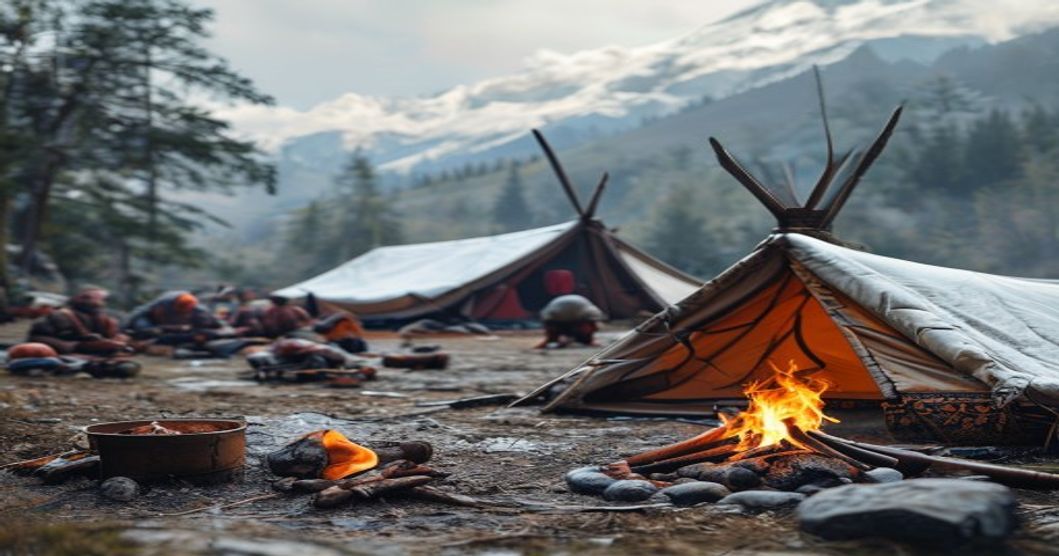
Traditional Sami Camping Methods
The Sámi people developed highly adaptive camping systems shaped by centuries of Arctic survival and reindeer pastoralism. Their encampments operated as mobile ecosystems, shifting across vast territories following migratory routes dictated by pasture availability, calving seasons, and extreme weather patterns. Camp placement followed strict ecological logic rather than convenience. Sites required natural windbreaks such as bedrock ridges or dense dwarf birch stands, well-drained ground to prevent meltwater accumulation, and proximity to unfrozen water sources during winter months. Elevated locations were prioritized during spring thaw, while sheltered valleys became essential during polar nights when temperatures dropped below forty degrees Celsius.
Structural design centered on the lavvu or goahti, a conical framework assembled from straight wooden poles lashed together with reindeer sinew or woven grass rope. The outer covering utilized treated reindeer hides in winter and layered birch bark in summer, both waterproofed through traditional smoking processes that hardened fibers and repelled moisture. Ventilation relied on a single adjustable opening at the apex, regulated by weighted stones or additional hide flaps to control airflow without compromising internal heat retention.
Ground preparation involved clearing deep snow with wooden sleds, laying insulating layers of dry grass and fern mats, then covering everything with reindeer skins arranged in overlapping patterns. Fire management remained the operational core. Central hearths featured stone-lined pits surrounded by heat-reflecting rock walls. Fuel selection prioritized dried birch branches, pine roots, and compacted reindeer dung, all burned slowly to maintain consistent warmth through subzero temperatures.
- Site Assessment: Lichen growth patterns
Historical Context of Nomadic Arctic Encampments
Early Sami communities developed sophisticated encampment strategies long before modern cartography defined Scandinavian borders. Their seasonal movements followed reindeer migration routes across Fennoscandia, dictated by terrain, snow conditions, and calving cycles. Winter sites typically relied on insulated wooden shelters or snow-walled structures, while summer camps prioritized ventilation and proximity to water sources. These historical settlements operated as highly coordinated logistical networks rather than isolated dwellings.
The traditional lavvu served as the central architectural element in these mobile Arctic encampments. Constructed with a conical framework of birch or pine poles and covered with reindeer hides or woven grass mats, the structure allowed complete disassembly within minutes. A central hearth provided heat and cooking capability, while strategically positioned ventilation holes prevented smoke accumulation during prolonged use. Pole spacing and ridge height varied according to seasonal wind loads, demonstrating empirical knowledge of aerodynamics passed through generations.
- Spring encampments clustered near forest edges and sheltered valleys to protect vulnerable newborn calves from predators and early-season storms.
- Summer pastures shifted toward coastal fjords, tundra plateaus, and alpine meadows where reindeer foraged on fresh vegetation and mineral-rich lichens.
- Autumn gatherings concentrated at established trade nodes along major river valleys, facilitating exchange with Norwegian and Finnish settlers before winter isolation cut off overland routes.
Archaeological excavations across Tromsø, Finnmark, and northern Lapland reveal consistent spatial organization within these historical camps. Hearth placement followed strict directional patterns aligned with prevailing winds, while storage pits contained preserved fish, dried meat, and resin-based adhesives used in tool maintenance. Settlement footprints demonstrate deliberate spacing between tents to maximize wind protection and maintain household privacy. Charcoal analysis confirms continuous occupation during the Little Ice Age, proving that encampment durability relied on precise timber selection and reinforced pole joints rather than permanent foundations.
Colonial taxation policies and mission school regulations gradually disrupted these established migration corridors during the nineteenth century. Nevertheless, archaeological records confirm that encampment layouts remained remarkably consistent through centuries of climate variation. Modern geospatial mapping of historical camp locations correlates directly with paleoclimate data showing stable reindeer corridor patterns across millennia. Oral transmission techniques preserved structural knowledge until ethnographic documentation began in the early twentieth century.
Cultural Significance of Reindeer Herding Routes
Reindeer herding routes function as dynamic cultural corridors that have shaped Sámi identity for centuries. These pathways are not arbitrary tracks but carefully negotiated landscapes where human movement, animal behavior, and ecological cycles intersect. The routes emerge from generations of observational data, tracking lichen growth patterns, snow depth variations, and predator migration. Campsites established along these corridors follow strict environmental logic rather than convenience. Families position temporary shelters to maximize natural windbreaks, align structures with sunrise angles for warmth, and select ground cover that drains moisture while preserving reindeer grazing access.
The architectural footprint of each camp reflects deep ecological literacy. Traditional lavvu frameworks utilize locally sourced birch poles bent through steam application, creating geometric stability without metal fasteners. Ground layers consist of layered moss and dried grass harvested during specific summer months to ensure antimicrobial properties. Water collection relies on natural topography, with meltwater channels diverted through shallow trenches rather than artificial piping. Every element serves dual purposes: immediate survival needs and long-term pasture sustainability.
- Seasonal Migration Windows: Routes activate during precise astronomical markers, typically aligned with the spring equinox and autumn solar declination.
- Ancestral Knowledge Transmission: Route navigation requires memorizing terrain features, vocal call patterns for reindeer, and oral geographic databases spanning multiple centuries.
- Ecosystem Reciprocity: Camp placement follows rotational grazing principles that prevent lichen overgrazing and allow forest regeneration cycles to complete.
Contemporary herding communities integrate satellite telemetry with traditional route knowledge, creating hybrid mapping systems that preserve ancestral pathways while adapting to shifting climate patterns. The cultural weight of these corridors extends beyond subsistence activities. They operate as living archives where language, craftsmanship, and spiritual practices remain embedded in daily movement. Protecting route accessibility directly safeguards intangible heritage that cannot be replicated through documentation alone.
Essential Gear and Traditional Equipment Selection
Traditional Sami camping equipment relies on a strict hierarchy of functional requirements dictated by subarctic environments and nomadic reindeer herding cycles. Every item undergoes rigorous material testing before integration into a traveling party. The selection process prioritizes thermal retention, wind resistance, and lightweight portability over decorative elements.
The primary shelter structure demands precisely graded spruce or pine poles harvested from wind-exposed slopes to ensure natural flexibility. These poles are stripped of bark immediately after cutting to prevent splitting during transport. Covering materials consist exclusively of cured reindeer hides layered in overlapping patterns that direct precipitation away from the central fire pit. The hide thickness varies by season, with summer setups utilizing thinner pelts while winter configurations require dense, undressed fur for insulation. Connection points rely on braided lichen cordage and sinew thread that shrinks tighter as moisture increases.
- Dwelling Framework: Curved wooden ribs form a self-supporting dome geometry that distributes snow load evenly across the central support pole.
- Fire Management Tools: Hand-forged iron knives with birch handles carve windbreaks from frozen ground, while hollowed reindeer antlers store dry birch bark and resin for ignition.
- Cooking Vessels: Traditional copper pots feature riveted handles and thick bottoms that retain heat during extended simmering of bone broth and dried lichen.
- Transport Equipment: Hand-carved wooden sleds with curved runners reduce friction on packed snow, enabling the movement of heavy hide bundles across frozen tundra.
Bedding systems follow a strict moisture management protocol. Travelers select reindeer skins based on hair direction and underwool density, layering them to create a capillary barrier that pulls condensation away from the sleeping surface. Wooden snow knives with broad blades cut through crust layers to expose insulating air pockets beneath. Every rope, needle, and binding undergoes fat curing in reindeer marrow to prevent brittleness during extreme cold exposure. The equipment selection reflects generations of empirical data regarding material behavior under sub-zero conditions. Artisans evaluate wood grain orientation before splitting poles, ensuring structural integrity during repeated assembly cycles.
Authentic Lavvu Construction Materials and Fabric Types
The structural integrity of an authentic Sami lavvu depends on carefully selected natural materials that balance insulation, durability, and portability across Arctic conditions.
Pole Framework relies on straight birch or pine saplings harvested during late winter when sap flow ceases. The wood is dried slowly to prevent warping, then trimmed to lengths ranging from two to three meters. Poles typically measure three inches in diameter at the base, tapering gradually to one inch near the apex. This gradual taper allows the structure to lock tightly together without metal fasteners.
- Birch poles offer superior flexibility and resist cracking in subzero temperatures.
- Pine variants provide higher resin content, naturally repelling moisture and extending lifespan in damp environments.
Binding and Tensioning utilize braided reindeer sinew or twisted hemp cordage. Sinew undergoes a multi-day preparation process: soaking in cold water, stretching over wooden frames, and air-drying until it shrinks to approximately eighty percent of its original length. This contraction generates continuous inward pressure, securing the pole junctions without slippage during high winds.
Outer Covering Materials historically evolved alongside migration patterns and trade availability. Traditional winter configurations employ full reindeer hides with fur facing inward, creating a microclimate that traps body heat while wicking condensation away from the interior floor. Summer versions reverse the hide orientation or substitute woven grass mats for enhanced breathability. When canvas became accessible through northern trade routes, undyed wool duck replaced synthetic alternatives to maintain historical accuracy.
- Hide overlapping follows a strict shingle pattern, with each layer extending six inches beyond the previous one to channel precipitation away from the entrance.
- Sewing techniques utilize hand-carved bone needles and sinew thread, producing seams that expand under moisture without tearing.
Interior Linings often incorporate birch bark sheets or layered moss to manage smoke dispersion and stabilize ground temperature. The bark’s natural salicylic compounds deter insects, while compacted moss provides acoustic dampening against heavy snowfall. Modern replicas frequently substitute these elements with synthetic foams, but authentic construction demands organic layers that decompose without leaving trace residues in fragile tundra ecosystems.
Handcrafted Tools for Wilderness Survival Tasks
The Arctic ecosystem demanded an uncompromising standard of material efficiency, forcing Sami artisans to engineer survival instruments entirely from available biological resources. Reindeer antler formed the foundation for cutting implements, awls, and snow knives. Craftsmen stripped fresh antlers of their velvet, then scored the bone with obsidian flakes or hardened quartz before applying controlled heat to induce gradual bending. This thermal treatment prevented catastrophic fracturing during winter expeditions when temperatures plummeted below forty degrees Celsius. The resulting toggles, hooks, and blade handles maintained structural integrity across repeated impact cycles.
- Birch bark processing involved peeling cylindrical sheets from young trees during spring sap migration. Artisans steamed these layers over simmering water, then molded them into tapered containers or fire baskets. Reindeer fat sealed the seams, creating waterproof vessels capable of storing rendered oil or preserving cured venison without synthetic lining.
- Sinew preparation required separating tendons from the animal’s hindquarters, splitting each bundle into microscopic strands, and soaking them in fresh water until pliable. Once twisted under tension and air-dried, this cordage achieved tensile strength surpassing modern alternatives while remaining fully biodegradable.
- Tinder architecture combined resin-saturated bark shavings with dried cottonwood floss packed
Site Evaluation and Shelter Assembly Techniques
Selecting an optimal camping site requires precise environmental reading. The Sami prioritize terrain stability, natural wind protection, and proximity to reliable water sources without compromising ecological balance. Ground elevation above seasonal flood lines prevents moisture accumulation beneath sleeping areas. Slopes facing south maximize solar exposure during winter months, while dense birch or pine stands offer immediate windbreaks against Arctic gusts. Soil composition matters significantly; sandy loam drains rapidly, whereas clay-heavy ground retains cold and accelerates heat loss. Campers scan for natural depressions that channel air upward rather than trapping it, ensuring ventilation inside the dwelling.
- Terrain Analysis: Identify flat or gently sloping ground free from loose scree or permafrost thaw zones.
- Wind Assessment: Observe grass movement and tree lean to determine prevailing airflow patterns. Position the shelter entrance away from dominant wind directions.
- Water Access: Locate streams or lakes within walking distance, ensuring discharge does not contaminate upstream areas.
- Natural Barriers: Utilize rock formations, fallen timber, or dense vegetation to reduce structural load and retain heat.
Shelter assembly begins with pole selection. Straight birch saplings provide flexible yet rigid support for the framework. Poles are lashed together using reindeer sinew or braided grass rope, forming a conical or A-frame structure depending on regional variations. The outer shell consists of layered reindeer hides, stitched tightly to prevent snow ingress and wind penetration. Birch bark sheets serve as inner insulation, layered over wooden slats to create an airtight barrier. Groundsheets made from compacted moss and dried heather absorb residual moisture while providing thermal separation from frozen earth. Structural tension is maintained through guy lines anchored into the soil with weighted stones or packed snow blocks.
- Framework Construction: Cross poles at the apex to distribute weight evenly across the canopy.
- Hide Application: Layer hides hair-side out for shedding precipitation, securing edges with wooden pegs driven into compacted soil.
- Insulation Layering: Pack birch bark and reindeer fat between inner walls to reflect radiant heat back toward the center.
- Foundation Stabilization: Clear vegetation, level the ground, and lay a thick base of dried grass to prevent conductive cooling.
Sustainable site management dictates that no permanent modifications remain after departure. All structural components are disassembled, hides are rolled compactly, and poles are returned to the forest edge if not required for subsequent use. The ground is restored using natural debris, ensuring minimal visual and ecological impact. This methodology reflects centuries of adaptation to subarctic conditions, where shelter efficiency directly correlates with survival rates during extreme weather events.
Terrain Analysis for Wind Breaks and Natural Drainage
Identifying optimal campsite locations in Sápmi requires precise reading of the landscape long before modern navigation tools existed. The Sámi traditionally prioritized topographical stability and microclimate regulation when selecting winter or summer grounds. Wind exposure directly impacts heat retention and structural integrity, making terrain analysis the foundational step in sustainable encampment planning. Natural windbreaks rely on specific geological features rather than artificial barriers. Elevated ridges, steep rock faces, and dense clusters of dwarf birch or scattered pine trees disrupt laminar airflow, reducing wind velocity by up to seventy percent within a fifty-meter radius. Campsites are consistently positioned on the leeward side of these formations, ensuring consistent shelter without compromising ventilation
Step by Step Framework for Erecting a Reindeer Hide Tent
Site preparation establishes the foundational stability of the structure. Clear a circular area with a three-meter radius and level the soil using flat stones or packed earth. Spread a dense matting of dried bracken ferns or spruce boughs to insulate against ground conduction before positioning the primary timber supports. Construct the framework using four straight, pole-sized pine trunks harvested from high-altitude stands where slow growth produces dense grain resistant to cracking. Bind the central junction with braided rawhide cords treated with rendered fat to prevent moisture absorption and maintain tensile strength.
- Pole Geometry: Angle each support outward at forty-five degrees, ensuring the apex meets at a precise ninety-degree vertical orientation for optimal load distribution.
- Hide Assembly: Drape cured reindeer pelts over the frame starting from the leeward side. Overlap adjacent seams by twenty centimeters and secure them using sinew needles threaded through pre-punched leather loops. Orient the hair side inward to trap body heat and repel condensation toward the outer surface.
- Tensioning System: Attach heavy braided ropes to wooden pegs driven into frozen ground or weighted with river stones. Apply progressive tension using a ratchet-style toggle mechanism to eliminate fabric flutter during high winds.
- Airflow Management: Position a vertical stovepipe through the apex, maintaining a twelve-inch gap between metal and hide to prevent combustion. Route condensation channels along the lower hem toward drainage trenches that direct meltwater away from the sleeping platform.
Conduct structural stress tests by applying lateral force to each joint before finalizing anchor points. Monitor rope elasticity continuously, as subzero temperatures reduce material flexibility and increase fracture probability. Maintain a controlled fire using low-resin pine knots placed on a stone hearth to regulate internal temperature without depositing soot across the textile surface. Regularly inspect seam integrity during heavy snowfall events to prevent structural collapse under accumulated load.
Ground Insulation Strategies Using Local Vegetation
Traditional Sámi encampments relied on precise knowledge of local flora to create effective ground insulation against the harsh subarctic climate. The practice centers on harvesting specific vegetation that offers exceptional thermal resistance, moisture absorption, and natural flexibility. Campsites are carefully selected near birch thickets, peat bogs, and dense pine forests where materials remain abundant throughout the seasonal migration routes.
The construction follows a strict three‑layer protocol designed to trap still air and prevent conductive heat loss. The foundation layer consists of straight birch branches arranged in parallel rows. These woody stems create a raised platform that elevates the sleeping area above frozen soil and damp peat. Birch wood contains natural resins that repel moisture while maintaining structural integrity under heavy reindeer hides.
- Moss strata: Sphagnum and Dicranum varieties are harvested from undisturbed bogs. Their cellular structure holds up to twenty times their weight in water, yet they remain breathable when layered over the birch base. The moss acts as a vapor barrier while distributing body heat evenly across the sleeping surface.
- Lichen and reindeer feed: Cladonia rangiferina provides exceptional loft without compression. When dried and fluffed, it creates a permanent cushion that retains warmth even during prolonged exposure to subzero temperatures.
- Pine needles and bracken ferns: These fine organic materials fill micro‑gaps between larger branches. Their natural oils release mild antimicrobial compounds that inhibit mold growth inside the lavvu or goahti floor structure.
Density management proves critical during insulation preparation. Each layer must be packed firmly enough to eliminate air channels but loose enough to preserve compressibility. Camp elders monitor material thickness by hand pressure; a properly insulated floor yields slightly under weight without collapsing. This tactile assessment ensures consistent thermal performance across variable ground conditions.
Seasonal timing dictates harvest quality. Autumn collections yield mature moss with optimal moisture retention, while winter foraging targets dried lichen that maintains structural loft without freezing into dense mats. Proper drying techniques involve spreading materials on raised wooden racks under controlled airflow, preventing rot before indoor storage inside reindeer‑hide tents.
Modern researchers validate these indigenous methods through thermal imaging studies. The layered vegetation system reduces ground contact temperature by nearly forty percent compared to direct soil placement. This traditional approach remains a benchmark for sustainable cold‑weather shelter design, demonstrating how localized ecological knowledge directly solves environmental engineering challenges without synthetic materials.
Fire Management and Food Preservation Protocols
Traditional Sami fire management operated on precise thermodynamic principles adapted to subarctic conditions. Campers prioritized resinous pine knots and birch bark as ignition sources, followed by dried reindeer moss and split alder branches that produced sustained low-temperature combustion. The hearth foundation required a central ash collection zone to regulate oxygen intake and prevent rapid fuel depletion. Fire builders maintained a controlled draft by arranging stones around the perimeter, directing heat upward while minimizing radiant loss. Ash layers functioned as thermal buffers for cooking vessels and provided alkaline compounds for rendering reindeer hides. Smoke ventilation was managed through woven grass flues that channeled fumes away from sleeping quarters without disrupting internal temperature stability.
Food preservation protocols directly addressed seasonal resource gaps and migration cycles. Reindeer meat underwent air-drying on elevated wooden racks positioned near hearth peripheries, where consistent low heat accelerated moisture extraction while preserving structural integrity. Caribou strips were sometimes buried in insulated snow pits lined with cured reindeer fur to maintain freezing conditions during spring thaw periods. Berries collected in late summer were packed into sterilized birch burl containers alongside rendered moose fat, creating an oxygen-exclusion barrier against microbial degradation. Fish harvested from fell lakes required dorsal splitting, coarse brine application, and twelve days of continuous airflow exposure on spruce racks to achieve complete desiccation. Dairy preservation utilized fermented milk stored in cleaned stomach bladders, where native lactic acid bacteria naturally curdled cream into a stable, transportable product. Smoke curing involved wrapping meat strips in dampened fern fronds before placing them near the hearth edge, allowing phenolic compounds from burning birch wood to penetrate tissue layers and inhibit bacterial growth. All storage locations demanded strict humidity control, achieved through elevated pine platforms and periodic ash brushing to inhibit fungal colonization.
- Fuel Selection: Resin-rich pine knots provide extended burn duration; birch bark ignites rapidly in damp conditions.
- Ash Utilization: Regulates hearth temperature, extracts alkaline compounds for hide processing, and insulates cooking vessels.
- Drying Techniques: Elevated racks ensure consistent airflow; snow pits maintain sub-zero storage during transitional seasons.
- Fat Preservation: Rendered reindeer or moose fat creates anaerobic seals for berries and meat, preventing oxidation.
- Storage Hygiene: Pine platforms prevent ground moisture absorption; ash brushing eliminates fungal spores and desiccates organic materials.
Wood Sourcing and Sustainable Burn Practices in Tundra
The tundra ecosystem demands meticulous resource management due to extreme growing conditions and fragile soil layers. Sámi firecraft historically relied on deadwood harvested from windfall trees, storm-fallen branches, and naturally fallen birch or Scots pine. Collectors prioritized wood that had already dried in place for multiple seasons, eliminating the need to cut living timber. This method preserved root systems essential for permafrost stabilization and prevented soil erosion in nutrient-poor ground.
Traditional protocols dictated strict gathering boundaries. Harvesters measured fuel needs against available deadwood without exceeding what naturally accumulated within a given radius. They avoided green wood, which produces excessive smoke and toxic resins, and rejected any timber showing signs of fungal decay or insect infestation that could compromise combustion efficiency. Stumps were left intact to maintain habitat continuity for lichens and mosses critical to reindeer forage cycles.
- Fire Timing: Campfires were built during stable atmospheric conditions when wind patterns supported lateral heat dispersion rather than vertical flame escalation.
- Fuel Gradation: Small-diameter twigs formed the base layer, while palm-sized deadwood pieces filled the center to sustain consistent thermal output for extended periods.
- Ash Management: Post-use residue was carefully collected and scattered around tent bases or near garden plots. Rich in potassium and calcium, this natural fertilizer accelerated plant recovery in disturbed tundra soil and deterred insect pests through alkaline deposition.
Combustion temperatures were deliberately kept below thresholds that trigger soil sterilization, preserving mycorrhizal networks essential for nutrient cycling. Repeated seasonal camps rotated across different micro-terrain features, allowing disturbed zones to recover through natural succession. The Sámi recognized that unregulated wood removal or high-intensity burning disrupted lichen pastures and delayed moss recovery for decades. By aligning fuel consumption with natural decay timelines and utilizing combustion byproducts as soil amendments, traditional camps operated within the tundra’s carrying capacity. Modern ecological studies confirm that such low-impact fire management reduces carbon release volatility and maintains microhabitat diversity, validating ancestral resource protocols through contemporary environmental science.
Smoke Curing Techniques for Reindeer Meat Storage
The preservation of reindeer meat through controlled smoking formed a cornerstone of Sami subsistence strategies across Fennoscandia. Nomadic communities developed this method to prevent spoilage during extended migrations and harsh winters when fresh provisions remained inaccessible. The process relies on deliberate dehydration and chemical deposition from wood smoke, which inhibits bacterial growth while enhancing flavor profiles unique to Arctic ecosystems.
Wood selection dictates both preservation efficacy and taste quality. Sami practitioners exclusively utilized resin-free birch and juniper branches, avoiding coniferous varieties that release excessive terpenes and create acrid residues. Freshly cut green wood generates denser smoke containing higher concentrations of phenolic compounds, essential for long-term storage. Meat preparation requires precise butchery; muscle fibers are trimmed to uniform 2–3 centimeter thicknesses to ensure even moisture extraction. Strips hang from horizontal birch poles positioned above low smoldering fires, maintaining consistent exposure without thermal damage.
- Air temperature remains strictly below thirty-two degrees Celsius throughout the curing cycle
- Smoke density requires continuous monitoring to prevent soot accumulation on meat surfaces
- Curing duration extends from fourteen days to several months depending on ambient humidity and intended storage period
- Ventilation channels in traditional smoke cabins regulate oxygen flow while excluding precipitation and insects
Properly cured reindeer meat develops a firm texture and exhibits negligible fat oxidation. Historically, families stored these provisions in elevated wooden caches or insulated earth pits until seasonal grazing cycles resumed. The technique demands precise environmental management rather than mechanical intervention, reflecting generations of empirical knowledge adapted to subarctic conditions. Modern practitioners maintain these parameters using open-air frameworks or modified traditional structures, preserving both functional integrity and cultural continuity.
Thermal Regulation Systems for Subzero Nighttime Conditions
The thermal architecture of traditional Sami winter encampments relied on layered insulation strategies that minimized conductive and convective heat loss without synthetic materials. The primary shelter, known as a goahti or lavvu, utilized a conical framework of wooden poles tightly bound with reindeer sinew or birch bark cordage. Reindeer hides were layered horizontally and vertically across the structure, with the outer layer positioned fur-side out to shed snow and ice while the inner layer retained trapped air pockets that functioned as natural thermal barriers. In permanent winter dwellings, operators mounded turf, frozen peat, and packed snow over the hide canopy. These earth materials provided exceptional R-values, dampened wind shear, and stabilized internal ambient temperatures around 10 to 15 degrees Celsius despite external readings dropping below minus thirty.
- Hearth Placement and Smoke Dynamics: Centralized or offset stone hearths were positioned to maximize radiant heat distribution while maintaining controlled draft pathways. Smoke escaped through a deliberate gap at the apex, creating a low-pressure vortex that pulled fresh oxygen downward and prevented carbon dioxide saturation.
- Moisture Management: Condensation control dictated interior layout. Sleeping platforms elevated off the frozen ground used layered birch boughs, reindeer antler fragments, and cured moss to break thermal bridging. Occupants rotated sleeping positions nightly to prevent localized dampness accumulation on hides.
- Textile Insulation Systems: Layering followed a strict moisture-wicking sequence. A base tunic of woven nettle or wool drew perspiration away from the skin, followed by a loose reindeer fur jacket with the hair facing inward to trap body heat. Outer garments received repeated treatments of rendered fat and fish oil to maintain hydrophobic properties during sleet events.
Behavioral thermoregulation complemented structural design. Camp layouts positioned sleeping quarters leeward of prevailing polar winds, while communal spaces aligned with solar gain angles during brief daylight windows. Heat recycling occurred through shared body mass during rest periods and strategic use of hot stone transfers near the perimeter walls to prevent cold air stratification. These integrated systems reduced reliance on continuous fuel consumption while maintaining core body temperatures within safe physiological limits during extended subzero exposure.
Landmark Recognition Without Modern Mapping Tools
The indigenous Sami communities developed a sophisticated framework for terrain identification that functioned entirely through generational knowledge transfer and acute environmental monitoring. Navigators memorized topographical signatures by analyzing ridge lines, drainage patterns, and geological formations across vast Arctic landscapes. Each valley carried distinct identifiers such as basalt outcrops, glacial moraines, and wind-scoured plateau edges that served as fixed reference points during seasonal migrations.
- Topographical Anchors: Campers identified locations by correlating distant mountain silhouettes with immediate foreground features. River confluences, frozen lake margins, and specific rock clusters created unique spatial coordinates that remained consistent across years.
- Vegetation & Ground Indicators: Lichen density on northern slopes, alpine birch growth patterns, and moss distribution provided reliable directional cues. Reindeer trails naturally followed optimal routes between these markers, allowing herders to trace established pathways without visual reference.
- Celestial & Atmospheric Signals: Night navigation depended on fixed star positions relative to local terrain profiles. During polar twilight periods, sun reflection off snowfields and cloud movement patterns indicated prevailing wind directions essential for tent placement.
Site selection prioritized microclimate advantages over geographic centrality. Campers evaluated shelter potential by observing snow drift accumulation zones, windbreak formations created by rock walls, and proximity to thermal springs or geothermal vents. Ground composition assessments determined drainage efficiency, preventing moisture intrusion beneath reindeer hide dwellings. Experienced navigators tracked seasonal light shifts to predict optimal positioning for solar exposure during winter months.
This systematic approach eliminated dependency on external instruments while maintaining precise route continuity across unmarked territories. Knowledge preservation occurred through deliberate field instruction where elders demonstrated terrain correlation techniques during actual travel conditions. The resulting spatial awareness enabled rapid camp establishment even in zero-visibility conditions, ensuring survival and resource access throughout extreme climate fluctuations.
Wildlife Tracking and Atmospheric Pattern Reading
Traditional Sámi camping relied heavily on precise observation of animal movement and environmental shifts. Hunters and herders read snow surfaces for subtle indentations, broken crust layers, and directional drag marks left by reindeer, wolves, or foxes. Footprint depth indicated animal weight and speed, while track spacing revealed pacing patterns and exhaustion levels. Scat analysis provided direct dietary information, signaling recent grazing zones or migration corridors. Browsing height on pine and birch branches mapped seasonal forage availability, allowing camp placement near concentrated food sources without depleting local herds.
Atmospheric indicators operated as a parallel forecasting system. Cloud density and movement speed dictated wind shifts that directly affected smoke dispersion and heat retention inside lavvu structures. Frost patterns on wooden poles or snow ridges revealed overnight temperature drops, guiding insulation layering and firewood reserves. Ice clarity along frozen waterways signaled structural safety for crossing routes to hunting grounds. Wind direction changes often preceded precipitation events, prompting immediate shelter reinforcement or camp relocation.
- Snow transparency above frozen streams measured winter severity and predicted thaw cycles.
- Behavioral shifts in crows and ptarmigans offered early warnings of barometric instability.
- Aurora intensity correlated with geomagnetic activity that sometimes preceded temperature inversions.
These observational skills formed a continuous feedback loop. Track density near a proposed site indicated recent predator activity, requiring elevated food storage and strategic fire placement. Joint pain or equipment tension provided manual barometric readings, warning of approaching storms. Camp layouts adapted dynamically, with sleeping platforms positioned upwind of cooking areas to prevent smoke inhalation, and drainage trenches carved leeward of main structures to manage meltwater flow. Survival depended on interpreting these natural signals without written records or digital tools, transforming environmental awareness into a practical navigation system.
Rapid Response Procedures for Arctic Weather Shifts
Arctic weather systems shift with minimal warning, requiring immediate tactical adjustments to maintain camp safety and operational continuity. Sámi practitioners monitor atmospheric pressure drops, sudden wind direction changes, and the behavior of local fauna to anticipate storms before visible cloud formations appear. When conditions deteriorate, the first priority involves stabilizing the primary shelter. The lávvu or goahte framework receives reinforced guy lines anchored into packed snow using frozen reindeer sinew or braided hemp ropes. Snow blocks are stacked around the base to seal drafts while preserving ventilation gaps that prevent carbon monoxide accumulation from interior heating sources.
- Replace damp outer covers with dry reindeer hides treated through traditional fat-curing methods to maintain waterproof integrity.
- Rearrange pine bough bedding to elevate sleeping platforms above condensation layers and insulate against conductive heat loss.
- Switch from open-flame heating to buried charcoal pits surrounded by granite stones that retain thermal energy longer during fuel shortages.
Navigation protocols shift immediately when visibility drops below fifty meters. Camp members secure all loose equipment using braided leather laces tied to fixed anchors. Mobility transitions from walking to crawling or sliding techniques on reindeer hides to minimize wind exposure and preserve body heat. Emergency signaling relies on pre-established smoke patterns using green spruce branches and controlled resin drops, while auditory cues utilize carved wooden horns to maintain group cohesion beyond visual range. Thermal regulation protocols require continuous monitoring of breath condensation density to adjust layer insulation before hypothermia thresholds are reached.
Sustained weather events demand resource reallocation. Food stores shift toward high-fat reindeer meat and bone marrow caches positioned near thermal zones for rapid consumption. Water procurement moves from melting snow to utilizing insulated birch-bark containers that reduce refreezing risks. Camp rotation schedules adjust to prevent fatigue-induced errors during critical maintenance tasks. Local ecological indicators, including lichen color shifts and permafrost cracking patterns, guide long-term site evaluation to determine whether temporary relocation or structural reinforcement remains the optimal strategy. Crew members document snow accumulation rates and wind scour patterns on exposed rock faces to map safe passage corridors for the following daylight cycle.
Environmental Stewardship and Heritage Conservation
Traditional Sami camping practices operate within a highly refined framework of ecological balance and sustainable resource allocation. The nomadic reindeer herding lifestyle demands continuous movement across fragile Arctic and subarctic landscapes, where reckless land use could rapidly degrade lichen pastures and disrupt entire trophic networks. Herders rely on intergenerational knowledge to interpret snow accumulation, moss vitality, and animal migration cues, allowing them to shift camps before overgrazing occurs. This rotational grazing system functions as a natural regeneration protocol, preserving soil integrity and supporting diverse flora and fauna across tundra and taiga biomes.
Shelter construction further demonstrates this environmental ethic. The lavvu, built from flexible birch branches, reindeer hides, and heavy canvas, requires no permanent ground disturbance. Once the migration cycle completes, structures are dismantled entirely, leaving behind only faint organic traces that decompose naturally. Fire management follows strict traditional guidelines; hearths are surrounded by unworked stones, and fuel consists exclusively of deadwood or thinnings from managed pine stands. Waste protocols ensure complete separation of biodegradable materials, which return to the ecosystem, and non-perishable items, which remain with the group during transit.
- Seasonal grazing routes are mapped using historical landmarks and animal behavior patterns rather than fixed boundaries.
- Lichen monitoring dictates camp duration, preventing soil compaction and root damage in sensitive peatlands.
- Water sources are accessed via upstream collection points to avoid contaminating downstream drinking pools used by wildlife.
Contemporary conservation initiatives increasingly validate these indigenous methodologies as scalable models for ecosystem resilience. Joint land management councils now coordinate traditional migration schedules with modern wildlife corridor protections, reducing human-reindeer-wildlife conflicts while maintaining genetic diversity in reindeer herds. Elder-led workshops restore practical skills such as terrain reading, natural shelter weaving, and climate-adaptive fire stacking, ensuring that ecological literacy remains embedded in daily practice rather than archived as historical artifact. This continuous application of ancestral land stewardship actively counters permafrost thaw, vegetation shift, and biodiversity loss across northern latitudes by maintaining ground cover integrity and preventing erosion during rapid seasonal transitions.
Leave No Trace Implementation in Fragile Ecosystems
The intersection of traditional Sami land use patterns and Leave No Trace protocols requires precise ecological awareness in Arctic and subarctic environments. Fragile ecosystems here operate under extreme constraints: permafrost layers inhibit rapid decomposition, vascular plants grow at millimeters annually, and trampling damage persists for decades. Implementing sustainable camping practices demands a shift from passive observation to active soil and vegetation preservation. Campsite selection must prioritize established gravel beds or rocky outcrops rather than moss-dominated terrain. Lichen mats and reindeer winter grazing patches serve as critical nutritional sources; disturbing these layers disrupts both ecological balance and indigenous food systems.
- Waste Management Protocols: All non-organic materials require certified pack-out procedures. Human waste must be deposited below the frost line or in designated bio-digestion units, as tundra soils lack microbial activity necessary for rapid breakdown.
- Thermal Regulation Methods: Open fires violate core conservation standards in treeless zones. Portable pressurized stoves eliminate soil carbonization, prevent root exposure, and remove airborne particulate accumulation on sensitive lichen surfaces.
- Temporal Site Rotation: Traditional reindeer herding routes already demonstrated rotational usage. Modern implementation enforces mandatory campsite switching every three to five days, allowing moss recovery cycles and preventing compaction-induced hydrological disruption.
Group size directly correlates with cumulative ecosystem stress. Limiting parties to six individuals reduces trampling radius and minimizes water source contamination risks near alpine streams. When navigating fragile biomes, hikers must follow existing game trails or use trekking poles to distribute weight evenly across unstable tundra crusts. Soil moisture levels dictate movement windows; traversing wet meadows during thaw periods causes irreversible peat layer collapse. Documenting vegetation recovery rates through standardized photo points helps researchers correlate traditional mobility patterns with modern conservation metrics. Integrating indigenous observational data with contemporary environmental monitoring creates a replicable framework for wilderness preservation.
Educational protocols form the operational backbone of sustainable implementation. Visitors require explicit instruction on identifying protected species, recognizing active reindeer corridors, and adhering to seasonal access restrictions. Camp layouts should utilize natural windbreaks instead of cutting vegetation for shelter construction. Food storage follows established wildlife-proof standards while preventing odor dispersion that alters local animal behavior. Continuous monitoring of microhabitat changes ensures that camping practices remain adaptive rather than static. Long-term ecosystem resilience depends on aligning historical land stewardship with scientifically validated impact thresholds.
Transmitting Indigenous Knowledge Across Generations
The transmission of Sami camping knowledge operates through continuous oral tradition and direct environmental engagement. Elders guide younger members during seasonal migrations, embedding survival techniques into daily routines rather than teaching them as isolated lessons. Children learn to read snow drifts, identify edible lichens, and construct temporary shelters by observing adult movements and participating in incremental tasks. This method ensures that practical skills remain tightly coupled with ecological awareness.
- Hands-on apprenticeship: Youth assist in dismantling and erecting goahti structures, learning load distribution, ventilation principles, and smoke management without explicit verbal instruction.
- Seasonal rhythm alignment: Knowledge transfers occur alongside reindeer calving, autumn gathering, and winter migration cycles, reinforcing spatial awareness and weather prediction.
- Material literacy: Crafting tools from birch bark, animal sinew, and spruce roots teaches resource selection, durability testing, and sustainable harvesting practices.
Digital documentation supplements but does not replace lived experience. Recorded interviews preserve dialect variations and regional camping adaptations, yet technical proficiency still requires physical repetition under supervision. Young herders practice knot tying, fire lighting in high humidity, and snow trenching until muscle memory develops. Community festivals occasionally showcase reconstructed encampments, allowing cross-regional comparison of structural techniques while maintaining ceremonial context.
Modern educational programs integrate Sami knowledge transmission into formal curricula through mentorship partnerships. Schools coordinate with reindeer herding cooperatives to schedule field sessions during optimal weather windows. Participants document observations using standardized ecological logs, bridging indigenous tracking methods with contemporary environmental monitoring. This structured approach prevents cultural dilution while maintaining scientific accuracy.
Sustainability remains central to the transmission framework. Knowledge bearers emphasize reciprocal relationships between campsite placement and landscape recovery. Repeated site usage follows rotational patterns that allow vegetation regeneration and soil stabilization. Younger generations learn to assess carrying capacity through moss thickness, lichen density, and animal trail convergence. These indicators replace arbitrary distance measurements, grounding camping decisions in observable ecological thresholds.
Seasonal Adaptations and Climate Preparedness
The Sami camping infrastructure relies on a highly calibrated response to extreme latitudinal shifts and rapidly changing weather systems. During the prolonged winter months, when temperatures regularly plummet below thirty degrees Celsius, camp structures shift toward the lavvu configuration, which functions as a freestanding conical shelter engineered for wind deflection rather than thermal mass. The framework uses bent birch saplings lashed with reindeer sinew, while the exterior receives multiple layers of cured caribou hide or heavy canvas treated with rendered fat to block moisture penetration. Interior heat retention depends on a central hearth positioned directly beneath a reinforced smoke vent, requiring constant airflow management to prevent carbon monoxide buildup while maintaining ambient warmth above freezing.
Spring brings rapid thaw cycles that demand mobile camp layouts. The Sami dismantle structures within hours of weather shifts, rolling hides and packing lightweight birch bark containers filled with dried moss for insulation. Trail navigation during this period relies on wind-scoured ice ridges and lichen-covered boulders rather than visible landmarks, as snow accumulation erases traditional markers within days. Fire preparation shifts to compacted snow pits lined with green spruce branches, which sustain combustion through oxygen diffusion while protecting the flame from erratic gusts common in transitional seasons.
- Summer operations reverse the entire thermal strategy, prioritizing insect mitigation and moisture control during continuous daylight periods. Camps relocate to elevated terrain above tree lines where air circulation reduces mosquito swarms that disrupt livestock and human rest cycles.
- Ventilation engineering becomes the primary challenge, with tarpaulin covers rigged at steep angles to channel condensation away from sleeping platforms constructed from woven reed mats.
- Water sourcing requires immediate filtration through sand and charcoal layers packed into hollowed birch logs, as glacial runoff carries sediment that compromises digestive health during extended foraging expeditions.
Autumn preparation centers on structural reinforcement before the first frost locks ground moisture in place. The Sami reinforce lavvu poles with cross-bracing using split pine ribs, pack extra layers of dry lingonberry leaves between hide panels for supplemental insulation, and cache dried reindeer fat in ceramic vessels buried beneath permafrost-adjacent soil. Weather monitoring remains entirely observational, tracking cloud formations, wind direction shifts against mountain ridges, and the behavioral patterns of migratory birds to predict precipitation windows. This continuous cycle of structural modification and resource positioning ensures camp survival across latitudes where meteorological forecasts provide zero margin for error.
Midnight Sun Adjustments for Summer Expedition Planning
The continuous daylight during the Arctic summer fundamentally alters traditional Sami camping operations, requiring precise physiological and logistical adaptations. Indigenous campers historically synchronized their daily rhythms with reindeer movement patterns rather than mechanical timekeeping, treating the midnight sun as an extension of operational capacity rather than a biological disruption. Sleep cycles were strategically fragmented into two to three shorter rest periods throughout the twenty-four-hour window, utilizing thick moss layers and double-layered reindeer hides to block residual illumination and maintain core body temperature regulation.
Water procurement and food preparation shifted toward early morning hours when insect activity remained minimal and ambient temperatures stayed stable. Cooking fires were positioned downwind of sleeping areas to prevent smoke accumulation during prolonged stillness, while preserved meats and dried fish were stored in elevated wooden racks to avoid moisture condensation from extended daylight exposure.
- Circadian Alignment: Activity windows were mapped to reindeer grazing peaks rather than artificial time markers, ensuring herds remained calm during continuous illumination.
- Thermal Regulation: Ventilation flaps in lavvu structures were adjusted hourly to balance heat retention with airflow, preventing condensation buildup on interior walls.
- Navigational Calibration: Sun compass readings required frequent recalibration due to the sun’s prolonged azimuth stability, forcing camp planners to rely on wind direction and terrain shadows for directional reference.
- Food Preservation: Smoked provisions were rotated daily between shaded canopy areas and controlled airflow zones to inhibit bacterial growth during extended daylight hours.
Modern expedition teams integrating these methodologies report reduced fatigue rates and improved herd management efficiency when adopting phased rest schedules and natural light-blocking materials. Camp layouts were traditionally arranged in semicircular formations to maximize wind deflection while maintaining visual contact across the settlement, a spatial configuration that remains optimal for monitoring reindeer proximity during uninterrupted daylight periods. Equipment storage followed strict elevation protocols, keeping tools and textiles above ground level to prevent fungal degradation from prolonged humidity exposure.
Ice Sheet Navigation and Cold Weather Layering Systems
Navigating frozen Arctic landscapes required precise environmental reading long before modern instruments became standard practice. Sami hunters and winter herders assessed ice stability by striking wooden poles at regular intervals, listening for acoustic feedback that distinguished solid pack from fractured or water-saturated zones. Snow accumulation patterns, wind-scoured ridges, and subtle tonal shifts on the ice surface revealed hidden pressure cracks, submerged vegetation, or seasonal thaw lines. During extended darkness, celestial navigation adapted to low-angle solar arcs and fixed stellar positions provided reliable directional reference, while mastery of prevailing winter wind corridors prevented spatial disorientation during whiteout events. Travelers followed established reindeer migration corridors, constructed temporary cairns on stable ground, and marked safe routes using split birch branches driven vertically into the snowpack.
Thermal regulation in sub-zero environments depended on a meticulously engineered multi-layer system designed for dynamic activity cycles. Base garments utilized tightly woven reindeer wool to extract perspiration without retaining moisture against the skin. The intermediate layer incorporated densely felted wool panels that trapped radiant body heat while maintaining airflow through precisely positioned lace channels. Outer protection featured double-sided reindeer hide, with fur orientation reversed based on ambient temperature and exertion levels to manage condensation effectively. Articulated joints, gusseted shoulders, and adjustable waist closures preserved full range of motion while eliminating draft pathways. Footwear combined rawhide soles layered over compressed wool socks, reducing conductive heat loss during prolonged snow contact.
- Ice assessment protocols emphasized pole-testing frequency, acoustic analysis, and surface texture evaluation to prevent catastrophic breakage.
- Layer ventilation adjustments correlated directly with metabolic output, requiring real-time modification of seam tightness and hood positioning.
- Garment maintenance routines included regular fumigation with juniper smoke to preserve hide elasticity and repel moisture absorption during extended campaigns.
These components functioned as an integrated survival framework. Navigation decisions dictated movement velocity, which directly governed layer configuration changes. Rapid ascents necessitated partial unfastening of outer seams to prevent sweat saturation, while stationary scouting periods demanded complete closure to preserve core temperature. Traditional knowledge encoded continuous environmental feedback loops, enabling practitioners to adapt gear placement based on wind chill gradients, precipitation phase, and sustained physical output. This adaptive methodology eliminated dependency on external thermal equipment and maintained operational readiness across multi-day winter expeditions.
Monitoring Microclimate Changes in Northern Latitudes
Traditional Sami camping methods rely on precise environmental reading long before modern meteorological instruments existed. The lavvu structure, positioned with specific windward orientations, functions as a passive climate sensor. Snow depth measurements taken around the tent pegs indicate shifting storm patterns across tundra and taiga zones. Reindeer movement trails reveal localized temperature fluctuations that affect lichen availability and ground freeze-thaw cycles. Sami herders track subtle shifts in air density by observing how smoke from central hearths disperses, which directly correlates with pressure changes and upcoming weather fronts.
Modern microclimate monitoring in high-latitude regions mirrors these observational techniques through calibrated data collection. Temperature loggers placed near traditional camp sites record diurnal variations that expose permafrost degradation rates. Humidity sensors mounted at reindeer grazing altitudes capture condensation patterns critical for predicting frost events. Wind anemometers positioned according to historical lavvu alignment principles validate how terrain-driven airflow modifications impact snow redistribution. These instruments document accelerated warming trends that disrupt ancestral seasonal calendars, forcing adjustments in camp placement and livestock routing.
- Snowpack density measurements show earlier spring melt windows that compress foraging periods for migratory herds.
- Soil moisture probes track thaw progression in areas where traditional camping grounds once maintained stable thermal buffers.
- Air quality monitors detect increased particulate matter from early wildfire seasons, which alters solar radiation absorption and ground temperature retention.
Researchers cross-reference these metrics with historical Sami camp records to model how localized climate shifts influence ecosystem resilience. Campsite selection algorithms now factor in windbreak efficiency, thermal mass stability, and precipitation probability using centuries-old spatial reasoning. Continuous monitoring networks highlight how rapid atmospheric changes strain traditional resource management systems. Field teams deploy calibrated hygrometers alongside reindeer tracking collars to map real-time habitat stress indicators. These combined approaches preserve ecological balance while documenting irreversible shifts in northern latitude weather patterns.
Frequently Asked Questions
What is Traditional Sami Camping Methods?
Traditional Sami camping methods refer to the historical nomadic lifestyle and shelter techniques of the indigenous Sami people of northern Scandinavia and Russia, primarily centered around the lavvu (or goahti), a conical tent made from wooden poles and reindeer hides or canvas. These methods emphasize sustainability, adaptability to harsh Arctic climates, and a deep connection with nature and reindeer herding.
Key facts about Traditional Sami Camping Methods
Key facts include the use of natural materials like birch bark, moss, and reindeer skins for insulation; the strategic placement of camps near water sources and reindeer grazing lands; the central role of the fire pit for warmth and cooking; and the oral transmission of camping and survival knowledge across generations to maintain cultural heritage in extreme environments.