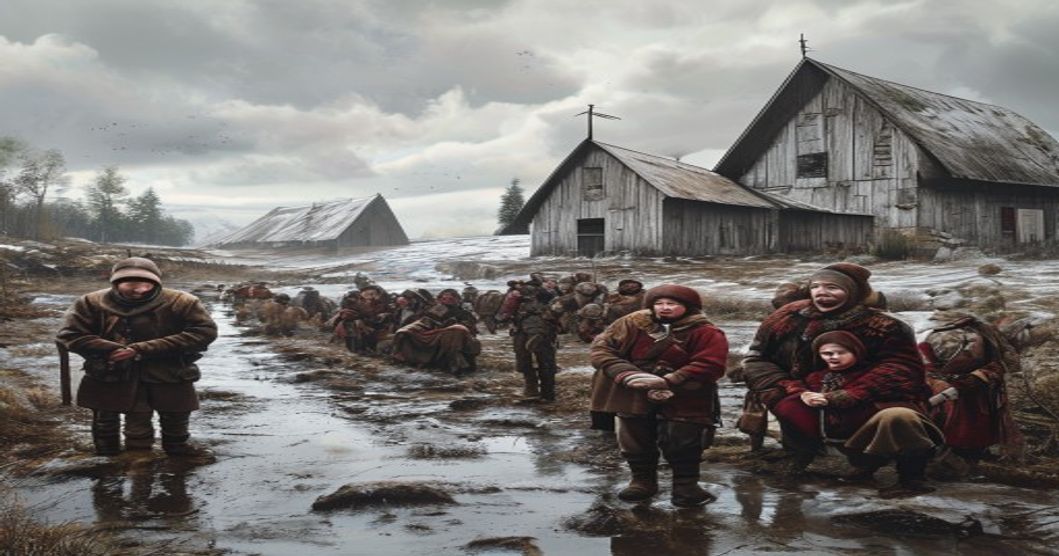
Understanding the History of Sápmi and Its People: A Comprehensive Overview
The territory known as Sápmi spans across the northern reaches of Norway, Sweden, Finland, and Russia, encompassing a landscape shaped by millennia of Indigenous adaptation. Archaeological evidence confirms human presence in this circumpolar region dating back over ten thousand years, long before modern national borders existed. The Sámi people developed highly specialized subsistence strategies tailored to subarctic environments, with reindeer herding evolving into a sophisticated pastoral system during the late medieval period. Coastal communities relied on maritime hunting and fishing, while inland groups mastered seasonal migrations across tundra, taiga, and mountain ecosystems. These traditional knowledge systems were transmitted orally through joik melodies, duodji handicrafts, and intricate seasonal calendars that synchronized with natural cycles.
- Prehistoric Foundations: Rock carvings at Alta (Norway) and Tanum (Sweden) document early Sámi spiritual practices and reindeer domestication around 4000 BCE.
- Medieval Trade Networks: Sámi communities exchanged furs, antlers, and iron goods with Norse merchants and Eastern Finnic groups, establishing economic corridors that predated state formation.
- Cultural Differentiation: Distinct dialects such as North Sámi, Inari Sámi, and Kildin Sámi emerged from geographic isolation, each preserving unique ecological terminology and governance structures.
The seventeenth through twentieth centuries marked a period of intense territorial encroachment. Scandinavian and Russian authorities imposed fixed borders that fragmented traditional migration routes, while taxation policies forced Indigenous families into wage labor or agricultural settlements. Missionary schools systematically suppressed Sámi languages and spiritual practices, classifying cultural expressions as primitive rather than sophisticated adaptations. Despite these pressures, resistance persisted through clandestine gatherings, legal challenges over grazing rights, and the preservation of oral histories. The 1960s environmental movements inadvertently catalyzed Indigenous activism, leading to the establishment of the Sámi Parliament in Norway (1989), Sweden (1993), and Finland (1996). Contemporary governance frameworks now mandate bilingual education, reindeer husbandry subsidies, and archaeological repatriation protocols. International instruments like the UN Declaration on the Rights of Indigenous Peoples have strengthened legal standing, though climate change and extractive industry expansion continue to threaten ancestral lands. Research institutions and Sámi-led archives actively digitize manuscripts, map historical grazing territories, and document intergenerational trauma recovery programs.
Geographical Boundaries and Traditional Territories of Sápmi
Sápmi spans a vast transnational landscape that cuts across northern Norway, Sweden, Finland, and the Russian Kola Peninsula without adhering to any formal internal political divisions. The region covers approximately 100,000 square kilometers of Arctic and subarctic terrain, extending from the Scandinavian Mountains eastward to the White Sea coast. No single government recognizes Sápmi as an official administrative unit; instead, historical treaties and modern nation-state boundaries arbitrarily slice through traditional Sami lands. The 1751 Strömssund Treaty between Sweden and Norway established fixed frontier lines that disrupted seasonal migration corridors, while later Finnish and Russian border policies further fragmented continuous grazing grounds. Despite these imposed limits, the territory remains culturally cohesive, defined by linguistic continuity, shared ecological knowledge, and centuries-old land-use practices.
The physical geography of Sápmi transitions sharply across latitudinal zones. Coastal strips feature rugged fjords, archipelagos, and shallow inlets where coastal Sami historically relied on fishing, bird hunting, and marine mammal harvesting. Moving inland, the landscape shifts into dense boreal forests dominated by Scots pine and Norway spruce, followed by open mountain tundra above the tree line. These ecological gradients dictate traditional livelihoods: reindeer herding follows precise altitudinal routes between summer pastures in highland plateaus and winter grazing grounds in sheltered forest valleys. River systems like the Tana, Vuoyatsjokk, and Tuloma serve as natural highways for seasonal movement, while frozen lakes and ice-covered bays enable winter travel across otherwise impassable wetlands.
- Western Sápmi: Extends along the Norwegian and Swedish Atlantic coastlines, characterized by maritime resources and milder coastal climates.
- Inland Sápmi: Covers the central Scandinavian mountain range and adjacent lowlands, forming the core of traditional reindeer pastoralism.
- Eastern Sápmi: Reaches into Finnish Lapland and the Russian Kola Peninsula, where mixed forestry-grazing economies and distinct dialectal groups developed.
Modern boundary enforcement continues to influence land rights negotiations, particularly regarding reindeer herding licenses, mining concessions, and conservation zones. Traditional territories overlap extensively with national parks, wind farm developments, and railway infrastructure, prompting ongoing legal challenges under international frameworks like ILO Convention 169. The geographic reality of Sápmi remains a living landscape where ecological adaptation, historical sovereignty, and contemporary governance intersect daily.
Origins and Early Settlements of the Indigenous Sámi Communities
Archaeological excavations across the Fennoscandian shield reveal that human activity in what is now Sápmi began shortly after the retreating ice sheets of the Weichselian glaciation, approximately 10,000 BCE. Early populations followed receding glaciers and massive herds of wild reindeer, establishing temporary camps along newly exposed coastlines and river valleys. The Komsa culture in northern Norway and the contemporaneous Fosna-Hensbacka sites along the western Atlantic coast demonstrate a sophisticated hunter-gatherer society that utilized flint, antler, and bone tools to exploit marine and terrestrial resources. These groups developed seasonal mobility patterns that optimized access to salmon runs, bird nesting grounds, and migratory wildlife corridors.
The transition toward reindeer management unfolded gradually between 2000 BCE and 500 BCE, driven by climate shifts during the Subboreal period and increased ecological pressure. Rather than immediate domestication, early Sámi ancestors practiced controlled herding, guiding wild populations through forested tundra ecotones. Rock art sites at Alta in Finnmark and Hjemmeluft in Tromsø document this era with intricate depictions of reindeer, boats, and hunting rituals, confirming a complex symbolic system intertwined with environmental observation. Subsistence strategies diversified into intensive fishing, berry harvesting, and the use of birch bark containers for food preservation.
- Early material culture relied on split-wood construction and turf roofing for insulation against subarctic winds
- Semantic boundaries between coastal, forest, and mountain groups emerged through resource specialization and trade networks
- Ancient dwelling foundations reveal standardized spatial organization centered around hearths and storage pits
Linguistic reconstruction places the divergence of Proto-Sami from other Uralic branches around 1000 BCE, coinciding with increased contact across the Barents Sea. Dialectal fragmentation accelerated as geographic barriers isolated communities in deep fjords, high plateaus, and taiga corridors. Social organization remained kinship-based, with leadership emerging through demonstrated ecological knowledge rather than hereditary rank. Exchange networks extended to the Finnic peoples to the east and Norse traders to the south, facilitating the movement of antler work, iron fragments, and marine mammal oil across vast distances.
Settlement density increased during the early medieval period as agricultural experimentation with hardy barley and root vegetables supplemented traditional foraging. Winter camps clustered around geothermal springs and sheltered valleys, enabling year-round occupation despite prolonged darkness. The integration of skis, snowshoes, and sled technology transformed mobility patterns, allowing efficient traversal of frozen lakes and deep snowpacks. These foundational adaptations established the ecological and cultural baseline that would define Sámi life for millennia.
Historical Evolution and External Influences Across Centuries
The territorial boundaries of Sápmi have never been fixed by formal treaties but rather shaped by shifting geopolitical pressures and indigenous adaptation strategies. Prior to the tenth century, Sami communities operated through decentralized kinship networks across a landscape defined by seasonal migration routes and distinct ecological zones. Norse explorers initiated sustained contact during the Viking Age, establishing coastal trading posts along the northern Scandinavian coastline. These early encounters introduced iron implements and silver currency while generating intermittent conflict over resource control.
Ecclesiastical expansion during the thirteenth century fundamentally altered traditional spiritual practices as missions in Tromsø and Trondheim integrated Sámi territories into broader European economic networks. The late medieval period marked a decisive turning point when emerging kingdoms of Norway, Sweden, and Denmark systematically extended administrative control northward. Tax collection frameworks replaced customary land use arrangements, imposing foreign legal structures on nomadic pastoralism. Cartographic surveys in the sixteenth through eighteenth centuries formalized border divisions that fractured continuous grazing corridors.
- National governments implemented fiscal policies favoring sedentary agriculture over reindeer husbandry, triggering economic marginalization.
- Nineteenth-century assimilation campaigns enforced mandatory schooling in state languages while prohibiting traditional textile techniques and oral historiography.
- Early twentieth-century territorial reforms institutionalized land expropriation for commercial forestry concessions and hydroelectric development.
These infrastructure projects dismantled critical wetland ecosystems that sustained both wildlife populations and seasonal livelihoods. Despite continuous legal challenges, indigenous land rights remained unrecognized until late twentieth-century constitutional amendments granted limited grazing permissions. Contemporary archaeological findings and linguistic reconstruction efforts continue to document centuries of cultural persistence against structured assimilation campaigns. Modern Sámi parliaments now coordinate transnational advocacy across four sovereign states while monitoring climate-driven ecological shifts that directly threaten traditional migration corridors.
Colonial Policies, Border Divisions, and Cultural Suppression
The fragmentation of Sápmi began with a series of bilateral treaties signed between the eighteenth and nineteenth centuries, which imposed arbitrary geopolitical boundaries across Indigenous territories without any consultation from the Sami communities. These border divisions severed traditional reindeer migration corridors, disrupted seasonal grazing patterns, and forced pastoralists to navigate conflicting national jurisdictions. Each state developed distinct colonial administrations that prioritized resource extraction, territorial consolidation, and administrative control over Indigenous sovereignty. State authorities systematically appropriated vast tracts of land for forestry, mining, and agricultural expansion, while imposing heavy taxation regimes on Sami households to enforce economic dependency.
Cultural suppression operated through coordinated assimilation frameworks designed to erase Indigenous identity across generations. Government officials banned the use of Sami languages in schools and public institutions, compelling children to adopt state-sanctioned naming conventions and religious practices. State-funded boarding facilities isolated youth from familial networks, enforcing linguistic prohibition and punishing traditional expressions such as joik performance. Municipal regulations further restricted reindeer husbandry by limiting grazing zones and demanding formal land tenure documentation that contradicted customary usage rights. These structural interventions dismantled intergenerational knowledge transfer, fractured community cohesion, and institutionalized marginalization within national legal systems.
- Treaty of 1751 imposed fixed borders across Sápmi, fragmenting pastoral routes
- Language prohibition laws mandated Swedish, Norwegian, Finnish, and Russian in education
- Assimilation schools separated children from families to enforce cultural conversion
- Land appropriation acts transferred traditional grazing territories to state and private owners
The cumulative impact of these policies created enduring socioeconomic disparities and legal challenges that persisted well into the twentieth century. Administrative frameworks continued to prioritize national development objectives over Indigenous land claims, while educational curricula systematically omitted Sami history from official textbooks. Contemporary land rights negotiations and linguistic revitalization initiatives directly address the structural imbalances established during this historical period, reflecting a long trajectory of policy correction rather than spontaneous reform.
World War II Impact and Postwar Reevaluation of Indigenous Rights
During World War II, Sápmi experienced profound disruption as strategic military operations transformed the northern frontier into a contested zone. Norwegian forces implemented scorched-earth tactics along the Finnmark coast to deny resources to advancing German troops, resulting in the forced evacuation of entire Sámi communities. Swedish and Finnish authorities similarly mobilized border regions for defense, intensifying state control over indigenous territories. These wartime measures accelerated existing assimilation policies, as governments prioritized national security over cultural preservation. The conflict exposed the vulnerability of Sámi livelihoods, particularly reindeer herding routes that were severed by military fortifications and restricted access zones. Educational institutions operating in northern districts enforced language suppression programs, further eroding intergenerational knowledge transmission.
- 1950s Institutional Adjustments: Limited recognition of Sámi cultural councils occurred alongside continued land allocation favoring agricultural settlers and state-run resource extraction.
- 1970s Transnational Advocacy: Indigenous organizations coordinated cross-border lobbying efforts, demanding formal consultation rights on territorial governance and environmental management.
- 1980s Judicial Precedents: Scandinavian courts increasingly referenced historical reindeer grazing patterns to validate traditional land use claims against municipal and corporate development projects.
- 1990 Legislative Milestones: Norway ratified ILO Convention 169, establishing binding consultation obligations; Sweden amended constitutional text to acknowledge Sámi indigenous status; Finland integrated Sámi language rights into national education statutes.
The postwar era required decades of legal reevaluation before indigenous sovereignty gained institutional traction. Government compensation programs targeted displaced families from wartime evacuations, yet full restitution remained contingent on parliamentary approval processes that historically favored majority populations. Contemporary policy frameworks now integrate Sámi ecological knowledge into conservation planning, reflecting a structural transformation from forced assimilation toward co-management agreements. Disputes over mining concessions, hydroelectric infrastructure, and seasonal grazing corridors persist, underscoring the ongoing tension between economic development and cultural continuity. The historical trajectory of Sápmi demonstrates how wartime exigencies and postwar state-building initially suppressed indigenous autonomy, while subsequent decades have fostered incremental legal recognition and sustained advocacy that continue to shape regional governance.
Cultural Foundations and Traditional Livelihoods
The cultural architecture of Sápmi developed through centuries of adaptive resilience, where knowledge transmission occurred primarily through lived practice rather than written records. Central to this framework is the siida, a historically fluid community structure that organized labor, resource sharing, and decision-making around seasonal migration patterns. Rather than fixed territorial boundaries, Sámi groups defined their living space by ecological corridors: winter pastures in dense boreal forests, summer grazing zones in open tundra, and coastal waterways critical for spring fishing. This geographic flexibility dictated a lifestyle where cultural rituals, economic activity, and ecological monitoring operated as interconnected systems.
Traditional livelihoods diversified across Sápmi’s latitudinal gradient, yet reindeer husbandry remained the most structurally significant practice. Herders tracked animal behavior, lichen availability, and snowpack density to determine migration timing, a process requiring precise environmental reading passed down through generations. Coastal communities relied on guolástus (traditional fishing), utilizing seasonal runs of salmon, trout, and whitefish. Techniques included hand-woven nets, wooden weirs, and smoke-drying methods that preserved protein stores through long winters. In forested regions, geahččamin (hunting) targeted moose, ptarmigan, and smaller game, while berry harvesting—particularly cloudberry, lingonberry, and crowberry—supplemented both diet and seasonal trade networks.
- Suodji craftsmanship: Tools, clothing, and ceremonial items were constructed from reindeer hide, antler, birch wood, and copper wire, with patterns encoding family lineage and regional identity.
- Joik performance: Vocal traditions functioned as mnemonic devices, preserving topographical knowledge, historical events, and ecological cycles through melodic structures that mirrored landscape contours.
- Káldu and duottar management: Controlled burning, selective grazing rotation, and watercourse maintenance maintained biodiversity while preventing resource depletion across generational timescales.
These practices were never purely utilitarian. Spiritual frameworks embedded within Sámi cosmology treated animals, waterways, and mountain formations as active participants in daily survival. Offering rituals before hunts or first catches reinforced reciprocal obligations between humans and the natural world. Land use policies imposed during the nineteenth and twentieth centuries disrupted these cycles, yet the underlying knowledge systems persisted through oral instruction, seasonal gatherings, and intergenerational skill transfer. Modern Sámi communities continue to adapt traditional ecological principles to contemporary conservation frameworks, demonstrating that cultural continuity in Sápmi remains fundamentally tied to place-based livelihood strategies.
Reindeer Herding Practices and Seasonal Migration Patterns
The Sámi relationship with reindeer is not merely economic but ecological and cultural, rooted in millennia of adaptation to northern latitudes. Traditional herding operates on a strict calendar dictated by forage availability and animal physiology. Each herd follows established migration corridors that traverse distinct ecological zones, primarily between coastal summer pastures and inland winter ranges.
- Spring Calving Season: Herds move toward sheltered valleys and forested areas where early vegetation emerges. Calves are marked with traditional brand codes within days of birth, a practice that reinforces clan lineage and herd ownership across generations.
- Summer Pastures: High-altitude plateaus and coastal tundra provide cool conditions that prevent insect harassment. The Sámi monitor mosquito and warble fly activity closely, relocating animals to wind-exposed ridges or open waterways when needed.
- Autumn Slaughter Round: As temperatures drop and snow begins to accumulate, herds are driven back toward forested zones where lichen remains accessible beneath shallower snowpacks. This period involves selective culling to maintain herd viability through winter.
Winter migration relies on precise topographical reading. Reindeer possess specialized hooves that compress snow in summer and expand it in winter, but deep crust formation can block lichen access. Herders use long poles to test snow density and identify ground rich in Cladonia rangiferina. Routes are passed orally alongside mapped waypoints known as luohti (reindeer bells), where sound communication replaces visual contact across vast, featureless landscapes.
Traditional knowledge systems classify migration windows by lunar cycles and permafrost thaw rates, ensuring herds avoid premature snow compaction that would seal lichen layers. Successful movement requires synchronizing animal pacing with microclimates, predator patterns, and regrowth cycles of arctic botanical species. The Sámi do not force reindeer along fixed paths; they guide populations toward optimal forage while allowing natural behavioral cues to dictate daily navigation.
JoiK Music, Oral Traditions, and Symbolic Art Forms
The cultural continuity of Sápmi relies heavily on interconnected artistic expressions that function as living archives. At the core of this tradition lies the joik, a vocal practice distinct from conventional singing. Rather than narrating an external story, a joik embodies the essence of its subject—be it a person, animal, landscape, or spiritual concept. Performers utilize microtonal shifts, rhythmic breathing patterns, and repetitive melodic motifs to evoke emotional and environmental resonance. Historically suppressed by colonial authorities and religious institutions, the practice experienced systematic eradication during the nineteenth and twentieth centuries. Contemporary Sámi artists have revitalized these techniques while integrating modern instrumentation, ensuring the tradition remains a dynamic component of indigenous identity.
- Vocal Techniques: Breath control, throat variations, and polyphonic layering distinguish regional joik styles across Finnmark, Troms, and northern Scandinavia.
- Thematic Focus: Subjects shift according to seasonal migrations, reindeer herd dynamics, and ancestral lineages rather than external narrative structures.
- Cultural Transmission: Elders teach melodic frameworks through direct demonstration, allowing younger generations to adapt compositions to current ecological and social conditions.
Oral history operates in tandem with musical practice, preserving ecological knowledge, navigation methods, and legal precedents through spoken word. Storytellers encode meteorological patterns, wildlife behavior, and territory boundaries within narrative frameworks that withstand centuries of environmental change. These accounts function as practical guides for survival in subarctic conditions while maintaining spiritual connections to ancestral territories. Digital archives and community-led documentation projects now safeguard recordings that once faced irreversible loss due to forced assimilation programs.
Symbolic craftsmanship complements these auditory traditions through duodji, the traditional Sámi handicraft system. Artisans employ reindeer antler, birch root, and cowrie shells to construct objects that communicate lineage status, regional affiliation, and cosmological beliefs. Color palettes follow established conventions: red represents vitality and blood ties, black signifies earth and resilience, white denotes snow and purity, while green and blue reflect forest canopies and glacial waters. The gákti, a tailored garment worn across daily life and ceremonial occasions, incorporates specific embroidery patterns that identify municipal origin without requiring verbal explanation. Petroglyph sites scattered across coastal regions and inland valleys further reinforce this visual language, depicting hunting rituals, boat constructions, and celestial alignments that guided seasonal movements. Together, these artistic disciplines maintain an unbroken chain of knowledge transfer that adapts to contemporary realities while preserving historical continuity.
Sami Language Dialects and Linguistic Preservation Efforts
The Sami linguistic landscape comprises a complex family of closely related languages rather than a single unified tongue. Historically classified as dialects, contemporary linguistics recognizes at least nine distinct Sami languages, each with unique phonological and grammatical structures. Northern Sami remains the most widely spoken, primarily across Finnmark in Norway, Troms in Norway, Lapland in Finland, and the Kola Peninsula in Russia. Southern Sami spans central Norway and Sweden, while Inari and Skolt Sami operate within northern Finland and northwestern Russia respectively. Kildin and Ter Sami survive on the Kola Peninsula, though both face critical endangerment levels.
Linguistically, these languages exhibit agglutinative morphology, where words expand through concatenated affixes to convey complex meanings. Vowel harmony governs syllable compatibility, and noun cases frequently reach twelve or more, reflecting precise spatial and relational concepts. The lexicon contains highly specialized terminology for reindeer husbandry, snow conditions, and Arctic ecology, often exceeding standard vocabulary in neighboring Uralic languages. This lexical density preserves centuries of environmental adaptation and cultural navigation.
State-sponsored assimilation policies across Norway, Sweden, Finland, and Russia systematically suppressed Sami linguistic transmission during the nineteenth and twentieth centuries. Mandatory boarding schools prohibited native speech, resulting in generational language loss. Contemporary revival strategies integrate institutional support with grassroots initiatives:
- Digital orthography standardization across operating systems and mobile interfaces.
- Intergenerational immersion camps that prioritize oral transmission over written curriculum.
- Real-time phonetic mapping projects documenting elder speakers in remote Arctic settlements.
- Legal framework enforcement under the Sami Language Act for public service accessibility and bilingual signage.
Cross-border linguistic coalitions continue refining spelling conventions while protecting regional morphological variations. Institutional funding now supports university-based dialectology departments, ensuring academic research directly informs community-led revitalization. Digital archives prioritize metadata accuracy, enabling precise search indexing for linguistic databases and cultural heritage repositories.
Modern Legal Frameworks and Contemporary Challenges
Nordic states have progressively integrated international indigenous rights instruments into domestic legislation, establishing a complex regulatory environment for Sápmi. Norway ratified ILO Convention No. 196 in 1990, granting the Sámi Parliament legislative authority over cultural and educational matters. Sweden followed with constitutional amendments recognizing the Sámi as an indigenous minority, while Finland enacted the Constitution Act provision safeguarding Sámi language and culture. These frameworks intersect with national land management statutes, creating overlapping jurisdictions that frequently require judicial clarification.
The Finnmark Act of 2005 transferred ownership of approximately ninety-five percent of Finnmark county to the Finnmark Estate, establishing a joint commission comprising state representatives and Sámi elected members to determine historical ownership boundaries. Norway’s Sametinget operates under specific parliamentary statutes that mandate government consultation on resource extraction projects affecting reindeer herding zones. Sweden’s Mining Act requires environmental impact assessments that must incorporate Sámi traditional knowledge, though practical application remains inconsistent across counties.
- Land Tenure Disputes: National park expansions and protected area designations frequently restrict seasonal migration routes without adequate compensation or co-management agreements.
- Resource Extraction Conflicts: Wind energy infrastructure, iron ore mining operations, and hydroelectric dams proceed through administrative permits that often bypass meaningful Sámi consent mechanisms.
- Climatic Disruption: Unpredictable weather patterns degrade lichen pastures and alter reindeer calving grounds, forcing herders to adapt traditional practices while legal frameworks remain static.
- Institutional Representation Gaps: Sámi Parliaments lack binding legislative power in Sweden and Finland, limiting their capacity to veto decisions impacting ancestral territories.
Enforcement mechanisms continue to lag behind statutory recognition. Courts in Oslo, Stockholm, and Helsinki routinely adjudicate boundary disputes where historical grazing records conflict with modern property registries. The European Court of Human Rights has repeatedly examined cases involving Sámi reindeer husbandry rights under Article 8 and Article 1 of Protocol No. 1 of the European Convention on Human Rights. Recent litigation focuses on whether state consultation procedures satisfy free, prior, and informed consent standards established by UNDRIP. Indigenous legal advocates argue that de jure protections require binding arbitration bodies with Sámi majority representation. Policy implementation depends heavily on regional administrative will, resulting in fragmented governance across Sápmi’s transnational landscape.
Establishment of the Sami Parliaments and SelfGovernance Models
The institutionalization of Sámi political representation emerged during the late twentieth century as indigenous rights gained international recognition. Norway established the first Sámi Parliament in 1989 following decades of activism and the publication of the Skoltsámi school report, which highlighted systemic discrimination in education and land use. Sweden followed in 1993 with its own parliamentary assembly, while Finland enacted legislation for its Sámi Parliament in 1996. Russia established a similar body in 2000, though its operational capacity remains constrained by federal restrictions on indigenous governance. These institutions were not created through unilateral state generosity but resulted from sustained lobbying, international legal shifts, and the ratification of ILO Convention 169, which explicitly recognizes indigenous peoples’ right to self-determination in cultural and economic matters.
Each Sámi Parliament operates under distinct national legislation, defining its authority as advisory rather than legislative. The Norwegian Sámediggi holds statutory consultation rights over all state decisions affecting Sámi communities, including mineral extraction, infrastructure development, and reindeer husbandry zoning. Swedish and Finnish parliaments manage annual budgets allocated by their respective governments, directing funds toward language revitalization programs, cultural institutions, and educational initiatives. Despite differing mandates, all three bodies share jurisdictional boundaries defined by electoral districts rather than traditional Sápmi territories, leading to complex questions about representation for cross-border Sámi populations. The electoral franchise requires proof of Sámi ancestry combined with demonstrated cultural or linguistic ties, a criterion that continues to generate legal debates regarding identity verification and historical continuity.
- Regulatory Coordination: Parliaments negotiate grazing quotas and seasonal migration routes alongside national agricultural ministries, ensuring reindeer husbandry aligns with environmental preservation goals.
- Language Standardization: Dedicated committees develop orthographic standards for North Sámi, Lule Sámi, South Sámi, and Inari Sámi, funding textbooks, broadcasting networks, and digital translation tools.
- Cross-Border Governance: The Sámi Parliament Conference facilitates policy alignment on wildlife management, climate adaptation strategies, and traditional knowledge documentation across national frontiers.
Funding mechanisms rely on state subsidies supplemented by EU regional development grants, enabling the financing of Sámi universities, media outlets, and traditional craft workshops. Governance challenges persist around resource allocation, jurisdictional overlaps with municipal authorities, and the limited capacity to enforce binding decisions, yet these bodies remain the primary institutional framework for Sámi political agency and cultural continuity.
Land Rights Disputes, Resource Extraction, and Environmental Advocacy
The territorial framework of Sápmi has long existed in tension with the administrative boundaries imposed by Norway, Sweden, Finland, and Russia. For centuries, Sámi communities managed grazing, hunting, and fishing grounds through customary practices rather than formal property deeds. The transition from traditional stewardship to state-controlled land tenure accelerated during the nineteenth and twentieth centuries, as national governments prioritized economic development over indigenous territorial continuity. This structural shift created a foundational conflict: while Sámi livelihoods remain deeply tied to seasonal migration patterns and ecosystem integrity, modern legal systems frequently classify these territories as public domain or state property.
Resource extraction industries have intensified this tension across the region. Mining operations targeting nickel, iron ore, and rare earth minerals operate within ecologically sensitive tundra and boreal zones. Hydroelectric dams have permanently altered river systems critical for reindeer herding, while industrial forestry and large-scale wind farm installations fragment habitats and disrupt traditional access routes. Licensing decisions frequently bypass the principle of Free, Prior, and Informed Consent, leading to protracted legal challenges and community-led opposition campaigns that document ecological degradation alongside cultural displacement.
- ILO Convention 169 establishes binding obligations for signatory states to recognize Sámi land use rights and mandate consultation protocols before permitting commercial development.
- UNDRIP reinforces collective territorial claims and has been increasingly cited in domestic litigation to challenge unauthorized resource concessions.
- National court rulings, including landmark Norwegian Supreme Court decisions regarding Finnmark’s land commission, have progressively acknowledged historical Sámi occupation as a legal basis for co-management frameworks.
Environmental advocacy in Sápmi has evolved from reactive resistance to structured territorial governance. Sámi organizations now integrate traditional ecological knowledge with contemporary conservation science to develop land-use plans that balance industrial activity with biodiversity preservation. Cross-border cooperation among Sámi parliaments and international environmental networks strengthens litigation strategies, data collection efforts, and policy advocacy. The movement increasingly frames land rights not as a standalone cultural issue but as a critical component of regional climate resilience and sustainable resource management.
Educational Initiatives and Cultural Revitalization Programs
The educational framework within Sápmi has systematically shifted toward indigenous sovereignty, prioritizing Sámi languages and traditional ecological knowledge as core academic disciplines. Programs established by the Sámi University College in Kautokeino and Tromsø function as primary nodes for curriculum development, research documentation, and teacher training. These institutions operate independently of national education ministries while maintaining accredited degree pathways. Language immersion schools across Norway, Sweden, and Finland utilize mother-tongue instruction from early childhood through secondary levels, ensuring fluency transmission across generations.
Institutional frameworks integrate reindeer herding practices, joik vocal traditions, duodji craftsmanship, and land-based pedagogy into standardized syllabi. Digital repositories such as the Sámi Parliament Archives and the Giellagas Institute host phonetic recordings, historical manuscripts, and interactive mapping tools that support remote learning communities. University partnerships with municipal governments mandate bilingual signage, indigenous history modules in public schools, and funded research grants targeting linguistic documentation.
- Sámi language nest programs deliver daily instruction to children aged three to six using native speakers as primary educators.
- Mobile teacher training units rotate through rural municipalities, equipping educators with culturally responsive teaching materials and assessment tools.
- Community-led craft workshops document traditional knitting patterns, lute construction techniques, and seasonal hunting strategies for archival preservation.
- Digital mapping initiatives collaborate with elders to label ancestral territories using standardized Sámi place names recognized by national geographic authorities.
Funding mechanisms originate from Nordic cultural heritage budgets, European Union indigenous development grants, and private foundation endowments. Governance structures require majority Sámi representation on advisory boards, ensuring program alignment with community priorities rather than external academic interests. Challenges include standardized testing frameworks that conflict with oral assessment traditions, infrastructure limitations in remote settlements, and the need for continuous curriculum updates reflecting contemporary Sámi jurisprudence. Measurable outcomes demonstrate increased university enrollment among indigenous youth, expanded native-speaking teacher pools, and documented recovery of endangered language variants across three Nordic jurisdictions.
Future Trajectories and Preserving Sámi Heritage for Generations
The preservation of Sámi heritage now operates at the intersection of binding legal frameworks, digital infrastructure development, and ecological adaptation strategies. Modern trajectories depend on securing land tenure through continuous judicial enforcement of reindeer herding rights, which directly dictates access to grazing corridors across Norway, Sweden, Finland, and Russia. National parliaments refine Sámedigg mandates annually, yet actual resource allocation requires transparent auditing mechanisms and direct community oversight over mining concessions, forestry operations, and renewable energy installations that intersect with traditional territories.
Language revitalization has transitioned from supplementary classroom instruction to immersive technological ecosystems. Mobile linguistics platforms, neural network speech recognition models, and high-fidelity audio archives now document dialects that previously faced structural erosion. These digital repositories function alongside community-led recording initiatives that position elder knowledge holders as primary authorities rather than academic subjects. Verification protocols align with international archival standards, ensuring long-term data integrity while preventing external appropriation of sacred vocalizations, genealogical records, and historical land-use maps.
- Educational Integration: Vocational curricula now embed joik performance techniques, duodji material processing standards, and traditional environmental monitoring into certified training programs. Youth mentorship networks pair adolescents with master herders and artisans to accelerate skill transfer across generational gaps.
- Climate Adaptation Protocols: Indigenous meteorological observations merge with satellite telemetry to model tundra permafrost degradation. Sámi advisory councils directly influence regional infrastructure planning, ensuring that thawing ground conditions do not compromise pasture accessibility or burial site integrity.
- Economic Sovereignty: Blockchain authentication systems verify authentic duodji craftsmanship, while cooperative ownership models govern reindeer supply chains and community renewable energy projects. These structures reduce external subsidy dependency and reinforce autonomous decision-making regarding resource distribution.
Cross-border coordination between Sámi organizations accelerates standardization of heritage protection legislation while preserving distinct regional identities across the four-nation territory. Municipal capacity building remains critical, requiring continuous training for local administrators on UNDRIP implementation and Sámi planning rights. Long-term cultural resilience depends on maintaining equilibrium between technological adoption and ancestral knowledge systems, allowing Sápmi to navigate modernization without diluting foundational identity markers.
Frequently Asked Questions
What is Understanding the History of Sápmi and Its People?
Understanding the History of Sápmi and Its People involves exploring the cultural, social, and political legacy of the Sámi indigenous communities across northern Scandinavia and Russia, highlighting their traditional livelihoods, language preservation efforts, and contemporary rights movements.
Key facts about Understanding the History of Sápmi and Its People
Key facts include: Sápmi spans four countries (Norway, Sweden, Finland, and Russia); the Sámi have over 10 distinct languages; reindeer herding remains a central cultural practice; and modern advocacy has led to greater political representation and land rights recognition in recent decades.