


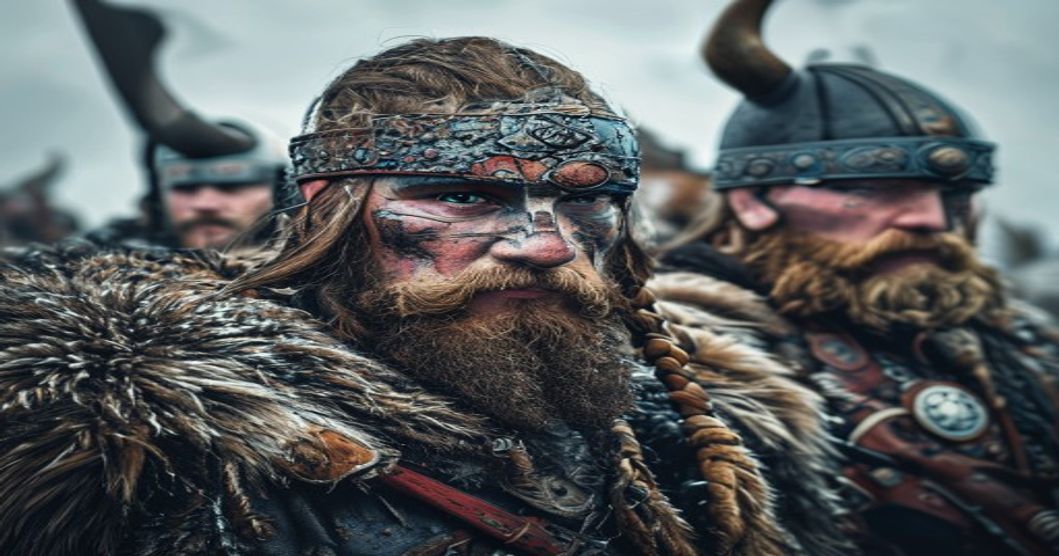
Differences Between Sami and Vikings: Complete Historical & Cultural Analysis
The divergence between the Sami and Viking populations stems from fundamentally distinct environmental adaptations, economic models, and socioreligious frameworks that evolved across Northern Europe over centuries. While both groups inhabited overlapping latitudinal zones during the early medieval period, their trajectories diverged sharply due to geography and resource utilization.
Viking societies emerged primarily along the Atlantic and North Sea coastlines, where maritime navigation dictated settlement patterns and economic expansion. Their economy relied on seaborne trade networks spanning from Newfoundland to Constantinople, supplemented by intensive agriculture, livestock management, and controlled raiding. Social organization revolved around hierarchical chieftaincies, agricultural clans, and regional things (assemblies) that mediated disputes and ratified laws through oral tradition and later runic documentation.
In contrast, the Sami developed a highly specialized nomadic pastoralism centered on reindeer husbandry, adapted to subarctic tundra and taiga ecosystems. Their economic survival depended on seasonal migration routes, intricate knowledge of animal behavior, and sustainable harvesting of forest resources. Governance operated through decentralized siida units—kinship-based cooperative groups that managed grazing lands collectively rather than through centralized monarchical authority.
Religious and cosmological frameworks further illustrate this historical divide. Norse belief systems emphasized a structured pantheon, ancestral worship, and ritual sacrifices conducted at temple sites or natural landmarks. The Sami spiritual tradition centered on animistic principles, where nature spirits governed ecological balance. Ritual practice involved the noaidi utilizing decorated drums to mediate between human and spirit realms, alongside vocal traditions known as joik that encoded genealogical and territorial knowledge.
- Viking material culture prioritized ironworking, shipbuilding techniques, and portable art styles emphasizing interlaced animal motifs.
- Sami craftsmanship focused on bone, antler, and wood carving, producing functional tools alongside ceremonial objects that reflected seasonal migration cycles.
Historical contact between these groups ranged from localized trade exchanges to prolonged territorial conflicts. Medieval Scandinavian chronicles frequently mischaracterized Sami communities as peripheral subjects, while archaeological evidence reveals complex cultural negotiations rather than simple assimilation. Modern historiography recognizes both groups as independent developmental pathways shaped by climate, topography, and distinct knowledge transmission systems.
Origins and Geographic Distribution Across Northern Europe
The ancestral roots of the Sámi and Norse populations diverge across distinct linguistic and archaeological lineages that shaped their respective territories throughout Northern Europe. Sámi communities trace their lineage to ancient Uralic-speaking groups that migrated from eastern Eurasia into the Fennoscandian region during the late Bronze Age and early Iron Age. Genetic and paleolinguistic research indicates that these populations established themselves across the taiga and tundra zones well before the first recorded Norse expeditions. Their traditional settlement pattern followed the ecological boundaries of reindeer migration routes, coastal fjord systems, and inland river valleys stretching from the Kola Peninsula westward through Finnmark and Troms, then south into central Sweden and Finland.
Norse origins emerge from a completely separate Indo-European framework. Proto-Norse dialects crystallized on the Scandinavian Peninsula and the Danish archipelago during the first millennium BCE. Archaeological stratigraphy at sites like Borre, Oseberg, and Gokstad confirms that these societies developed complex maritime networks along the North Sea and Norwegian coastlines. When the Viking Age commenced around 793 CE, Norse expansion radiated outward from three primary geographic corridors: Danish territories pushing toward the British Isles and Frankish coast; Swedish routes following river systems into Byzantium and the Caspian basin; and Norwegian fleets navigating open Atlantic waters to Iceland, Greenland, and the Faroe Islands.
- Sámi territory aligns with the historical Sápmi region, characterized by continuous habitation in subarctic and arctic zones without large-scale territorial displacement.
- Norse settlement originated exclusively within modern Norway, Sweden, and Denmark, with temporary colonial outposts established during maritime campaigns.
- Linguistic divergence remains definitive: Sámi languages belong to the Uralic family, while Old Norse derives from Proto-Germanic Indo-European roots.
- Archaeological trade networks in Finnmark and Lapland demonstrate prolonged cultural exchange rather than territorial replacement during the early medieval period.
Geographic overlap occurred primarily in northern Fennoscandia, where Norse trading posts intersected with Sámi seasonal camps. Excavated artifacts reveal shared metallurgy techniques and reindeer bone tool production, yet settlement density maps show Norse communities concentrating along navigable waterways while Sámi populations maintained dispersed, altitude-adapted dwellings. The ecological constraints of the Scandinavian mountain range naturally partitioned these groups, preventing large-scale demographic absorption and preserving distinct territorial boundaries throughout the medieval expansion era.
Historical Timelines and Expansion Patterns
The chronological frameworks governing Sámi history and Viking-era Norse activity operate on fundamentally different temporal scales. Archaeological stratigraphy and radiocarbon dating place continuous human habitation across Fennoscandia back to approximately 10,000 BCE, following the retreat of the Weichselian ice sheet. Early hunter-fisher groups established seasonal camps along coastal fjords and inland waterways, with material culture evolving through the Bronze and Iron Ages without a singular founding event. Sámi historical continuity rests on generational knowledge transmission, ecological adaptation, and territorial stewardship rather than documented conquest or state formation.
Norse expansion follows a sharply defined chronological window commonly designated as the Viking Age, spanning roughly 793 to 1066 CE. The period initiates with documented coastal raids targeting monastic settlements in Britain and continental Europe, followed by systematic maritime colonization across the North Atlantic, Baltic trade networks, and riverine routes into Eastern Europe. Political consolidation under centralized Scandinavian monarchies gradually curtailed independent longship expeditions, marking the chronological boundary of the era.
Expansion patterns diverge in methodology, geographic scope, and economic drivers. Sámi territorial movement relies on seasonal migration cycles adapted to reindeer herding, coastal fishing, and inland hunting grounds. These routes follow ecological thresholds rather than political borders, maintaining low-density presence across tundra, taiga, and mountain regions. Norse expansion depends on naval technology, particularly the clinker-built longship, which enabled rapid projection of force, trade monopolization, and permanent settlement establishment in Iceland, the Faroe Islands, Greenland, and parts of the British Isles.
- Sámi chronology reflects millennial continuity with adaptive territorial presence rather than outward colonization
- Viking expansion concentrates within a 270-year window characterized by maritime raiding, trade network control, and colonial settlement
- Sámi movement follows ecological seasonal cycles across Fennoscandian landscapes
- Norse projection utilizes ship-based mobility to establish distant outposts and integrate with foreign political economies
The intersection of these timelines reveals minimal overlap in expansion objectives. Sámi territorial patterns prioritize resource optimization within established ecological zones, while Norse activity focuses on geographic penetration, wealth extraction, and demographic relocation across unprecedented maritime distances.
Spiritual Worldviews and Religious Transformations
The spiritual landscapes of the Sámi and Norse peoples diverged fundamentally in both cosmological structure and daily practice. Sámi belief systems operated on an animistic foundation where every natural element—mountains, waters, specific trees, and animal species—possessed a distinct spiritual presence known as a noaidi or sieidi. These entities required continuous negotiation through personal spirit guides and seasonal offerings rather than centralized worship. Norse spirituality, by contrast, followed a structured polytheistic framework centered on a defined pantheon. Deities such as Odin, Thor, and Freyr governed specific domains like wisdom, thunder, and fertility, with their influence mediated through communal blót ceremonies conducted at wooden temples called hofs or outdoor altars.
Cosmological mapping further separated the two traditions. Sámi cosmology viewed existence as an interconnected web where humans, animals, and spirits shared reciprocal obligations. Ritual specialists utilized drumming and chanting to enter trance states for divination and healing, emphasizing adaptability within environmental cycles. Norse cosmology relied on Yggdrasil, the world tree connecting nine distinct realms, establishing a hierarchical universe where divine hierarchy dictated mortal fate. The concept of wyrd governed actions, reinforcing a destiny-driven worldview that celebrated martial prowess and heroic legacy over ecological symbiosis.
- Sámi spiritual authority emerged from individual trance experiences and localized land relationships, while Norse religious leadership depended on chieftain-sponsored temples and codified mythic narratives.
- Sámi rituals prioritized balance with seasonal migration patterns, whereas Norse ceremonies aligned with agricultural festivals and warfare cycles.
- Afterlife concepts differed sharply: Sámi traditions emphasized ancestral continuity within the natural world, while Norse belief promised Valhalla or Fólkvangr for warriors who died in battle.
The transition to Christianity occurred through distinct historical mechanisms. Norse communities underwent rapid institutional conversion during the tenth and eleventh centuries, driven by royal decrees, trade alliances with continental Europe, and the strategic adoption of Latin ecclesiastical structures. Sámi populations experienced prolonged syncretism, maintaining hidden sieidi practices and drum rituals while outwardly adopting Lutheran or Orthodox Christian elements depending on regional political control. Archaeological evidence reveals Norse temples replaced with churches in centuries-old locations, indicating deliberate spatial continuity despite theological replacement.
Modern scholarship interprets these divergent spiritual trajectories as reflections of broader societal organization. Sámi cosmology sustained decentralized kinship networks adapted to subarctic environments, while Norse religious frameworks reinforced centralized chieftaincy and maritime expansion. Both systems ultimately fragmented under external pressure, yet their underlying philosophical architectures continue to shape contemporary Scandinavian historical narratives.
Linguistic Families and Written Documentation
The linguistic divergence between the Sami peoples and Viking-age Scandinavians stems from fundamentally distinct language families. Sami languages belong to the Uralic family, specifically the Finno-Ugric branch, sharing distant genetic ties with Finnish and Hungarian. Old Norse falls squarely within the Indo-European language tree as a North Germanic dialect. This foundational classification dictates nearly every structural comparison, from phonology to morphosyntax.
Phonologically, Sami languages exhibit vowel harmony and extensive consonant gradation, features entirely absent in Old Norse. The latter relies on complex inflectional morphology with four grammatical cases, three genders, and intricate verb conjugations rooted in Proto-Germanic sound shifts. While Old Norse vocabulary expanded through contact with Celtic, Frankish, and Slavic speakers during expansion periods, Sami developed a highly specialized lexicon for reindeer husbandry, tundra ecology, and maritime survival, remaining largely insulated from Indo-European lexical borrowing.
Written documentation reveals an equally stark historical contrast. Viking-age Scandinavians utilized the Elder Futhark and later Younger Futhark runic alphabets extensively for memorial stones, trade marks, and legal inscriptions. The conversion to Christianity in the late tenth century accelerated the adoption of the Latin script, producing a massive literary corpus including sagas, laws (Grágás, Frostuþingslög), skaldic poetry, and administrative charters by the thirteenth century. Sami communities lacked indigenous writing systems for over a millennium. Early attempts to document Sami occurred only after sustained Lutheran missionary activity in the seventeenth and eighteenth centuries, resulting in fragmented grammars and religious texts rather than continuous historical records.
- Language Family Classification: Sami (Uralic/Finno-Ugric) versus Old Norse (Indo-European/Germanic)
- Phonological Systems: Vowel harmony and consonant gradation in Sami contrast with Old Norse ablaut patterns and case-driven declensions
- Documentation Timeline: Runic inscriptions and post-conversion Latin manuscripts (8th–13th centuries) versus missionary-era linguistic records (17th century onward)
The absence of pre-Christian Sami written sources does not indicate cultural inferiority but rather reflects different socio-political structures. Scandinavian societies operated within literate trade networks and early state formation, necessitating record-keeping. Sami communities maintained knowledge transmission through oral formulaic verse, yoik traditions, and practical apprenticeship, preserving ecological and navigational expertise without script-based infrastructure. Modern comparative linguistics treats both systems as equally complex, with Sami demonstrating remarkable grammatical precision in spatial orientation and kinship terminology, while Old Norse preserves detailed insights into medieval Scandinavian legal and mythological frameworks.
Naval Engineering and Terrestrial Adaptation Techniques
The Viking maritime tradition relied on clinker-built hulls, a construction method where overlapping iron-nailed planks created lightweight yet highly flexible vessels capable of withstanding North Atlantic swells. Longships featured shallow drafts, enabling navigation across open oceans and riverine systems alike, while their square sails combined with symmetrical oar ports provided tactical versatility during both transoceanic voyages and coastal raids. Knarrs, designed for cargo capacity rather than speed, utilized reinforced keels and deeper hulls to stabilize merchant operations across established trade networks spanning from Dublin to Novgorod. This naval architecture directly supported an expansionist model that prioritized rapid deployment, resource extraction, and the establishment of coastal footholds in ecologically diverse territories.
Sami watercraft engineering diverged fundamentally from Norse maritime practices, emphasizing adaptability over structural rigidity. Traditional duodji boat designs incorporated flexible wooden frames covered with cured reindeer or seal hides, creating vessels that conformed to river currents and fjord conditions rather than resisting them. Dugout canoes carved from single pine trunks dominated inland waterway transport, optimized for shallow depths and narrow channels where larger hulls would founder. These boats lacked the sail-driven propulsion systems characteristic of Viking fleets, relying instead on hand paddles and pole navigation to maintain control in fast-moving freshwater networks. The Sami approach reflected a subsistence-driven economy where vessel design prioritized quiet maneuvering, load distribution for fishing gear, and seasonal ice conditions over long-distance voyaging.
- Viking shipwrights utilized iron rivets and tarred oakum seams to create watertight yet dynamically flexible hulls that absorbed wave impact through controlled flexing.
- Sami constructors prioritized rapid assembly and disassembly, using sinew lashings and hide tensioning systems to accommodate extreme temperature fluctuations without structural fatigue.
- Viking terrestrial infrastructure centered on permanent farmsteads, timber-framed longhouses, and defensible harbor installations that anchored agrarian-maritime hybrid economies.
- Sami land-use strategies operated through seasonal migration corridors across boreal forests and arctic tundra, aligning human movement with reindeer grazing cycles rather than fixed agricultural plots.
These contrasting engineering philosophies produced distinct historical trajectories. Viking naval superiority enabled rapid interregional connectivity, institutionalized trade routes, and cultural diffusion across maritime frontiers
Material Culture and Artistic Traditions
Viking material culture relied heavily on iron, bronze, amber, and timber, reflecting their maritime expansion and warrior economy. Artistic expression manifested through intricate animal interlace patterns, runic inscriptions on weapons and runestones, and elaborate metalwork in brooches, arm rings, and ship fittings. These objects served as markers of social rank, religious devotion to Norse deities, and practical tools for navigation or combat. Archaeological excavations at sites like Birka and Hedeby reveal standardized Viking production methods, whereas Sami artifacts show regional variations tied to specific reindeer migration corridors and local resource availability.
In contrast, Sami artistic traditions emerged from a nomadic reindeer-herding lifestyle, prioritizing durability, portability, and spiritual utility. Their material culture centered on antler, bone, wood, and reindeer hide, crafted into functional items like duodji knives, sled runners, and drum frames. Visual art took the form of symbolic drum paintings featuring cosmological maps, shamanic journeys, and animal spirits rather than decorative interlace. While Viking artisans worked in settled workshops or mobile smithing camps along trade routes, Sami craftsmen embedded knowledge into seasonal migrations, passing techniques through oral instruction and hands-on replication
Archaeological Record and Historical Documentation Accuracy
The archaeological and documentary landscapes of the Sami and Viking populations diverge sharply due to preservation conditions, cultural practices, and colonial historiography. Viking sites benefit from Scandinavia’s acidic soils and extensive settlement patterns that yield durable artifacts like iron tools, ship timbers, runestones, and coin hoards. Monastic chronicles and later Icelandic sagas provide textual anchors, though these sources frequently reflect Christian biases or were composed centuries after the events they describe. Material culture remains the primary verification method for Viking activities, with stratigraphic analysis and dendrochronology establishing reliable timelines for raids, trade networks, and settlement expansion.
Sami historical reconstruction relies on fundamentally different evidence streams. Traditional nomadic and semi-nomadic lifestyles left minimal monumental architecture, while organic materials such as reindeer antler, wood, and leather decompose rapidly in most Nordic soils. Archaeological recovery depends heavily on waterlogged deposits, burial mounds, and rock art panels that document spiritual practices and seasonal migration routes. Written documentation emerged only during the late medieval and early modern periods, primarily through Norwegian, Swedish, and Danish administrative records that often misinterpreted or deliberately altered indigenous terminology to justify taxation, land appropriation, and religious conversion campaigns.
- Preservation Bias: Viking material culture survives in higher quantities due to stone construction, metalworking intensity, and deliberate burial practices. Sami artifacts require exceptional environmental conditions for survival, creating fragmented archaeological sequences.
- Source Criticism: External chronicles about both groups contain systematic distortions. Viking accounts frequently exaggerate martial prowess, while Sami records reflect colonial administrative categories rather than indigenous self-identification.
- Methodological Shifts: Modern Nordic archaeology has transitioned from textual dependency to scientific dating techniques, isotopic analysis, and ethnoarchaeological models that reconstruct Sami mobility patterns without relying on biased written sources.
Contemporary research integrates paleobotanical samples, faunal remains, and settlement footprint mapping to reconstruct daily life across both cultures. The accuracy of historical documentation now depends on cross-referencing radiocarbon datasets with linguistic reconstruction and comparative ethnography. Reliable conclusions require acknowledging that absence of evidence does not indicate cultural absence, but rather reflects differential preservation and the legacy of early modern state documentation practices.
Modern Legal Recognition and Indigenous Rights Frameworks
The contemporary legal landscape draws a sharp distinction between the Sami people and Viking heritage, primarily through indigenous rights frameworks established across Nordic jurisdictions. The Sami constitute recognized indigenous populations with active legal standing in Norway, Sweden, Denmark, and Finland. These nations have implemented statutory mechanisms that affirm collective land tenure, self-governance, and cultural autonomy. In Norway, the Finnmark Act of 2005 transferred ownership of approximately ninety-five percent of eastern Finnmark to the Finnmark Estate, overseen by the Sami Parliament. Sweden incorporated similar provisions through the Swedish Sami Act, granting grazing rights and reindeer husbandry protections that directly trace back to traditional land use patterns.
- International Instruments: The United Nations Declaration on the Rights of Indigenous Peoples (UNDRIP) provides the foundational framework for Sami legal claims. Ratification by Nordic states obligates governments to secure free, prior, and informed consent for development projects impacting traditional territories.
- National Legislation: Finland’s Sami Parliament Act and Denmark’s Greenlandic Self-Government model inform regional policies that recognize the Sami as living peoples with continuous cultural practices rather than historical artifacts.
Conversely, Viking ancestry lacks any modern legal recognition framework. Medieval Norse explorers, traders, and warriors hold no contemporary political status, land claims, or statutory protections. Legal systems treat Viking heritage exclusively as archaeological and historical subject matter. National museums, UNESCO World Heritage sites, and cultural preservation statutes govern artifacts, runestones, and settlement remains. These frameworks focus on material conservation and academic research rather than living community rights.
The divergence stems from fundamental legal classifications. Indigenous rights law requires continuous cultural identity, territorial connection, and self-identification. The Sami meet all criteria through documented governance structures, language revitalization programs, and active participation in regional decision-making. Viking descendants remain legally unrecognized because medieval Norse societies dissolved centuries ago without unbroken institutional continuity. Modern statutes do not grant historical groups legal personhood or contemporary land entitlements. Consequently, policy debates center on protecting active Sami rights while managing Viking heritage through cultural tourism, archaeological regulation, and educational curricula. This structural separation ensures that living indigenous communities receive constitutional safeguards unavailable to historical populations.
Frequently Asked Questions
What is Differences Between Sami and Vikings?
The differences between the Sámi and Vikings primarily lie in their origins, lifestyles, and historical roles. The Sámi are an indigenous people of northern Fennoscandia, traditionally known for reindeer herding, hunting, and fishing, while the Vikings were seafaring Norsemen from Scandinavia who raided, traded, and settled across Europe during the Viking Age.
Key facts about Differences Between Sami and Vikings
- Origins: Sámi are indigenous to Sápmi (northern Scandinavia/Russia), while Vikings originated from modern-day Norway, Sweden, and Denmark.
- Livelihood: Sámi traditionally relied on reindeer herding, fishing, and hunting; Vikings were known for shipbuilding, raiding, long-distance trade, and agriculture.
- Culture & Religion: Sámi practiced animistic/shamanic traditions later influenced by Christianity; Vikings followed Norse paganism with a pantheon of gods before Christianization.
- Historical Interaction: While both lived in northern Europe, they rarely interacted directly as enemies or allies due to the Sámi inhabiting inland and coastal arctic regions versus Viking expansion along seas and rivers.